


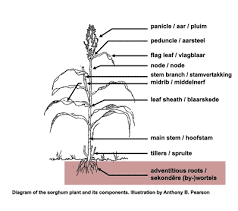
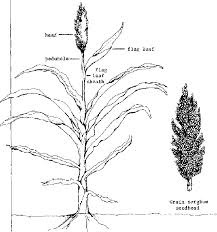
The sorghum peduncle is a crucial structural component of the sorghum plant, connecting the inflorescence (panicle) to the main stem. It plays a key role in supporting the panicle and facilitating the plant's reproductive processes. Understanding the peduncle's structure and function is essential for optimizing sorghum yield and managing crop health.
Structurally, the peduncle is a specialized extension of the sorghum stem that extends upward from the node where the panicle is attached. It is typically cylindrical and can vary in length and thickness depending on the sorghum variety and growing conditions. The peduncle provides physical support to the panicle, ensuring that it remains upright and properly positioned for effective pollination and seed development.
The peduncle is composed of several tissue layers, including the epidermis, cortex, and vascular tissues. The epidermis is the outermost layer, which protects the internal tissues and is often covered with a waxy cuticle to reduce water loss. The cortex, located beneath the epidermis, consists of parenchyma cells that store nutrients and contribute to the peduncle's mechanical support. The vascular tissues within the peduncle include xylem and phloem, which are essential for the transport of water, nutrients, and photosynthates between the panicle and the rest of the plant.
The length and strength of the peduncle can significantly impact the overall health and productivity of the sorghum plant. A well-developed peduncle supports a larger and heavier panicle, which can lead to higher grain yields. However, if the peduncle is too short or weak, it may not adequately support the panicle, leading to lodging (the bending or breaking of the plant) and reduced grain production.
Several factors can influence the development and health of the peduncle. Genetic factors play a role in determining the inherent strength and length of the peduncle. Agronomic practices such as proper plant spacing, fertilization, and irrigation can also impact peduncle development. For instance, excessive nitrogen fertilization may lead to overly rapid growth, resulting in weak peduncles that are more prone to lodging.
Environmental conditions are another crucial factor. Wind, heavy rainfall, and other weather extremes can stress the peduncle and increase the risk of lodging. In such cases, the plant's ability to withstand these stresses is dependent on the strength and flexibility of the peduncle. Additionally, high temperatures during the flowering period can affect the integrity of the peduncle and the overall health of the panicle.
🌿 Go Organic on Your Farm: Instead of harmful chemical pesticides and fertilisers, try our organic farming products — including neem oil spray, bio-pesticides, natural plant treatments, organic seeds and seedlings, suckers, and many more organic products that are safe for your health, your family, your soil and your harvest. Shop Now →
Pests and diseases can also impact the peduncle, though they are less commonly targeted compared to other parts of the plant. Infestations by certain insects or fungal pathogens can weaken the peduncle, compromising its ability to support the panicle and affecting grain development.
The sorghum peduncle is a critical component of the plant's reproductive structure, providing essential support for the panicle and facilitating nutrient and water transport. Its development and health are influenced by genetic, environmental, and management factors, all of which contribute to the plant's overall yield and productivity. Understanding and managing the peduncle effectively can lead to improved crop performance and higher-quality sorghum production.
The Economic Importance and Uses of Sorghum Peduncle
1. Support Structure: The sorghum peduncle provides structural support to the plant, allowing the grain head to develop fully.
2. Crafting Materials: The fibrous nature of the peduncle makes it suitable for crafting items such as baskets and mats.
🔧 Free Farm Tool Available: Use our free Agric4Profits Farm Tools to calculate your farm profits, formulate feeds, identify pests and diseases on both your crops and animal farms, plan your planting and harvesting season, including many more farm tasks to get free expert advice and recommendations — completely free, no registration required. Access Free Tools →
3. Animal Feed: After harvest, the sorghum peduncle can be chopped and used as roughage in animal feed.
4. Biofuel Production: Sorghum peduncles can be processed to produce biofuels like ethanol.
5. Biomass Energy: The peduncle is a good source of biomass for energy production.
6. Paper Production: The fibers in sorghum peduncles can be processed into paper and cardboard.
7. Mulch: Chopped sorghum peduncle can be used as mulch to retain soil moisture and suppress weeds.
💬 Have a Farming Question? Join thousands of farmers across Africa on the Agric4Profits Community — ask questions, share experiences and connect with agricultural experts. It is completely free. Ask Your Question Now →
8. Composting: Sorghum peduncles decompose well, contributing to organic compost.
9. Construction Material: In some regions, sorghum peduncles are used as a building material for walls and roofs.
10. Soil Conditioning: When processed, sorghum peduncles improve soil structure and fertility.
11. Biochar Production: Sorghum peduncles can be converted into biochar, which is used to improve soil health and fertility.
12. Erosion Control: Sorghum peduncles can be used to create barriers that prevent soil erosion.
13. Bedding Material: The fibers from sorghum peduncles can be used as bedding material for livestock.
14. Activated Carbon: Sorghum peduncles can be processed into activated carbon for water purification.
15. Packaging Material: The fibers can be used to make biodegradable packaging materials.
16. Green Manure: Sorghum peduncles can be plowed back into the soil as green manure to enhance soil fertility.
📖 Want to Go Deeper on This Topic?
Our expert agricultural ebooks cover poultry, fish farming, different crops production, snail farming, organic farming, mushrooms, sheep, cattle, flowers, pig farming, goat farming, agribusiness, etc. in practical step-by-step detail — written by agricultural professionals for African farmers.
Browse All Farming Ebooks →17. Pollutant Degradation: Sorghum peduncles aid in breaking down pollutants in the soil, contributing to environmental cleanup efforts.
18. Traditional Medicine: In some cultures, parts of the sorghum peduncle are used in traditional medicine.
Read Also: Sheep gene insights could help farmers breed healthier animals
The Products and By-products That Can Be Derived From Sorghum Peduncle
1. Ethanol: Produced by fermenting the sugars in sorghum peduncles, used as a biofuel.
2. Biomass Pellets: Sorghum peduncles can be processed into biomass pellets for energy production.
3. Paper: The fibers in sorghum peduncles can be processed into paper.
4. Cardboard: Similar to paper production, but thicker and more robust.
5. Mulch: Chopped sorghum peduncles can be used as mulch to retain soil moisture and suppress weeds.
6. Compost: Sorghum peduncles decompose into rich compost, providing nutrients for plants.
7. Animal Bedding: Processed sorghum peduncles can be used as comfortable bedding material for livestock.
8. Biochar: Produced by pyrolyzing sorghum peduncles, biochar is used to enhance soil fertility and sequester carbon.
9. Erosion Control Mats: Sorghum peduncles can be woven into mats to prevent soil erosion.
10. Soil Amendments: The biomass from sorghum peduncles can be used as soil amendments to improve soil structure and fertility.
11. Organic Fertilizer: Decomposed sorghum peduncles add organic matter and nutrients to the soil.
12. Compost Tea: Sorghum peduncles can be used to make compost tea, a liquid fertilizer for plants.
13. Craft Items: The fibrous nature of sorghum peduncles makes them suitable for crafting items like baskets and mats.
14. Activated Carbon: Sorghum peduncles can be processed into activated carbon for water and air purification.
15. Construction Material: In some regions, sorghum peduncles are used as a building material for walls and roofs.
16. Green Manure: Sorghum peduncles can be plowed back into the soil as green manure to enhance soil fertility.
17. Biodegradable Packaging: The fibers from sorghum peduncles can be used to make biodegradable packaging materials.
Read Also: 17 Medicinal Health Benefits Of Mucuna pruriens (Monkey Tamarind)
Frequently Asked Questions (FAQ’s) About Sorghum Peduncle

1. What is a sorghum peduncle?
The sorghum peduncle is the stalk that supports the grain head of the sorghum plant.
2. How is the sorghum peduncle used in biofuel production?
It can be processed to produce ethanol, a renewable biofuel.
3. Can sorghum peduncles be used for animal feed?
Yes, after harvest, they can be chopped and used as roughage in animal feed.
4. Are there industrial uses for sorghum peduncles?
Yes, they are used in paper and cardboard production, and as biomass for energy.
5. How do sorghum peduncles contribute to soil health?
They can be used as mulch, compost, and green manure to improve soil structure and fertility.
6. What role do sorghum peduncles play in erosion control?
They can be used to create barriers that prevent soil erosion.
7. Can sorghum peduncles be used in construction?
Yes, in some regions, they are used as a building material for walls and roofs.
8. How are sorghum peduncles processed into biochar?
They are pyrolyzed in the absence of oxygen to produce biochar, which enhances soil health.
9. Are sorghum peduncles environmentally friendly?
Yes, they are biodegradable and can be used to make eco-friendly products like biochar and compost.
10. What craft items can be made from sorghum peduncles?
They can be used to make baskets, mats, and other decorative items.
Read Also: 4 Steps to help an Orange Tree Produce Sweet Oranges
🌱 Take Your Farming Further With Agric4Profits
Based on what you just read, here are free resources and products from Agric4Profits that can help your farm right now:
- 🛒 Visit Our Marketplace — Organic neem oil, bio-pesticides, seeds and farming products
- 📚 Read Premium Content — Advanced guides for serious and profitable farming
- 🎓 Join Our Free Academy — Structured free training for farmers across Africa
- 🔧 Use Our Free Farm Tools — Profit calculators, feed formulation, pest identifier and more
- 💬 Join Our Farming Community — Connect with farmers across all 54 African countries
- ❓ Ask a Farming Question — Get answers from experienced farmers and agricultural experts
Please cite this content in academic work, research, or publications.