


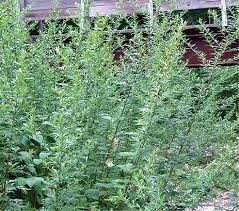
Mugwort botanically known as Artemisia vulgaris derives its name from Artemis of the Greek moon goddess, who is revered as a protector of women.
Meanwhile, vulgaris connects to the first of many applications for mugwort that we’ll discuss about in this article. In the past, it was utilized as a natural menstrual cycle inhibitor for women and to ease the symptoms of menopause.
Mugwort has occasionally been effective in moxibustion, a technique known for reducing joint pain and turning fetuses’ breach positions before birth.
The leaves of one species of the plant, A. douglasiana, have also been used as a natural bug repellant and as a preventative measure before exposure to poison oak.
The plant itself can grow up to six feet tall and has sometimes been mistaken for hemlock, but there are a few easy ways to tell them apart: height, stem color, and blossoms. For instance, hemlocks can reach heights of up to 12 feet, which is unusual for mugwort plants.
Hemlock stems are often green with purple splotches, but mugwort stems are entirely purple. While mugwort blooms are a pale yellow or red color and wrap around the stalk in an alternate pattern, hemlock flowers are white with five petals that resemble an upside-down umbrella.
I want to make sure you are informed of any potential allergies and negative effects associated with the mugwort plant before we almost finish. Not all of the frequent allergies to this particular plant family are included in this article. Before using, make sure to check with your doctor.
I have listed a number of allergies that have been connected to mugwort because they share comparable protein components below. You don’t need to avoid all of these healthy foods; instead, just be mindful of how you may react to them. Most people who are allergic to mugwort pollen only develop a few food sensitivities from this list.
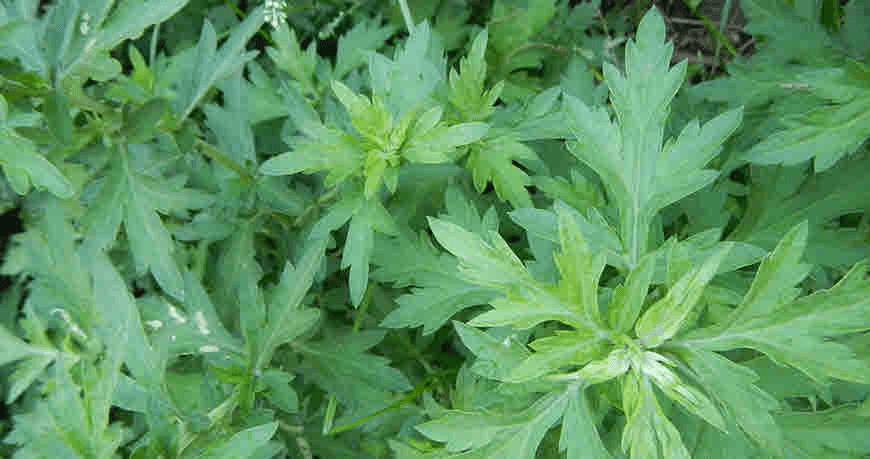
You are prepared to apply some of the natural cures associated with this historically significant plant now that you are aware of how to identify mugwort and have learned all about its background. This is a herb whose uses have been around since the time of the Bible.
We’ve talked about a lot of easy ways that this one plant can ease your pain, prevent invasive surgeries, calm your achy joints, calm your stomach, balance your mood, and possibly be a new way to fight cancer. It might even be growing in your yard!
Toxic chemicals and prescription drugs could both be replaced with mugwort in the treatment of any of the Illnesses we’ll be covering.
Antioxidants found in abundance in the plant aid to treat digestive and intestinal problems such as ulcers, nausea, vomiting, and constipation. It has even been known to induce vivid and powerful nightmares.
Mugwort’s constituents are also being investigated and tested as a potential complementary therapy for several malignancies. Let’s delve deeper into the specifics and background of all the advantages of mugwort.
Read Also: 7 Health Benefits of Lemongrass (Cymbopogon)
3 Health Benefits of Mugwort (Artemisia vulgaris)

1. Pain Relief
Along with helping to stimulate fetal movement inside the womb, mugwort combined with the moxibustion technique also works well as a treatment for some types of arthritis.
The same traditional Chinese method was tested on patients with osteoarthritis in a trial under blind conditions. Half of the 110 patients received the genuine moxibustion treatment, and the other half received a placebo three times per week for the duration of the study. Patients and practitioners were unaware of which patients were receiving which treatments.
Participants in the moxibustion group experienced a pain reduction of 53% at the end of the treatment, compared to a pain reduction of just 24% in the placebo group.
Knee function also rose 13 percent more in the placebo group versus 51 percent more in the moxibustion group. Although the therapy’s benefits might not have been long-lasting, the outcomes are undoubtedly encouraging.
Read Also: 7 Health Benefits of Lemon Balm (Melissa officinalis)
2. Used In Flavouring Beers
Most beer brewers make their beer with hops, or Humulus lupulus. But around a thousand years ago, brewers in the middle ages used a different herbal mixture called gruit, which featured mugwort as one of its primary components.
In fact, compared to the ancient Greeks or Chinese, the English have a slightly different remembrance of how the word “mugwort” came to be. It is believed that the herb’s name derives from the fact that gruit beer was consumed and served in mugs.
To prepare a kind of herbal tea, the dried flowers are combined with other herbs and boiled; the resulting liquid is then added to give the tea its taste. Some claim that the herbal concoction has a sour flavor.
Like so many other traditions, the practice of making beer in the Middle Ages has actually come back. Gruit mixes are being produced by several well-known breweries, including New Belgium, Dogfish Head, and a ton of other microbreweries throughout the globe. There are numerous recipes available as well for making your own gruit beer.
3. Anticancer
As linkages between artemisinins and their targeting of the lysosome, endoplasmic reticulum, and mitochondria have been discovered by researchers. In turn, this makes cancer cells more vulnerable to the toxicity of artemisinin since they have higher levels of iron than healthy cells.
In one experiment, researchers combined artemisinin with iron-rich cancer cells. Enhanced toxicity, or a greater propensity to kill cancer, resulted from the combination once it was inside the cells.
This tagged chemical may eventually prove to be a potent chemotherapeutic agent for the treatment of cancer, the statement reads. Even if this approach to cancer treatment isn’t yet established, it’s something to keep an eye out for as the outcomes of more research and studies become clear.
Read Also: 7 Health Benefits of Fenugreek (Trigonella foenum-graecum)
Here is the additional section to add to the provided article link (https://agric4profits.com/3-health-benefits-of-mugwort-artemisia-vulgaris/). These new sections follow the requested structure and are based on the article’s content about Mugwort (Artemisia vulgaris), incorporating credible details where applicable.
Nutritional value of Health Benefits of Mugwort (Artemisia vulgaris)
1. Flavonoids: Quercetin and kaempferol act as potent antioxidants to combat free radicals and reduce oxidative stress while providing anti-inflammatory support.
2. Volatile Oils: Cineole and camphor (0.1-1.4% content) deliver antimicrobial, expectorant, and mild calming effects with aromatic qualities for respiratory and digestive relief.
3. Sesquiterpene Lactones: Vulgarin offers anti-inflammatory, antimicrobial, and antispasmodic properties key to pain and inflammation management.
4. Phenolic Compounds: These antioxidants protect cells from damage and enhance overall protective effects against oxidative stress.
5. Coumarins: Provide anticoagulant and anti-inflammatory benefits in trace amounts to support circulation and tissue health.
6. Tannins: Astringent properties help tone tissues, promote mild wound healing, and offer antimicrobial action.
7. Polysaccharides: Support immune function and gentle gut health through complex carbohydrate structures.
8. Trace Minerals: Potassium, calcium, magnesium contribute to electrolyte balance, bone support, and muscle function.
9. Carotenoids: Act as vitamin A precursors for vision, immune health, and skin integrity with antioxidant effects.
10. Carbohydrates and Proteins: Modest amounts provide basic energy and metabolic support in dried forms for traditional dietary use.
Scientific Evidence and Case Studies on Health Benefits of Mugwort (Artemisia vulgaris)
1. Antioxidant and Anti-inflammatory Activity: Liu et al. (2022) reviewed phytochemicals like flavonoids and sesquiterpene lactones showing strong in vitro antioxidant and anti-inflammatory effects for inflammatory conditions.
2. Antimicrobial Properties: Bora et al. (2011) demonstrated essential oils active against bacteria like Staphylococcus aureus and fungi like Candida albicans, supporting traditional infection uses.
3. Neuroprotective Effects: Jakovljević et al. (2015) found extracts reduced oxidative stress in neuronal models via phenolics, suggesting benefits for neurodegenerative issues.
4. Hepatoprotective Potential: Extracts protected liver in models through antioxidant mechanisms (Ekiert et al., 2020).
5. Antispasmodic and Antinociceptive Effects: Pharmacological reviews confirmed smooth muscle relaxation and pain relief useful for digestive and menstrual complaints.
6. Cytotoxic Anticancer Potential: Methanolic extract induced autophagy and suppressed migration in colon cancer cells (2018 study on antitumor effects).
7. Anti-inflammatory in Animal Models: Leaf extracts reduced paw edema in mice with camphor as a key contributor (2021 Nepal-sourced study).
8. Xanthine Oxidase Inhibition: Flavonoids like luteolin, apigenin, quercetin suppressed enzyme activity for potential gout management (2024 study).
Evidence remains mostly preclinical (in vitro/animal) with limited human trials; benefits align with traditional uses for digestion, menstruation, stress, and inflammation, but further clinical research is needed.
Summary of Health Benefits of Mugwort (Artemisia vulgaris)
| Aspect | Key Details |
|---|---|
| Plant Overview | Perennial herb in Asteraceae family, native to Europe/Asia, widespread weed; aromatic leaves silvery underneath, used traditionally as “mother of herbs.” |
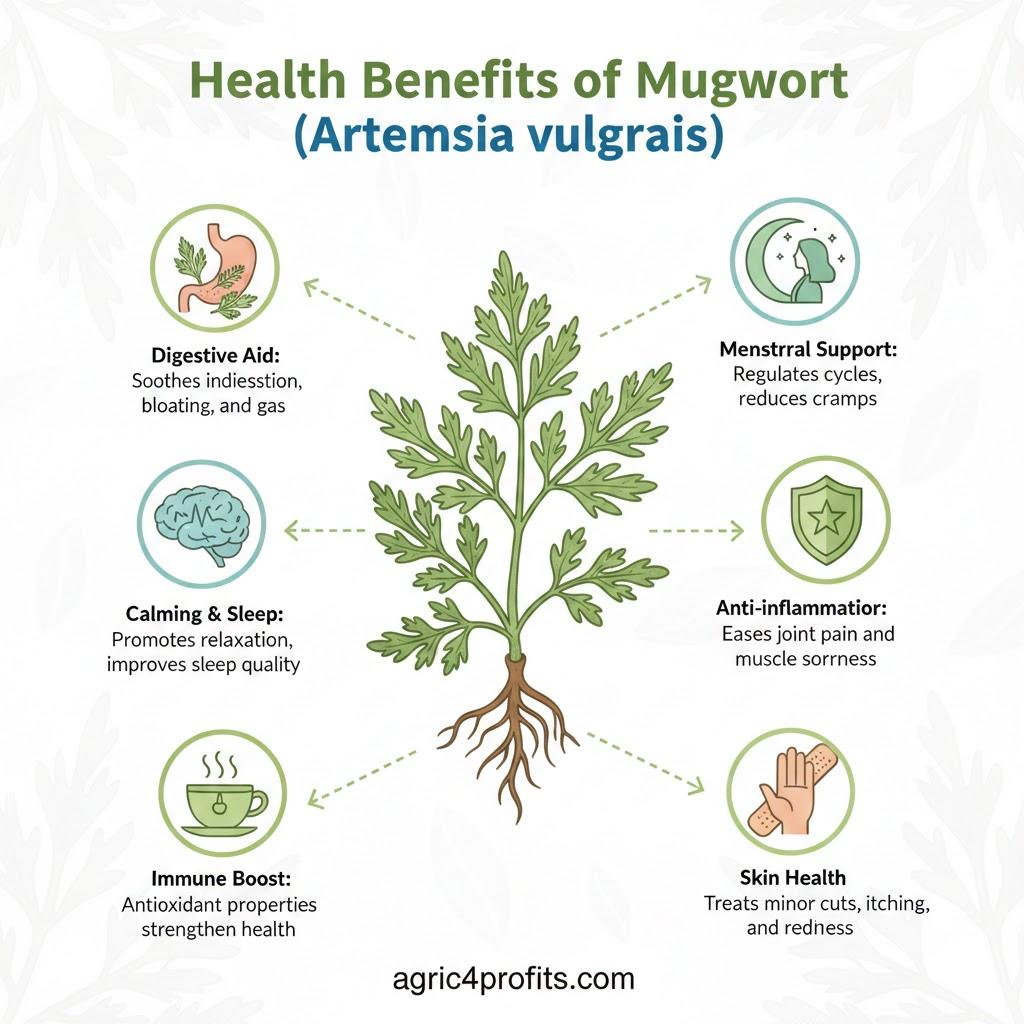
| Primary Benefits | Digestive aid (indigestion/bloating), menstrual pain relief, stress/anxiety reduction, sleep enhancement. |
| Other Benefits | Skin soothing (eczema/irritations), respiratory support, immune boost, anti-inflammatory/antimicrobial, pain relief, liver/detox aid, antioxidant protection, menopausal relief, anti-parasitic. |
| Key Constituents | Flavonoids (quercetin/kaempferol), volatile oils (cineole/camphor), sesquiterpene lactones (vulgarin), phenolics, coumarins, tannins, polysaccharides, trace minerals. |
| Usage Forms | Herbal tea, topical compress/poultice, aromatherapy/essential oil, tincture, herbal pillow, infused oil, bath soak, smudging. |
| Precautions | Allergies (Asteraceae family), GI upset, uterine stimulation (avoid pregnancy), photosensitivity, drug interactions, dizziness/hallucinations in excess, potential liver/neurological toxicity; consult professionals. |
Frequently Asked Questions About Health Benefits of Mugwort (Artemisia vulgaris)
1. What is mugwort mainly used for?
It is traditionally used for digestive relief, menstrual cramp easing, stress reduction, and promoting better sleep through its calming properties.
2. How does mugwort help with digestion?
Bitter compounds and volatile oils stimulate appetite, reduce bloating, and alleviate indigestion or flatulence.
3. Can mugwort relieve menstrual pain?
Yes, its anti-inflammatory and antispasmodic effects traditionally ease cramps and discomfort during menstruation.
4. Does mugwort improve sleep or reduce anxiety?
It has mild sedative qualities in teas or pillows, helping with insomnia, anxiety, and overall relaxation.
5. Is mugwort safe for topical skin use?
Yes, as poultices or oils it soothes irritations, eczema, or wounds due to antimicrobial and anti-inflammatory actions.
6. What are the main risks of mugwort?
Allergies, nausea, uterine stimulation (avoid in pregnancy), photosensitivity, or toxicity in high doses; monitor for dizziness.
7. How do you prepare mugwort tea?
Steep 1-2 tsp dried leaves in hot water for 5-10 minutes; consume 1-2 cups daily for digestive or calming benefits.
8. Does mugwort have antimicrobial effects?
Yes, studies show activity against bacteria and fungi, supporting traditional use for infections.
9. Can mugwort support respiratory health?
It may reduce airway inflammation for issues like bronchitis or asthma in traditional applications.
10. Is mugwort different from wormwood?
Yes; mugwort (Artemisia vulgaris) is related but distinct from wormwood (Artemisia absinthium), though both belong to the Artemisia genus.
Do you have any questions, suggestions, or contributions? If so, please feel free to use the comment box below to share your thoughts. We also encourage you to kindly share this information with others who might benefit from it. Since we can’t reach everyone at once, we truly appreciate your help in spreading the word. Thank you very much for your support and for sharing!
Disclaimer: This article is for educational and informational purposes only. The health benefits described are based on scientific research and traditional knowledge. They ayre not a substitute for professional medical advice, diagnosis, or treatment. Always consult a healthcare professional before using any herb or natural remedy for medical purposes.
Read Also: Complete Steps in Aluminum Recycling Guide