


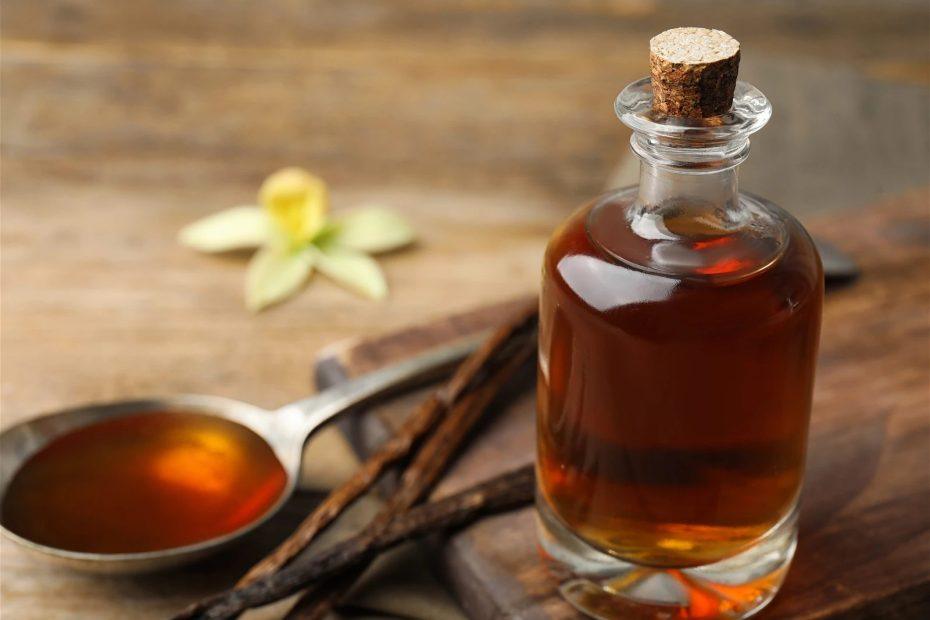
Vanilla extract, is a gotten from the mixture of vanilla beans and alcohol. The main flavoring component of vanilla, vanillin, is released when the vanilla beans also referred to as pods are soaked in alcohol. The sweetness of sweets can therefore be increased by adding this dark brown liquid, commonly known as a vanilla tincture.
But the solution is rarely that straightforward. According to estimates, lignin, a byproduct of paper waste products that may be used to make synthetic vanillin, is the source of about 95% of the vanilla extract used in commercial products rather than vanilla beans. The leftover sawdust from paper mills and other related businesses is used to create this synthetic replica.
Unfortunately, the labor-intensive procedure of growing vanilla plants and extracting their flavor forced the synthetic synthesis of vanilla extract in order to meet the rising demand.
That shouldn’t deter you from creating your own extract. Additionally, real vanilla extract has a deeper flavor than synthetic vanillin, especially when prepared from Madagascar vanilla beans.
The most natural and homemade-like product you can buy should be Vanilla Co2 Total Extract if you’re not sure you’re ready to manufacture your own.
Not surprisingly, the subjects’ response was comparable to their favorable response to fluoxetine, a typical SSRI medication recommended for depression.
Read Also: 5 Health Benefits of Wild Yam (Dioscorea villosa)
Vanillin does not show adverse effects in animal experiments, in contrast to fluoxetine, which has “common” side effects that include weird nightmares, pain, vomiting, diarrhea, flu symptoms, and impotence among roughly a dozen others.
I firmly believe that food may be used as a medication instead of harmful psychiatric drugs. Here’s another illustration of how the plants that God put on the world for our good actually help us, without any of the horrifying side effects that come with using manmade chemicals.
Mexico was the main supplier of vanilla exports up to the middle of the 19th century. The Totonacs, a historical ethnic group from Mexico who reside on the nation’s east coast, appear to be the plant’s original cultivators.
According to Totonac mythology, the king forbade Princess Xanat, an immortal, from wedding a mortal. She fled with her lover, and when they were apprehended, they were both decapitated. Thankfully, their blood spilled to the ground and gave rise to the vanilla vine.
When the Aztecs entered Totonac territory in the fifteenth century, they discovered that their people loved this “black flower” very much. Tenochtitlan, their leader, demanded that the Totonac populace bring vanilla to him as a form of tribute to the Aztecs.
Read Also: 4 Health Benefits of Valerian Root (Valeriana officinalis)
4 Health Benefits of Vanilla Extract
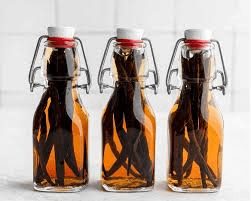
The vanilla plant, which belongs to the genus Vanilla and is most frequently found in Mexico as the species V. Planifolia, is a flowering vine that can grow up to 300 feet long depending on the structure that supports it.
The dried orchids from the vine known as “vanilla beans” are what gives vanilla its delicious flavor. They contain a variety of compounds, including vanillin.
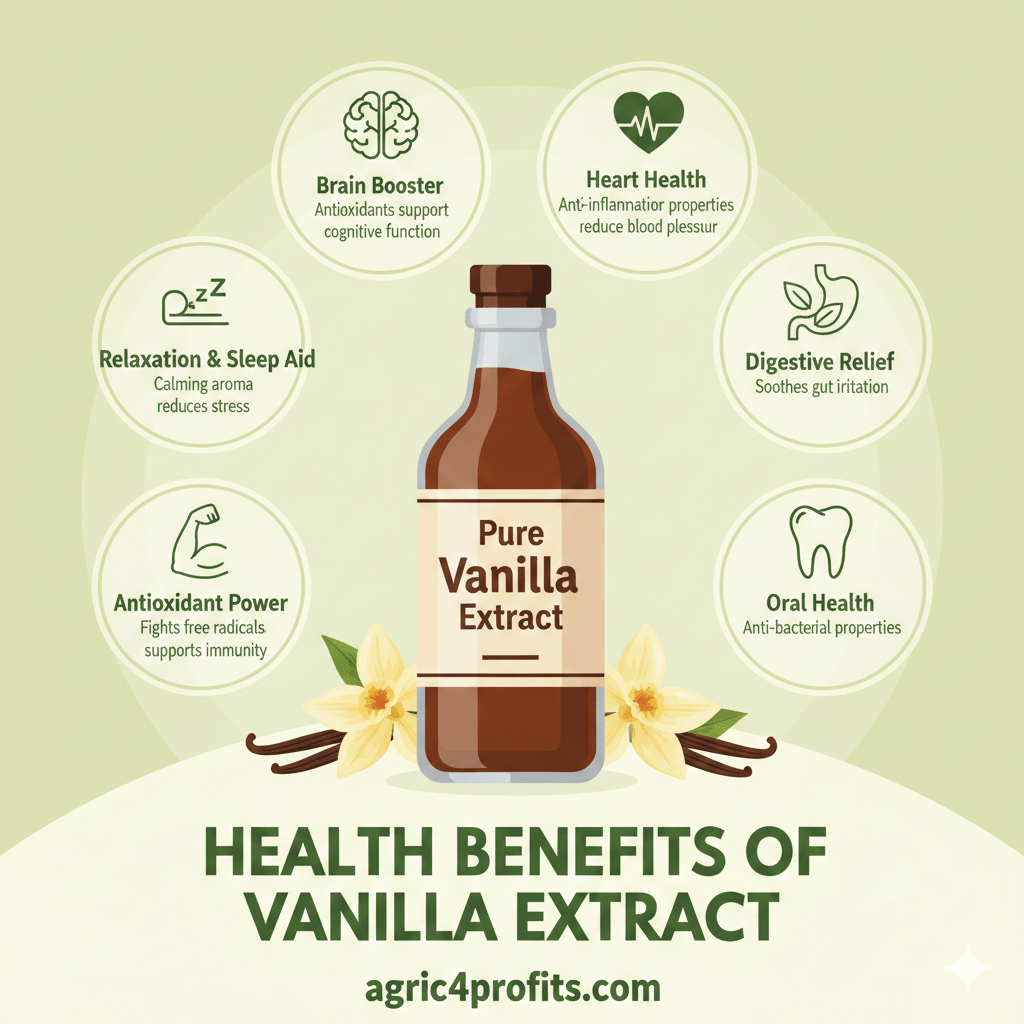
1. Antioxidants
I know you hear about how certain foods have antioxidant properties, but why precisely is it so significant? Because free radicals that enter your body from exposure to chemicals, sunlight, and other factors have the ability to inflict long-term harm, it is crucial to include antioxidants in your diet. This free radical damage is referred to as oxidative stress, and it causes a number of illnesses as well as cancer.
Since quite some time, vanillin has been recognized as an antioxidant. However, it’s interesting to note that vanilla extract, which has recently attracted attention as a valuable product in food preservation and in health supplements as nutraceuticals, exhibits lower antioxidant activity than vanillin.
2. Antibacterial
Products made with vanilla also have antimicrobial qualities. They may be included in a regimen to cure cold sores naturally because of this in part.
I suggest applying the extract to your cold sore with a cotton ball about four times daily until you see the sore go away. Soon after using the product for the first time, you will likely notice a decrease in the cold sore’s inflammation.
Read Also: 5 Health Benefits of Moringa (moringa Oleifera)
3. Anti-inflammatory
Vanilla not only has the potential to lessen inflammation on a cold sore, but it also contributes to lessening inflammation throughout your entire body. Because it is at the core of the majority of diseases, inflammation poses a serious threat.
Fortunately, medical science has started to acknowledge the profound effects of chronic inflammation, and this area of study is now regarded as an emerging one in the world of healthcare research.
You can include components in your diet that actively lower inflammation that may already be present in addition to eliminating inflammatory foods from your diet (foods heavy in sugar, pasteurized dairy, and conventional meat are a few examples).
In addition to its antioxidant action, one rat study exploring the anti-inflammatory characteristics of vanillin discovered that it was particularly important in preventing and reducing the damage caused by liver injury.
4. For Mental Health
Additionally, some individuals’ anxiety and despair have been shown to be reduced by vanilla. Its anti-inflammatory qualities might contribute to this effect.
You see, inflammation has an impact on more than just your chance of illness. Additionally, it appears to be the cause of several types of mental instability.
The brain releases what are referred to as pro-inflammatory cytokines when it is under stress, whether it be from an injury, ongoing mental or emotional stress, an illness, or even dietary inadequacies. Your immune system releases cytokines in a variety of ways, including pro-inflammatory ones, in reaction to illness or other triggers.
Regular inflammation is a healthy biological response to your well-designed immune system’s efforts to get rid of an infection or other threat. However, when a pro-inflammatory cytokine is released in excess, your body starts to respond physically and mentally. This is referred to as sickness behavior.
This was demonstrated in various studies on depression, where it was discovered that people with depression had considerably higher levels of the pro-inflammatory cytokine TNF-alpha than those without the diagnosis.
Vanillin’s antidepressant effects are therefore not surprising because they may be related to its capacity to reduce inflammation (although that was not mentioned specifically in this study).
Read Also: 6 Health Benefits of Juniper Berries
Nutritional value of Vanilla Extract
1. Calories: Vanilla extract provides about 288 calories per 100 grams, mainly from the alcohol base used in extraction, with typical servings (like 1 tsp) offering around 12 calories, making it low-calorie when used sparingly in recipes.
This modest energy contribution comes primarily from the ethanol solvent rather than macronutrients, allowing it to add flavor without significantly impacting daily calorie intake.
2. Carbohydrates: It contains approximately 12.65 grams of carbohydrates per 100 grams, consisting mostly of simple sugars with no dietary fiber present.
These carbs are minimal in practical use and derive from the natural sugars in vanilla beans, contributing trace sweetness without notable blood sugar effects in small amounts.
3. Protein: Vanilla extract has a negligible amount of protein, around 0.06 grams per 100 grams.
This trace level means it offers virtually no contribution to daily protein needs but also keeps it suitable for low-protein dietary adjustments.
4. Fat: Fat content is extremely low at about 0.06 grams per 100 grams, essentially fat-free.
This makes vanilla extract an excellent choice for fat-conscious cooking or baking where flavor enhancement is desired without added lipids.
5. Alcohol content: The primary component in many extracts is ethanol (from the extraction process), contributing the bulk of calories and serving as a preservative.
While not a “nutrient,” this alcohol base evaporates partially during cooking, reducing its impact in finished foods.
6. Vanillin: As the key active compound (0.1–0.2% in extract), vanillin acts as a potent antioxidant with potential health-supporting properties.
It provides the characteristic flavor and may help combat oxidative stress when consumed regularly in foods.
7. Trace B-vitamins: Small amounts of B-complex vitamins like niacin, pantothenic acid, thiamin, riboflavin, and vitamin B-6 are present from the vanilla beans.
These contribute minimally but support general metabolic functions in larger bean-based consumptions.
8. Minerals: Negligible traces of minerals such as potassium, magnesium, or calcium may be found, but not in meaningful quantities.
These offer no substantial nutritional boost in typical extract usage.
9. Antioxidants (beyond vanillin): Other phenolic compounds in the extract provide additional free radical scavenging potential.
These support overall cellular health indirectly through the extract’s natural composition.
10. Low glycemic impact: With minimal carbs and no significant fiber or fats, it has a low effect on blood sugar levels.
This makes it a favorable flavoring option for managing glycemic response in recipes.
Scientific Evidence and Case Studies on Vanilla Extract
1. Antioxidant activity: Shankaranarayanan et al. (2007) found that natural vanilla extract and components like 4-hydroxy-3-methoxybenzyl alcohol showed strong antioxidant effects in in vitro models (beta-carotene-linoleate and DPPH assays), with potential for food preservation and nutraceutical use.
2. Anti-inflammatory and neuroprotective effects: Tai et al. (2021 review) highlighted vanillin’s strong antioxidant, anti-inflammatory, anti-mutagenic, and neuroprotective properties, suggesting therapeutic potential in various conditions.
3. Antidepressant-like effects: Dhama et al. (2013) demonstrated vanillin’s antidepressant activity in mice models, possibly linked to its antioxidant properties and effects on stress-related pathways.
4. Obesity and metabolic benefits: Guo et al. (2018) showed vanillin alleviated high-fat diet-induced obesity in mice, improving gut microbiota, reducing inflammation, insulin resistance, and hyperglycemia.
5. Anti-neuroinflammatory action: Kwon et al. (2018) reported vanillin reduced nitric oxide and pro-inflammatory cytokines (IL-1β, TNF-α, IL-6) in LPS-stimulated microglia, inhibiting NF-κB and MAPKs pathways.
6. Gastroprotective effects: Barros et al. (2022) found vanillin protected against ethanol-induced gastric ulcers in rats via anti-inflammatory mechanisms, including NF-κB inhibition and cytokine reduction.
7. Antibacterial properties: Multiple studies (e.g., Fitzgerald et al., 2022 review) indicated vanillin and vanillic acid showed effects against multidrug-resistant bacteria like E. coli, S. aureus, and others, with potential synergistic antibiotic actions.
Summary of Vanilla Extract
| Aspect | Key Points |
|---|---|
| Primary Component | Vanillin (main flavor compound from vanilla beans extracted in alcohol) |
| Main Health Benefits | Antioxidant protection, potential anti-inflammatory effects, stress/anxiety reduction, possible metabolic support |
| Nutritional Profile | Low calories (~12 per tsp), minimal carbs/protein/fat, trace antioxidants and B-vitamins |
| Common Uses | Flavoring in baking, desserts, beverages; natural alternative to synthetic flavors |
| Scientific Backing | In vitro and animal studies show promise for antioxidant, anti-inflammatory, and neuroprotective roles; limited human trials |
| Considerations | Benefits mainly from compounds like vanillin; effects more pronounced in concentrated forms than typical culinary use |
Frequently Asked Questions About Vanilla Extract
1. What is pure vanilla extract?
Pure vanilla extract is made by steeping real vanilla beans in alcohol and water to extract flavors and compounds like vanillin.
2. Is vanilla extract healthy to consume?
In moderation, yes—it offers trace antioxidants and low calories, with potential benefits from vanillin, though it’s primarily a flavoring agent.
3. How many calories are in vanilla extract?
About 12 calories per teaspoon, mostly from alcohol, with negligible fat, protein, or impactful carbs.
4. Can vanilla extract help with anxiety or mood?
Some animal studies suggest vanillin has antidepressant-like effects, and the aroma may promote relaxation, but human evidence is limited.
5. Is vanilla extract the same as imitation vanilla?
No—pure uses real beans; imitation uses synthetic vanillin, which lacks the full compound profile and potential benefits of natural extract.
6. Does vanilla extract have antioxidants?
Yes, primarily from vanillin and other phenolics, which show free radical scavenging in lab studies.
7. Can I use vanilla extract for weight management?
It may indirectly help by replacing higher-calorie sweeteners, and some research on vanillin shows metabolic benefits in animals.
8. Is vanilla extract safe during pregnancy?
Generally yes in food amounts, but consult a doctor for high doses or alcohol-based concerns.
9. How long does vanilla extract last?
Indefinitely if stored properly (cool, dark place), as alcohol preserves it; flavor may mellow over time.
10. Can vanilla extract provide any vitamins or minerals?
Only trace amounts from beans (e.g., small B-vitamins), not significant in typical use.
Read Also: Definitions, Concepts and Types of Sewage and Sewerage