


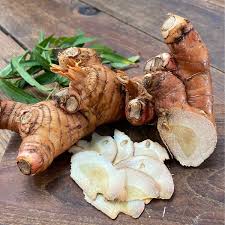
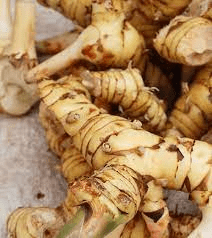
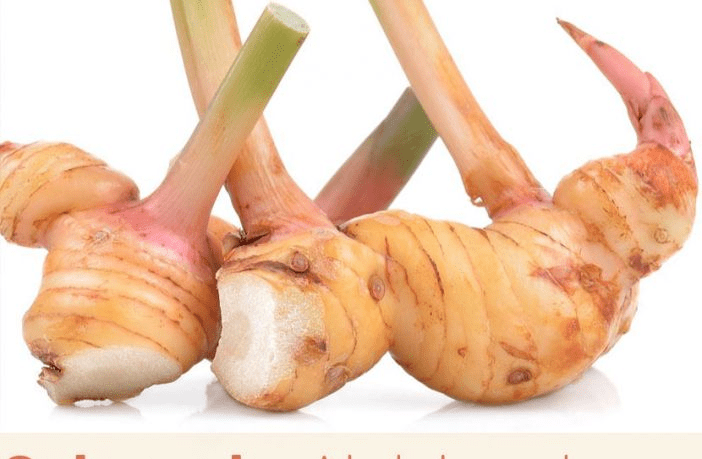
Galangal (Alpinia galanga) is closely linked to ginger, but each variety has its own nutritional profile and tastes more citrus, earthy, or pine-like. This plant’s pale yellow or white rhizome has rings all around it. It frequently gets confused with turmeric and ginger root due to how similar it looks to both.
Four distinct kinds of rhizomatous spices belonging to the Zingiberaceae family, collectively known as ginger, are referred to as galangal. Alpinia galanga, Alpinia Officinale, Boesenbergia rotunda, and Kaempferia galanga are the four primary varieties of galangal.
Given their strong and spicy flavors, these four plants’ rhizomes are frequently used as spices in a variety of Asian cuisines, especially soups.
One of the greatest differences between these spices and ginger and turmeric is their flavor, but there are also variances in the active components. Since ginger is softer than galangal and contains a lot of gingerols, you can only really slice it.
Galangal contains Galangin, beta-sitosterol, and other flavonoids whereas turmeric is strong in curcumin, beta-carotene, and other antioxidants. Despite having a similar appearance and being incredibly healthful, the three have quite diverse culinary and medical uses.
Read Also: 6 Health Benefits of Horehound (Marrubium vulgare)
Usually, only take place when it is ingested in quantities that are greater than those seen in typical diets. Like other herbs, galangal should not be used while pregnant unless a doctor is closely watching you.
There is a good probability that you won’t suffer any allergy symptoms after consuming galangal because it is a generally low-allergenic meal that is even recommended in certain literature to lessen the severity of allergic reactions.
As previously indicated, galangal, more specifically Alpinia galanga, or “bigger galangal,” may perhaps cause you to produce more stomach acid. It’s generally advisable to stay away from this one if you have GERD or peptic ulcer disease unless your primary care doctor recommends it.
Despite being two separate roots, ginger and galangal belong to the same family. Alpinia galanga (larger galangal), Alpinia officinarum (lesser galangal), Kaempferia galanga (kencur, black galangal, or sand ginger), or Boesenbergia rotunda are the four plant species in the Zingiberaceae family that are referred to as “galangal” (Chinese ginger or fingerroot). The greater or smaller plant species are the subjects of the majority of scientific studies.
This root also grows underground in rhizomes like ginger. Even though it isn’t a typical element in most Western cooking techniques, Thai and traditional Chinese cuisine frequently use it.
Read Also: 4 Health Benefits of Vanilla Extract
8 Health Benefits of Galangal (Alpinia galanga)

This Asian spice contains significant amounts of iron, vitamin C, vitamin A, dietary fiber, and carbs. This plant has just 45 calories per serving but is incredibly high in antioxidants like quercetin, alpine, galangin, and beta-sitosterol, among others.
1. Anti-cancer
A 2016 study revealed that the main ingredient in galangal, galangin, has anticancer effects. According to the study, it works particularly well in cases of colon, hepatoma, and melanoma cancer. Another study published in 2014 emphasized its antiproliferative ability against gastric cancer cell lines.
2. Anti-inflammatory
This spice, like turmeric and ginger, has anti-inflammatory properties that help with rheumatoid arthritis, gout, headaches, irritable bowel syndrome, and other common diseases. To enjoy these results, this powder can be mixed into a paste or taken internally.
3. Immune System
The immune system can take a well-earned break with adequate vitamin C intake and the support of special antioxidants like alpine and galangin, which can lessen unneeded inflammation throughout the body.
Read Also: 5 Health Benefits of Moringa (moringa Oleifera)
4. Chronic Disease
Chronic inflammation and the harmful effects of free radicals frequently lead to chronic illness. You may experience a reduction in your risk of diabetes, coronary heart disease, and arthritis thanks to the half-dozen antioxidants found in this spice.
5. Antibacterial and Antifungal
Galangal extract has been shown to have antimicrobial effects on several food-infecting bacteria, including staphylococcus, E. coli, listeria, salmonella, and clostridium.
According to a study done in Thailand, it can even combat amoxicillin-resistant E. coli and even reverse the resistance some strains have to the drug.
According to one study, using this herb when cooking shellfish may also increase the likelihood that the effects of the bacteria vibrio will be reduced. Undercooked seafood, especially oysters, can cause Viviosis, however, after adding galangal to your recipe, Viviosis may be far less likely to occur.
According to the Centers for Disease Control and Prevention, H. pylori is a different common bacteria that is actually carried by 66 percent of people worldwide.
Although one study suggests that this potent herb may even help prevent the stomach ulcers that are frequently brought on by the H. pylori bacteria in addition to eliminating the bacteria itself, it also appears that this bacteria may have met its match when exposed to galangal.
6. Brain Health
Research shows that a substance extracted from this root known as ACA may have a brain-protective impact, reducing some types of age-related cognitive deterioration, perhaps in part because of its anti-inflammatory effects.
Returning to the TNF-alpha protein, we discover that galangal may even aid in the treatment of depression by controlling TNF-alpha. Recent research has focused on the relationship between chronic inflammation and TNF-alpha overreaction as it relates to the debate over depression.
7. Soothes Stomach Pain
Despite the fact that it is evident that this root has amazing health advantages, the effect it has on unsettled stomachs is the one that people are most interested in.
It is used to soothe troubled stomachs, treat diarrhea, lessen vomiting, and even stop hiccups in Ayurvedic medicine and other Asian cultures.
8. Improves Sperm Count
The galangal root’s specific components may help increase male fertility. Iranian researchers found that it improved sperm motility and count in a rat model (or ability to move).
One Danish study investigated the impact of pomegranate fruit extract and galangal rhizome on healthy male human sperm. Researchers found that three times as much motile sperm were produced as compared to the placebo.
Consuming galangal root may also increase male fertility, according to some research. There are, however, only a small number of studies that have been published that directly link galangal root to these advantages in people.
Most of the research to date has been conducted on animals or in test tubes. Therefore, further thorough scientific investigation is required before making any definitive judgments.
Furthermore, more study is required to establish the safe upper intake limit of galangal root for people in order to achieve these health advantages and prevent any adverse effects.
Read Also: 6 Health Benefits of Juniper Berries
Nutritional value of Galangal (Alpinia galanga)
1. Calories: Galangal provides about 71 calories per 100 grams, making it a low-calorie option that supports weight management without adding excessive energy intake.
2. Carbohydrates: With approximately 15 grams per 100 grams, it serves as a source of quick energy, helping to fuel daily activities and maintain blood sugar levels.
3. Protein: Containing around 1.2 grams per 100 grams, galangal contributes to muscle repair and growth, though it’s not a primary protein source.
4. Fat: At about 0.6 grams per 100 grams, its low fat content makes it suitable for heart-healthy diets, reducing the risk of excessive calorie accumulation from fats.
5. Vitamin C: Galangal is rich in vitamin C, which boosts immune function, aids in collagen production, and acts as an antioxidant to protect cells from damage.
6. Vitamin A: It offers vitamin A, essential for maintaining healthy vision, skin integrity, and immune responses.
7. Iron: Providing iron, galangal helps in oxygen transport in the blood and prevents anemia by supporting red blood cell formation.
8. Sodium: With natural sodium content, it assists in maintaining electrolyte balance and nerve function.
9. Potassium: Containing 589 mg per 100 grams, potassium in galangal supports heart health, muscle contractions, and fluid balance in the body.
10. Dietary Fiber: Galangal includes dietary fiber, which promotes digestive health, prevents constipation, and aids in controlling cholesterol levels.
Scientific Evidence and Case Studies on Galangal (Alpinia galanga)
1. Srivastava, S., Mennella, J. A., & Dayal, R. (2017). Effect of Alpinia galanga on mental alertness and sustained attention with or without caffeine: A randomized placebo-controlled study. Journal of the American College of Nutrition. This study found that Alpinia galanga extract improved mental alertness by reducing response times in attention tests, with benefits lasting up to five hours. When combined with caffeine, it enhanced sustained attention and prevented the typical energy crash.
2. Das, G., Patra, J. K., Gonçalves, S., Romano, A., Gutiérrez-Grijalva, E. P., Heredia, J. B., Talukdar, A. D., Shome, S., & Shin, H.-S. (2020). Galangal, the multipotent super spices: A comprehensive review. Trends in Food Science & Technology. The review highlighted galangal’s anti-inflammatory effects through inhibition of nitric oxide production and its anticancer potential, showing cytotoxicity against liver and breast cancer cells. It also noted immune-boosting properties from polysaccharide extracts that enhanced cell proliferation.
3. Destryana, R. A., Estiasih, T., Sukardi, & Pranowo, D. (2024). The potential uses of Galangal (Alpinia sp.) essential oils as the sources of biologically active compounds. AIMS Agriculture and Food. Research demonstrated that galangal essential oils, rich in 1,8-cineole, provide antioxidant and anti-inflammatory benefits, along with antimicrobial action against bacteria and fungi, supporting traditional uses for infection prevention and cardiovascular protection.
4. Eraiah, M. M., Kundapur, M., Joshua, L., & Thomas, J. V. (2023). Alpinia galanga extract increases alertness, focus, and energy while lowering fatigue and daytime sleepiness with four weeks supplementation: A randomized, double-blind, placebo-controlled, cross-over study in human subjects. Current Research in Complementary & Alternative Medicine. In this trial, daily supplementation with 300 mg of galangal extract over 28 days significantly boosted alertness and focus in cognitive tests, reduced daytime sleepiness, and increased energy levels while decreasing fatigue, with no reported side effects.
5. Aziz, I. M., Alfuraydi, A. A., Almarfadi, O. M., Aboul-Soud, M. A. M., Alshememry, A. K., Alsaleh, A. N., & Almajhdi, F. N. (2024). Phytochemical analysis, antioxidant, anticancer, and antibacterial potential of Alpinia galanga (L.) rhizome. Heliyon. The study revealed galangal rhizome extract’s antioxidant activity through radical scavenging, anticancer effects by inducing apoptosis in breast and liver cancer cells via gene regulation, and antibacterial properties against both Gram-positive and Gram-negative bacteria, with low MIC values indicating strong efficacy.
Frequently Asked Questions About Galangal (Alpinia galanga)
1. What is galangal? Galangal is a rhizome from the ginger family, known for its spicy, peppery flavor and used in Southeast Asian cuisine and traditional medicine.
2. How does galangal differ from ginger? Galangal has a sharper, more citrus-like taste compared to ginger’s milder sweetness, and it’s tougher in texture, often used in pastes rather than grated fresh.
3. What are the main health benefits of galangal? It offers antioxidant, anti-inflammatory, and antimicrobial properties, potentially aiding digestion, reducing pain, and supporting mental alertness.
4. How can I use galangal in cooking? Slice or pound it into curries, soups, or stir-fries; it’s essential in Thai tom yum soup and can be infused in teas.
5. Are there any side effects of consuming galangal? It’s generally safe in moderate amounts, but excessive intake may cause heartburn or interact with medications; consult a doctor if pregnant or on blood thinners.
6. Can galangal be substituted with something else? Ginger can replace it in recipes, though the flavor will be milder; for a closer match, use a mix of ginger and black pepper.
7. Is galangal good for digestion? Yes, its carminative properties help relieve bloating, gas, and abdominal discomfort.
8. How do I store fresh galangal? Keep it in the refrigerator wrapped in paper for up to two weeks, or freeze slices for longer storage.
9. Can I grow galangal at home? Yes, plant rhizomes in warm, humid conditions with well-drained soil; it thrives in tropical climates but can be grown indoors in pots.
10. Is dried galangal as effective as fresh? Dried galangal is milder and convenient for storage, but fresh provides stronger flavor and potentially more bioactive compounds.
Do you have any questions, suggestions, or contributions? If so, please feel free to use the comment box below to share your thoughts. We also encourage you to kindly share this information with others who might benefit from it. Since we can’t reach everyone at once, we truly appreciate your help in spreading the word. Thank you very much for your support and for sharing!
Disclaimer: This article is for educational and informational purposes only. The health benefits described are based on scientific research and traditional knowledge. They ayre not a substitute for professional medical advice, diagnosis, or treatment. Always consult a healthcare professional before using any herb or natural remedy for medical purposes.
Read Also: Fate and Transport of Micro-organisms in Air