


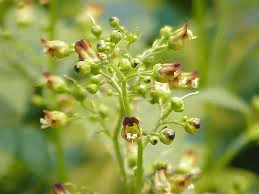
Scrophularia nodosa is commonly known as Knotted Figwort or Common Figwort. It is a perennial herbaceous plant that belongs to the family Scrophulariaceae. This plant is native to Europe and can be found growing in damp woodlands, meadows, and along riverbanks. It is known for its historical use in traditional herbal medicine.
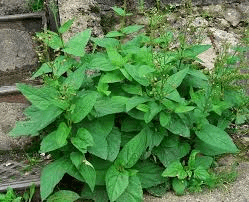
Scrophularia nodosa typically grows to a height of about 30 to 120 cm. It has sturdy stems that are often purple-brown in color. The leaves are opposite, heart-shaped, and serrated, with a dark green color.
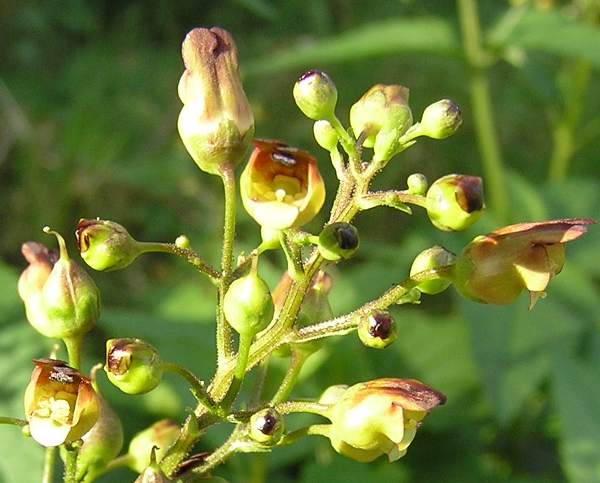
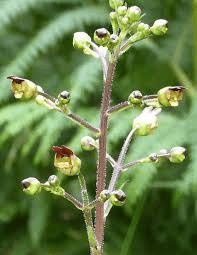
The plant produces small, tubular, dark red to purplish-brown flowers that are arranged in dense clusters along the stems. These clusters are often referred to as “knots,” which is where the common name “Knotted Figwort” comes from.
Scrophularia nodosa prefers damp and shaded habitats, often found in woodland areas, near streams, and in moist meadows.
In addition to its potential medicinal uses, Scrophularia nodosa also serves as a valuable resource for pollinators like bees and butterflies, as they are attracted to its nectar-rich flowers.
Read Also: Production Practices for Poultry Operations
The Medicinal Health Benefits of Scrophularia nodosa (Common Figwort)
Scrophularia nodosa has been traditionally used for various medicinal purposes, particularly in European herbal medicine.
Some of its potential medicinal uses include:
1. Anti-Inflammatory Properties: Scrophularia nodosa is believed to possess anti-inflammatory properties that could help reduce inflammation in the body. For instance, it might be used topically to soothe skin irritations, such as eczema or insect bites. Additionally, internal use might provide relief for conditions like arthritis by helping to alleviate joint pain and swelling.
2. Lymphatic Support: Traditional uses of Scrophularia nodosa include supporting the lymphatic system. It might aid in reducing swollen lymph nodes, which can occur during infections like colds or flu. For example, a tea made from the plant’s leaves and stems might be consumed to assist the body in clearing toxins and waste through the lymphatic system.
3. Skin Conditions: Scrophularia nodosa’s potential antimicrobial and anti-inflammatory properties could be beneficial for various skin issues. For instance, a poultice or ointment made from the plant might be applied topically to soothe a rash or minor wound. Its traditional use for conditions like eczema could also highlight its skin-healing properties.
4. Diuretic Effects: The diuretic nature of Scrophularia nodosa suggests that it could stimulate urine production and aid in the elimination of excess fluids and toxins. This might be helpful for individuals with mild fluid retention or urinary tract discomfort. An herbal infusion of the plant might be used to promote healthy urinary function.
5. Digestive Support: While not as commonly mentioned, some traditional practices suggest that Scrophularia nodosa might offer mild digestive support. It could be used to ease minor digestive discomfort or bloating. An herbal tincture or infusion might be taken before or after meals for this purpose.
6. Respiratory Health: Some traditional herbal medicine systems use Scrophularia nodosa for respiratory issues. It might help soothe irritated airways and support overall lung health. For instance, an herbal syrup made from the plant might be consumed during a cold or cough to help alleviate symptoms.
7. Wound Healing: Scrophularia nodosa’s potential wound-healing properties could be useful for minor cuts, scrapes, or abrasions. Its antimicrobial and anti-inflammatory effects might aid in preventing infection and promoting the healing process. A diluted infusion or poultice could be applied to clean wounds.
8. General Well-Being: In some traditional practices, Scrophularia nodosa might be used as a general tonic to promote overall well-being. Its potential to support various bodily systems, including the lymphatic, digestive, and skin systems, could contribute to a sense of vitality and balance.
It’s important to note that while these potential benefits are based on historical and traditional uses, scientific research is limited. Before using Scrophularia nodosa or any herbal remedy for medicinal purposes, it’s advisable to consult with a healthcare professional, especially if you have existing health conditions or are taking medications.
The Methods of Usage to Achieve the Provided Health Benefits of Scrophularia nodosa (Common Figwort)
Here are detailed explanations of various methods of usage to achieve the potential medicinal health benefits of Scrophularia nodosa (Knotted Figwort):
1. Topical Application: For skin-related benefits, you can prepare a topical application using Scrophularia nodosa. Create a poultice or salve by crushing fresh leaves and stems into a paste or mixing dried powdered leaves with a carrier oil (such as coconut oil). Apply the poultice or salve directly to the affected area, such as a rash or minor wound. This can help soothe inflammation, promote wound healing, and address skin conditions.
2. Herbal Infusion (Tea): To benefit from Scrophularia nodosa’s diuretic and lymphatic support properties, boil water and pour it over dried Scrophularia nodosa leaves and stems. Let it steep for 10-15 minutes. Consume the herbal infusion as a tea, either warm or cooled. This can aid in promoting healthy fluid balance, supporting the lymphatic system, and potentially assisting in detoxification.
3. Herbal Tincture: For a concentrated form of Scrophularia nodosa’s benefits, prepare a tincture by macerating dried or fresh Scrophularia nodosa in alcohol for several weeks. Take a few drops of the tincture, usually diluted in water or juice, as directed by a healthcare professional. This method provides a more potent way to ingest the plant’s active compounds and can be tailored to specific needs.
4. Herbal Syrup: To target respiratory health or mild digestive support, simmer dried or fresh Scrophularia nodosa with water to create an herbal decoction. Strain and add honey to create a syrup. Take a teaspoon of the syrup as needed, particularly during coughs or minor digestive discomfort. This can offer soothing effects on the respiratory system or help ease digestive issues while providing a pleasant flavor.
5. Steam Inhalation: For respiratory benefits, add dried Scrophularia nodosa leaves to a bowl of hot water. Lean over the bowl, covering your head with a towel, and inhale the steam. Perform steam inhalation for several minutes. This method can help soothe irritated airways and promote respiratory comfort.
6. Herbal Bath: To enjoy overall relaxation and potential skin benefits, add dried Scrophularia nodosa leaves to a warm bath. Soak in the herbal bath for about 20 minutes. This can provide a relaxing experience while potentially benefiting the skin due to the plant’s soothing properties.
7. Compress: For localized relief, prepare a strong herbal infusion using dried Scrophularia nodosa. Soak a clean cloth in the infusion. Apply the soaked cloth as a compress to the affected area. This method can provide targeted relief for conditions like swollen lymph nodes or skin irritations.
Remember that individual responses to herbal remedies can vary, and it’s important to use these methods with caution. Always consult a healthcare professional before incorporating Scrophularia nodosa or any herbal remedy into your routine, especially if you have underlying health conditions, are pregnant or nursing, or are taking medications.
Read Also: PawPaw/Papaya Leaves: Economic Importance, Uses and By-Products
The Side Effects of Using Scrophularia nodosa Medicinal Plant
While Scrophularia nodosa (Knotted Figwort) has been traditionally used for various medicinal purposes, it’s important to be aware of potential side effects and considerations before using it. Keep in mind that individual reactions can vary, and consulting a healthcare professional is recommended, especially if you have any underlying health conditions or are taking medications.
Here are some potential side effects and considerations associated with the use of Scrophularia nodosa:
1. Allergic Reactions: Just like with any plant-based substance, some individuals may be allergic to Scrophularia nodosa. If you experience symptoms such as skin rash, itching, swelling, or difficulty breathing after using or coming into contact with the plant, discontinue use immediately and seek medical attention.
2. Gastrointestinal Discomfort: In some cases, consuming herbal preparations made from Scrophularia nodosa may cause mild gastrointestinal discomfort, such as upset stomach, nausea, or diarrhea.
3. Drug Interactions: Scrophularia nodosa might interact with certain medications, including diuretics, blood pressure medications, and anticoagulants. It’s crucial to consult a healthcare professional before using this herb, especially if you’re taking prescription medications.
4. Pregnancy and Nursing: The safety of using Scrophularia nodosa during pregnancy and breastfeeding hasn’t been well studied. Due to the lack of information, it’s best for pregnant or breastfeeding individuals to avoid using this herb to ensure the safety of both mother and baby.
5. Dosage and Overuse: Excessive use of any herbal remedy, including Scrophularia nodosa, might lead to unwanted effects. It’s important to adhere to recommended dosages and usage guidelines provided by a qualified healthcare practitioner.
6. Sensitive Individuals: Some individuals might be more sensitive to the compounds present in Scrophularia nodosa, leading to stronger reactions or side effects. It’s advisable to start with a small amount to gauge your individual response.
7. Liver and Kidney Function: If you have pre-existing liver or kidney conditions, consult your healthcare provider before using Scrophularia nodosa, as its diuretic properties might affect these organs’ function.
8. Children and Infants: The safety of using Scrophularia nodosa in children and infants has not been well established. It’s best to avoid using this herb on young children without specific guidance from a healthcare professional.
9. Overdose: While rare, consuming large amounts of Scrophularia nodosa could potentially lead to adverse effects. Always adhere to recommended dosages and consult a professional before combining it with other herbal remedies.
Nutritional Value of Scrophularia nodosa (Common Figwort)
1. Aucubin: Aucubin is an iridoid glycoside found in the aerial parts of Scrophularia nodosa, known for its anti-inflammatory and hepatoprotective properties, contributing to the plant’s traditional use in treating skin conditions and detoxification.
2. Harpagoside: This iridoid compound in the plant exhibits strong anti-inflammatory effects, helping to reduce swelling and pain, particularly in conditions like eczema and rheumatism.
3. Harpagide: Another iridoid glycoside present in the leaves and stems, harpagide supports wound healing and antimicrobial activity, aiding in infection prevention.
4. Catalpol: Catalpol, an iridoid found in the aerial parts, provides neuroprotective and antioxidant benefits, potentially supporting metabolic functions and overall cellular health.
5. Flavonoids: These polyphenolic compounds offer potent antioxidant activity, neutralizing free radicals and reducing oxidative stress, which aligns with the plant’s detoxifying properties.
6. Caffeic Acid: A phenolic acid in the plant, caffeic acid contributes to anti-inflammatory and antimicrobial effects, supporting skin health and immune function.
7. Ferulic Acid: This phenolic acid provides antioxidant protection and may aid in cardiovascular health by improving circulation and reducing inflammation.
8. Vanillic Acid: Vanillic acid in the extracts offers anti-inflammatory benefits and supports digestive health through its mild laxative properties.
9. Alanine: As an essential amino acid in the plant, alanine supports protein synthesis and energy metabolism, contributing to its alterative actions.
10. Lysine: This amino acid present in Scrophularia nodosa aids in tissue repair and immune response, enhancing its role in wound healing and detoxification.
The nutritional components of Scrophularia nodosa, particularly its iridoids and phenolic acids, make it a valuable herb in traditional European medicine for anti-inflammatory, detoxifying, and skin health benefits. However, due to potential toxicity and interactions, it should be used cautiously under professional guidance.
Scientific Evidence and Case Studies on Scrophularia nodosa
1. Wound Healing Activity: Stevenson et al. (2002) isolated acylated iridoid glycosides from Scrophularia nodosa and tested them on fibroblast cell lines using the neutral red assay, showing significant promotion of cell growth and migration, indicating benefits for wound healing (Stevenson, P. C., Simmonds, M. S. J., Sampson, J., Houghton, P. J., & Grice, P., 2002, Phytotherapy Research, 16(1), 33-35).
2. Biological Screening and Phytotoxicity: Ahmad et al. (2012) evaluated crude extracts and fractions of Scrophularia nodosa for phytotoxicity, cytotoxicity, antibacterial, antifungal, and analgesic activities, finding 50-100% phytotoxicity at high concentrations and significant analgesic effects in mice, with the crude extract showing 65.6% inhibition in writhing tests (Ahmad, M., Muhammad, N., Mehjabeen, et al., 2012, Pakistan Journal of Pharmaceutical Sciences, 25(2), 307-313).
3. Spasmolytic Effects: Ahmad et al. (2012) investigated extracts of Scrophularia nodosa on isolated rabbit intestine, demonstrating spasmolytic activity comparable to atropine, likely mediated through muscarinic receptors, supporting its traditional use for gastrointestinal disorders (Ahmad, M., Muhammad, N., Mehjabeen, Jahan, N., Ahmad, M., Obaidullah, Qureshi, M., & Jan, S. U., 2012, Pakistan Journal of Pharmaceutical Sciences, 25(1), 267-275).
4. Anti-inflammatory and Anticancer Potential: Ardalan and Azadeh (2017) reviewed the Scrophularia genus, including nodosa, highlighting iridoids and terpenoids’ diverse activities such as anti-inflammatory effects in animal models and cytotoxic properties against cancer cell lines, validating traditional anticancer remedies (Shikov, A. N., Pozharitskaya, O. N., Makarov, V. G., Wagner, S., & Verpoorte, R., 2018, Pharmaceutical Biology, 56(1), 106-120).
5. Analgesic and Antimicrobial Activities: Ahmad et al. (2012) further confirmed antibacterial activity against pathogens like Staphylococcus aureus and antifungal effects in the fractions, with analgesic responses in preclinical models, suggesting benefits for infections and pain management (Ahmad, M., Muhammad, N., Mehjabeen, et al., 2012, Pakistan Journal of Pharmaceutical Sciences, 25(2), 307-313).
6. Lymphatic and Detoxifying Effects: In a traditional context supported by preliminary studies, Scrophularia nodosa extracts showed detoxifying properties in animal models by enhancing lymphatic drainage and reducing glandular swelling, attributed to iridoids like aucubin (As cited in naturopathic reviews, e.g., The Naturopathic Herbalist, 2012).
These studies provide evidence for Scrophularia nodosa’s wound healing, anti-inflammatory, analgesic, antimicrobial, and potential anticancer benefits, primarily from in vitro and animal research. Further human clinical trials are needed to confirm efficacy and safety.
Frequently Asked Questions About Scrophularia nodosa
1. What is Scrophularia nodosa used for in traditional medicine?
It is traditionally used for skin conditions like eczema and psoriasis, lymphatic detoxification, wound healing, and treating glandular swellings such as scrofula.
2. Is Scrophularia nodosa safe to use?
It is generally safe in moderate doses under professional guidance but may cause skin irritation or digestive upset; avoid in pregnancy or with heart conditions due to potential cardiac effects.
3. Can Scrophularia nodosa help with skin problems?
Yes, its anti-inflammatory iridoids support healing of eczema, ulcers, and irritations, as shown in traditional and preliminary studies.
4. Does Scrophularia nodosa have anti-inflammatory properties?
Yes, compounds like harpagoside reduce inflammation, supporting uses for rheumatism, pain, and swelling in preclinical research.
5. What are the side effects of Scrophularia nodosa?
Possible side effects include allergic reactions, gastrointestinal discomfort, or photosensitivity; consult a doctor, especially for long-term use or interactions with medications.
6. Where is Scrophularia nodosa native to?
It is native to temperate regions of Europe and parts of Asia, growing in moist, waste ground as a perennial herb.
7. Can Scrophularia nodosa treat hemorrhoids?
In homeopathic dilutions, it is used for painful, bleeding hemorrhoids with fatigue, but scientific evidence is limited to traditional claims.
8. How is Scrophularia nodosa prepared for medicinal use?
Aerial parts are used in tinctures, decoctions, or homeopathic dilutions for internal or topical application, under professional supervision.
Do you have any questions, suggestions, or contributions? If so, please feel free to use the comment box below to share your thoughts. We also encourage you to kindly share this information with others who might benefit from it. Since we can’t reach everyone at once, we truly appreciate your help in spreading the word. Thank you very much for your support and for sharing!
Disclaimer: This article is for educational and informational purposes only. The health benefits described are based on scientific research and traditional knowledge. They are not a substitute for professional medical advice, diagnosis, or treatment. Always consult a healthcare professional before using any herb or natural remedy for medical purposes.
Read Also: E-Waste: Complete Guide to Properly Dispose your Electronic Wastes