


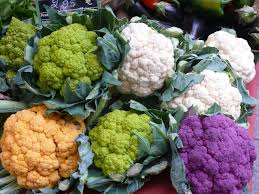
Do you have any idea that Cauliflower is an extremely healthy vegetable that is a significant source of nutrients that also contains unique plant compounds that may reduce the risk of several diseases, including heart disease and cancer?
In case you want to lose some weight then no more need for excess expenses on purchasing drugs, just start eating Cauliflower and achieve your aim as it is very easy to add to your diet.
The health benefits of cauliflower also include a reduced risk of brain disorders, relief from indigestion, detoxification of the body, increased iron absorption, and weight loss.
This superfood also helps boost eye health, maintain hormonal balance, and prevents diabetes, colitis, respiratory papillomatosis, hypertension, and the harmful effects of ultraviolet radiation.
Cauliflower is an excellent source of vitamins and minerals, containing some of almost every vitamin and mineral that you need.
Cauliflower contains a high amount of fiber, which is important for digestive health and may reduce the risk of several chronic diseases.
Cauliflower provides a significant amount of antioxidants, which are beneficial for reducing inflammation and protecting against several chronic diseases.
It is packed with nutrients and antioxidant power which helps in strengthening the immune system, maintaining bone and cellular health, electrolyte balance, and optimum cholesterol levels.
Cauliflower provides some powerful health benefits. There are many ways to add cauliflower to your diet. It can be consumed cooked or raw and makes a fantastic addition to just about any dish. It is a great source of nutrients, including a few that many people need more of.
Cauliflower is low in calories but high in fiber and water all properties that may assist in weight loss.
Cauliflower is a good source of choline, a nutrient many people are lacking. It is involved in many processes in the body and works to prevent several diseases.
Cauliflower is rich is sulforaphane, a plant compound with many beneficial effects, such as reduced risk of cancer, heart disease and diabetes.
Cauliflower can replace grains and legumes in many recipes, which is a great way to eat more veggies or follow a low-carb diet.
Plus, cauliflower contains unique antioxidants that may reduce inflammation and protect against several diseases, such as cancer and heart disease.
What’s more, cauliflower is easy to add your diet. It’s tasty, easy to prepare and can replace high-carb foods in several recipes.
As long as you have these important micronutrients, your body will be able to resist aging caused by your everyday exposure to pollutants, chronic stress, and more. If you don’t have an adequate supply of antioxidants to help squelch free radicals, then you can be at risk of oxidative stress, which leads to accelerated tissue and organ damage.
Read Also: Interesting Nutritional Facts About Cauliflower
Now let us discuss some science-based health benefits of cauliflower you should be aware of in details:
1. Contains Many Nutrients
The nutrition profile of cauliflower is quite impressive.
Cauliflower is very low in calories yet high in vitamins. In fact, cauliflower contains some of almost every vitamin and mineral that you need.
Here is an overview of the nutrients found in 1 cup, or 128 grams, of raw cauliflower:
- Calories: 25
- Fiber: 3 grams
- Vitamin C: 77% of the RDI
- Vitamin K: 20% of the RDI
- Vitamin B6: 11% of the RDI
- Folate: 14% of the RDI
- Pantothenic acid: 7% of the RDI
- Potassium: 9% of the RDI
- Manganese: 8% of the RDI
- Magnesium: 4% of the RDI
- Phosphorus: 4% of the RDI
2. High in Fiber
Cauliflower is quite high in fiber, which is beneficial for overall health.
There are 3 grams of fiber in one cup of cauliflower, which is 10% of your daily needs.
Fiber is important because it feeds the healthy bacteria in your gut that help reduce inflammation and promote digestive health.
Consuming enough fiber may help prevent digestive conditions like constipation, diverticulitis and inflammatory bowel disease (IBD).
Moreover, studies show that a diet high in fiber-rich vegetables like cauliflower is linked with a lower risk of several illnesses, including heart disease, cancer and diabetes.
Fiber may also play a role in obesity prevention, due to its ability to promote fullness and reduce overall calorie intake.
3. Good Source of Antioxidants
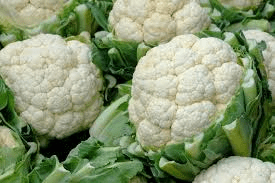
Vitamins C and K and manganese are antioxidants that can neutralize free radicals before they can cause damage to healthy cells and contribute to disease, such as heart disease and cancer. Antioxidants such as vitamins K and C may help prevent conditions such as cancer, heart disease and arthritis, Mangieri said.
One cup of cooked cauliflower provides 73 to 77 percent of the recommended daily amount of vitamin C, 19 percent of the daily vitamin K amount and 8 percent of the daily manganese amount, according to World’s Healthiest Foods.
Cauliflower is a great source of antioxidants, which protect your cells from harmful free radicals and inflammation.
Similar to other cruciferous vegetables, cauliflower is particularly high in glucosinolates and isothiocyanates, two groups of antioxidants that have been shown to slow the growth of cancer cells.
In test-tube studies, glucosinolates and isothiocyanates have been shown to be especially protective against colon, lung, breast and prostate cancer.
Cauliflower contains carotenoid and flavonoid antioxidants as well, which have anti-cancer effects and may reduce the risk of several other illnesses, including heart disease.
What’s more, cauliflower contains high amounts of vitamin C, which acts as an antioxidant. It is well-known for its anti-inflammatory effects that may boost immune health and reduce the risk of heart disease and cancer.
4. Reduces the Risk of Cancer
Cruciferous vegetables, like cauliflower, are rich in plant-based compounds, such as sulforaphane and indoles, which scientists think may reduce the risk of developing some types of cancer.
Studies of these cancer-protective compounds in animals have shown promising effects in preventing cancer, but human studies in people who ate higher amounts of cruciferous vegetables have shown mixed results of its cancer-preventive effects, according to the National Cancer Institute.
Some research suggests that the glucosinolates found in cruciferous vegetables may help reduce risk of certain cancers, namely prostate cancer,” Mangieri said. When glucosinolates in cruciferous vegetables break down, through being chopped or chewed, they produce compounds that may encourage the elimination of carcinogens from the body, according to a review published in Current Drug Metabolism.
A review published in Advances in Experimental Medicine and Biology looked at several studies that examined the link between the consumption of cruciferous vegetables and cancer risk. It found that “of the case-control studies 64 percent showed an inverse association between consumption of one or more brassica vegetables and risk of cancer at various sites.”
The association between a high consumption of cruciferous vegetables and a reduced risk of cancer is most consistent for lung, stomach, colon and rectal cancer, according to the study authors. But they also suggest that it’s not yet clear whether this association is due to eating more cruciferous vegetables, specifically, or to eating more vegetables in general.
5. Improves your Heart Health

A few studies have found that consuming higher amounts of cruciferous vegetables has been linked with a decreased risk of cardiovascular disease, compared to eating a lower intake, but results have been largely inconsistent, according to the Linus Pauling Institute of Oregon State University.
Sulforaphane is associated with strong blood vessels and a reduced risk of cardiovascular disease. A 2015 review published in Oxidative Medicine and Cellular Longevity found that sulforaphane’s anti-inflammatory capabilities may help protect against hypertension, atherosclerosis, stroke and myocardial infarction.
6. Improves Digestive Health
Cauliflower has a high fiber content, and one cup of it cooked has about 10 percent of the recommended daily amount of fiber. Diets rich in fiber can help prevent constipation, and promote bulkier, softer stools that are easier to pass through the digestive system than hard ones. These beneficial effects not only make life more comfortable but also help maintain colorectal health.
Read Also: Top 14 Amazing Health Benefits of Broccoli
7. May Aid in Weight Loss
Cauliflower has several properties that may help with weight loss. First, it is low in calories with only 25 calories per cup, so you can eat a lot of it without gaining weight. It can also serve as a low-calorie substitute for high-calorie foods, such as rice and flour.
As a good source of fiber, cauliflower slows digestion and promotes feelings of fullness. This may automatically reduce the number of calories you eat throughout the day, an important factor in weight control.
High water content is another weight loss friendly aspect of cauliflower. In fact, 92% of its weight is made up of water. Consuming lots of water-dense, low-calorie foods is associated with weight loss.
Comprehensive Amazing Health Benefits of Cauliflower
8. High in Choline
Cauliflower is high in choline, an essential nutrient that many people are deficient in.
One cup of cauliflower contains 45 mg of choline, which is about 11% of the adequate intake (AI) for women and 8% for men.
Choline has several important functions in the body.
To begin with, it plays a major role in maintaining the integrity of cell membranes, synthesizing DNA and supporting metabolism.
Choline is also involved in brain development and the production of neurotransmitters that are necessary for a healthy nervous system. What’s more, it helps prevent cholesterol from accumulating in the liver.
Those who don’t consume enough choline may have a higher risk of liver and heart disease, in addition to neurological disorders like dementia and Alzheimer’s.
Not many foods contain choline. Cauliflower, along with broccoli, is one of the best plant-based sources of the nutrient.
9. Rich in Sulforaphane
Cauliflower contains sulforaphane, an extensively studied antioxidant.
Many test-tube and animal studies have found sulforaphane to be particularly helpful for suppressing cancer development by inhibiting enzymes that are involved in cancer and tumor growth.
According to some studies, sulforaphane may also have the potential to stop cancer growth by destroying cells that are already damaged.
Sulforaphane appears to be most protective against colon and prostate cancer but has also been studied for its effects on many other cancers, such as breast, leukemia, pancreatic and melanoma.
Research shows that sulforaphane may also help reduce high blood pressure and keep arteries healthy both major factors in preventing heart disease.
Finally, animal studies suggest that sulforaphane may also play a role in diabetes prevention and reducing the risk of diabetes-induced complications, such as kidney disease.
While more research is necessary to determine the extent of sulforaphane’s effects in humans, its potential health benefits are promising.
10. It’s Anti-Inflammatory
You need some level of
inflammation in your body to stay healthy. However, it’s also possible, and
increasingly common, for the inflammatory response to get out of hand.
If your immune system mistakenly triggers an inflammatory response when no
threat is present, it can lead to significant inflammation-related damage to
the body, a condition linked to cancer and other diseases, depending on which
organs the inflammation is impacting.
Cauliflower contains a wealth of anti-inflammatory nutrients to help keep inflammation in check, including indole-3-carbinol or I3C, an anti-inflammatory compound that may operate at the genetic level to help prevent the inflammatory responses at its foundational level.5
11. It’s Rich in Vitamins and Minerals
Most Americans are seriously lacking in nutrients their body needs to function. Eating cauliflower regularly is a simple way to get these much-needed nutrients into your body.
For instance, one serving of cauliflower contains 77 percent of the recommended daily value of vitamin C. It’s also a good source of vitamin K, protein, thiamin, riboflavin, niacin, magnesium, phosphorus, fiber, vitamin B6, folate, pantothenic acid, potassium, and manganese.
12. Boost Your Brain Health
Cauliflower is a good source of choline, a B vitamin known for its role in brain development. Choline intake during pregnancy “super-charged” the brain activity of animals in utero, indicating that it may boost cognitive function, and improve learning and memory.
It may even diminish age-related memory decline and your brain’s vulnerability to toxins during childhood, as well as conferring protection later in life.
13. Detoxification
Support
Cauliflower helps your body’s ability to detoxify in multiple ways. It contains antioxidants that support Phase 1 detoxification along with sulfur-containing nutrients important for Phase 2 detox activities. The glucosinolates in cauliflower also activate detoxification enzymes.7
14. Low-Carb Alternative to Grains and Legumes
Cauliflower is incredibly versatile and can be used to replace grains and legumes in your diet.
Not only is this a fantastic way to increase your veggie intake, but it is also especially helpful for those who follow low-carb diets.
This is because cauliflower is significantly lower in carbs than grains and legumes.
For example, a cup of cauliflower contains 5 grams of carbs. At the same time, a cup of rice contains 45 grams of carbs nine times the amount of cauliflower.
Here are some examples of recipes that can be made with cauliflower instead of grains and legumes:
- Cauliflower rice: Replace white or brown rice with cauliflower that has been grated and then cooked
- Cauliflower pizza crust: By pulsing cauliflower in a food processor and then making it into a dough, you can make a delicious pizza.
- Cauliflower hummus: Chickpeas can be replaced with cauliflower in hummus recipes.
- Cauliflower mash: Instead of making mashed potatoe, a low-carb cauliflower mash that is easy to make.
- Cauliflower tortillas: Combine pulsed cauliflower with eggs to make low-carb tortillas that can be used for wraps, taco shells or burritos.
- Cauliflower mac and cheese: Cooked cauliflower can be combined with milk, cheese and spices to make mac and cheese.
15. Easy to Add to Your Diet
Not only is cauliflower versatile, but it is also very easy to add to your diet.
To begin with, you can consume it raw, which requires very little preparation. You can enjoy raw cauliflower florets as a snack dipped in hummus or another healthy vegetable dip.
Cauliflower can also be cooked in a variety of ways, such as steaming, roasting or sautéing. It makes an excellent side dish or can be combined with dishes like soups, salads, stir-fries and casseroles.
Not to mention, it is fairly cheap and widely available at most grocery stores.
Perhaps because the most commonly consumed varieties of cauliflower are white, many people may not associate cauliflower with the same nutrient richness as its fellow green cruciferous vegetables like broccoli or kale. This perspective on cauliflower does not match up with the research findings on this amazing food. White varieties of cauliflower are just as rich in phytonutrients as green cruciferous vegetables, and this nutrient richness is exemplified by its glucosinolates, described below.
Read Also: Comprehensive Guide on How to Grow Lettuce
16. Glucosinolates in Cauliflower
The phytonutrients provided by cauliflower are headed off by its glucosinolates. These sulfur-containing compounds are well studied and known to provide a variety of health benefits. The glucosinolates best studied in cauliflower include:
- Glucobrassicin
- Glucoiberin
- Glucoerucin
- Glucoraphanin
- Neo-glucobrassicin
- Progoitrin
- Sinigrin
- 4-hydroxyglucobrassicin
- 4-methoxyglucobrassicin
Glucosinolates are the subject of increasing health research, and the more that is learned about glucosinolates, the broader scientists see their role in supporting our body systems. The list of body systems supported by intake of glucosinolates from cauliflower and other cruciferous vegetables has now come to include our cardiovascular, digestive, immune, inflammatory, and detoxification systems. For in-depth information about glucosinolates and health support.
Health risks
The risks from eating cauliflower are generally minimal. Like other cruciferous vegetables, cauliflower can make some people feel gassy or bloated.
According to The Ohio State University Wexner Medical Center, people taking warfarin (Coumadin), a blood-thinning medication, should watch their intake of green leafy vegetables including cauliflower, since the vegetable’s vitamin K content may interfere with the medication’s effectiveness. It’s fine to include these nutritious vegetables in your diet, but keep your intake of foods rich in vitamin K consistent from week to week, experts recommend.
Scientific Evidence and Case Studies on Comprehensive Amazing Health Benefits of Cauliflower
1. Nutrient density and low calorie profile: One cup (128g) raw cauliflower provides only 25 calories yet supplies 77% RDI vitamin C, 20% vitamin K, significant folate, B6, and fiber, supporting overall micronutrient needs with minimal energy intake.
2. High fiber for digestive and chronic disease protection: 3g fiber per cup feeds gut microbiota, reduces inflammation, and is linked to lower risk of constipation, IBD, heart disease, diabetes, and certain cancers in population studies.
3. Antioxidant and anti-cancer effects of glucosinolates/sulforaphane: Sulforaphane and isothiocyanates inhibit cancer cell growth in test-tube and animal models (colon, prostate, breast, lung); human observational data show inverse associations with lung, stomach, colon, and rectal cancer risk from cruciferous intake.
4. Cardiovascular benefits: Sulforaphane supports vascular health, reduces hypertension and atherosclerosis in animal models; higher cruciferous vegetable consumption linked to lower CVD risk in some cohort studies.
5. Choline content for brain and liver health: Provides ~45mg choline per cup (important for cell membranes, DNA synthesis, neurotransmitter production); adequate intake associated with reduced risk of liver disease, cognitive decline, and neural tube defects.
Summary of Comprehensive Amazing Health Benefits of Cauliflower
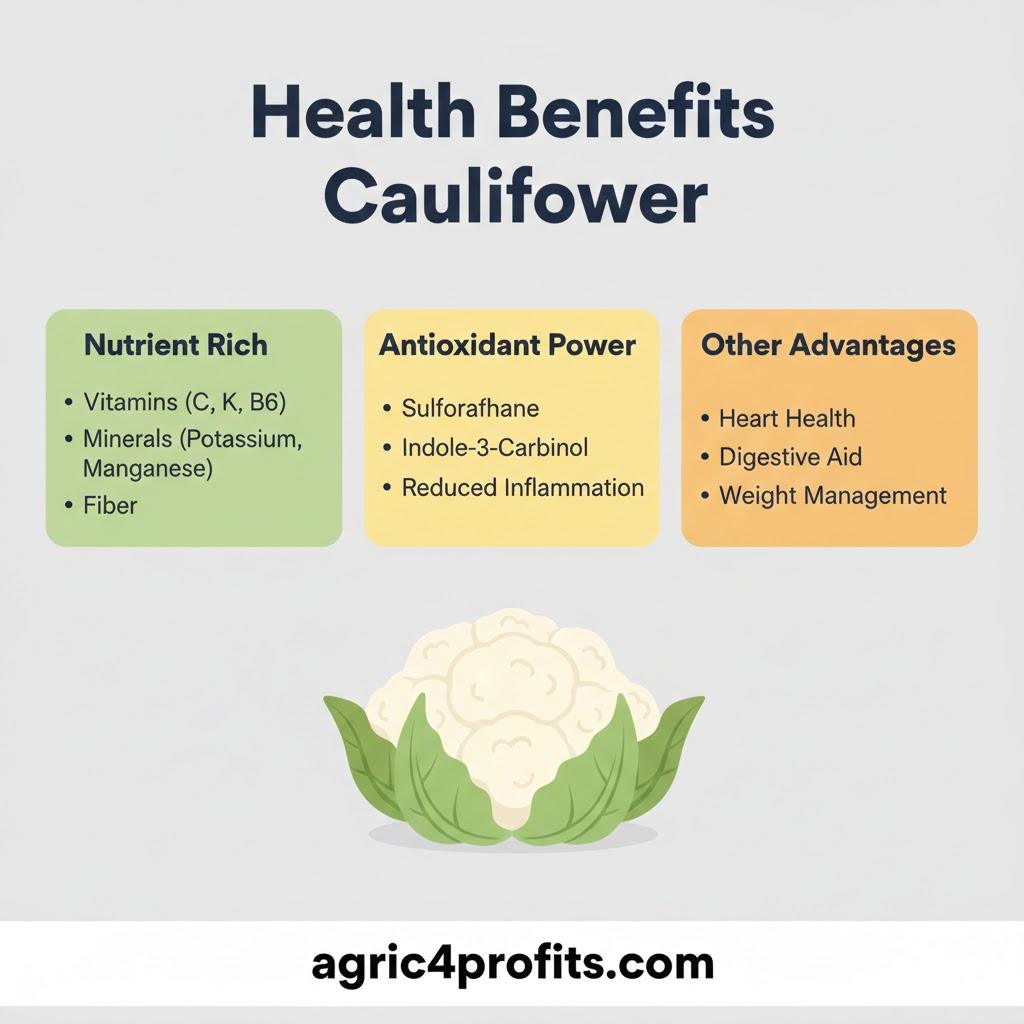
| Aspect | Summary |
|---|---|
| Nutritional Profile | Low-calorie (25 kcal/cup), high in vitamin C (77% RDI), vitamin K (20%), folate, B6, fiber (3g), choline, potassium, manganese; 92% water content. |
| Key Bioactive Compounds | Sulforaphane, glucosinolates, isothiocyanates, carotenoids, flavonoids, indole-3-carbinol (I3C). |
| Digestive Health | High fiber promotes gut bacteria, prevents constipation/IBD, supports regularity and colon health. |
| Cancer Risk Reduction | Glucosinolates/sulforaphane inhibit tumor growth; strongest evidence for colon, prostate, lung, stomach cancers in observational and lab studies. |
| Heart Health | Antioxidants and sulforaphane reduce inflammation, support blood vessels, lower hypertension and CVD risk. |
| Weight Management | Low calorie, high fiber/water/filling; excellent low-carb substitute for rice, grains, legumes. |
| Brain & Detox Support | Choline for brain development/memory; sulfur compounds and antioxidants aid liver detox pathways. |
| Anti-Inflammatory | I3C and other compounds reduce chronic inflammation at genetic level, protecting against related diseases. |
| Other Benefits | Boosts immunity (vitamin C), bone health (vitamin K), eye health, hormonal balance; versatile in low-carb recipes. |
| Safety/Considerations | Generally safe; may cause bloating/gas; monitor vitamin K intake if on blood thinners like warfarin. |
Frequently Asked Questions
1. Why is cauliflower considered a superfood? It is nutrient-dense, low in calories, high in fiber, vitamins (especially C and K), choline, and powerful antioxidants like sulforaphane and glucosinolates that support immunity, detoxification, and disease prevention.
2. How does cauliflower help with weight loss? Low in calories (25 per cup), high in fiber and water (92%), it promotes fullness, slows digestion, and serves as a low-carb substitute for rice, potatoes, or grains, reducing overall calorie intake.
3. What makes cauliflower good for cancer prevention? Its glucosinolates break down into sulforaphane and isothiocyanates, which inhibit cancer cell growth, induce detoxification enzymes, and show protective effects against colon, prostate, lung, breast, and other cancers in lab and observational studies.
4. How does cauliflower support heart health? Sulforaphane and antioxidants reduce inflammation, improve blood vessel function, lower blood pressure, and are linked to decreased cardiovascular disease risk in studies of cruciferous vegetable intake.
5. Is cauliflower high in fiber and why does that matter? Yes, one cup provides 3g fiber (10% daily needs), feeding gut bacteria, reducing inflammation, preventing constipation/IBD, and lowering risks of heart disease, diabetes, and obesity.
6. What is choline in cauliflower and why is it important? Cauliflower is a top plant source of choline (~45mg/cup), essential for cell membrane integrity, brain development, neurotransmitter production, DNA synthesis, and preventing liver fat accumulation.
7. Can cauliflower help with inflammation? Yes, compounds like indole-3-carbinol (I3C) and sulforaphane reduce chronic inflammation at the genetic level, helping protect against inflammation-related diseases including cancer and heart conditions.
8. How can I add more cauliflower to my diet? Eat it raw (with dip), steam, roast, sauté, or use as low-carb alternatives: cauliflower rice, pizza crust, mash, tortillas, hummus, or mac and cheese.
9. Are there any risks or side effects from eating cauliflower? Generally safe; may cause gas or bloating in some people. Those on blood thinners (e.g., warfarin) should maintain consistent vitamin K intake due to cauliflower’s content.
10. How does cauliflower compare to other cruciferous vegetables? Like broccoli, kale, and cabbage, it is rich in glucosinolates/sulforaphane and offers similar anti-cancer, anti-inflammatory, and detox benefits, but its mild flavor and versatility make it especially easy to incorporate regularly.
Do you have any questions, suggestions, or contributions? If so, please feel free to use the comment box below to share your thoughts. We also encourage you to kindly share this information with others who might benefit from it. Since we can’t reach everyone at once, we truly appreciate your help in spreading the word. Thank you very much for your support and for sharing!
Disclaimer: This article is for educational and informational purposes only. The health benefits described are based on scientific research and traditional knowledge. They ayre not a substitute for professional medical advice, diagnosis, or treatment. Always consult a healthcare professional before using any herb or natural remedy for medical purposes.
Read Also: Why Term Insurance Could Be the Right Choice for You
This article definitely gave me a better understanding about the health benefits of cauliflower. Thanks a lot for posting!
Glad i could help!