


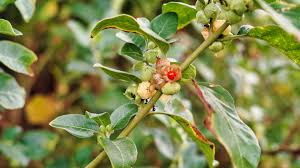
Ashwagandha (Withania somnifera), often called “Indian Winter cherry” or “Indian Ginseng,” was a mainstay of traditional Indian medicine. You may be familiar with Ashwagandha Churna, a powder that has been carefully sieved and can be combined with water, ghee, or honey.
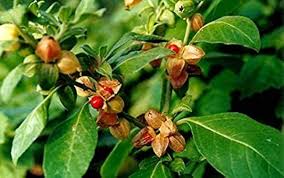
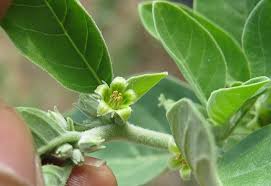
This species is a little, delicate shrub that can reach heights of 35–75 cm (14–30 in). Radially growing from a stem in the center are tomentose branches. The dull green, elliptic leaves are typically 10–12 cm (3.9–4.7 in) long. The bell-shaped, tiny, green blossoms are little in size. Orange-red is the color of ripe fruit.
The roots of Ashwagandha or Withania somnifera have historically been used to cure a number of ailments, including memory loss, arthritis, constipation, insomnia, skin diseases, stress, digestive problems, and diabetes. The fruits, seeds, and even the leaves have all been used to treat a variety of ailments. Let’s examine each one separately.
Read Also: Health Benefits of Ashwagandha (Withania somnifera)
10 Health Benefits of Ashwagandha (Withania somnifera)
Ashwagandha’s main chemical components give it its distinct therapeutic benefits. The way it works is that all plants contain a variety of unique substances known as phytochemicals.
Simply put, these phytochemicals are present in plants because they are unable to move, and they serve specialized functions. Some phytochemicals respond to antibodies that are assaulting by acting as an immune system.
Some are there because the plant can’t move to protect itself and needs to dissuade insects from devouring them. Some phytochemicals merely aid in the plant’s rapid and robust growth.
Because ashwagandha contains a lot of these phytochemicals, it is exceptionally helpful and has a positive impact on many different bodily systems.
1. Reliefs Anxiety
Given that ashwagandha is an adaptogen, it aids the body in coping with stress. It can improve mental performance and aid in reducing anxiety and depressive symptoms.
This herb can lessen symptoms in patients with stress and anxiety problems, according to several well-controlled human research. Anxiety and insomnia were reduced by an average of 69% in a 60-day study of adults with chronic stress, compared to 11% in the placebo group, for those who took ashwagandha supplements.
If you regularly suffer stress, you can massage your body with a traditional Ayurvedic oil that contains Ashwagandha as one of the main constituents.
2. For Inflammation
The body’s natural response to ailments like infection, poisons, and trauma is inflammation. To regain itself, the body will naturally develop an anti-inflammatory reaction.
The body, however, can’t control the inflammatory response when there is persistent pain. Chronic pain and unbalance are the results.
Numerous Ayurvedic botanicals treat persistent, excessive inflammation. One such herb that has demonstrated efficacy in decreasing inflammation is ashwagandha. Tea made from the leaves of ashwagandha is effective at reducing inflammation.
3. Prevents Acne
The skin is protected against infections or acne due to the antibacterial and antimicrobial characteristics of ashwagandha root.
Additionally, it increases the amount of collagen in the skin, which delays skin aging. Try natural face packs like powdered ashwagandha if you have acne. Ashwagandha is one of the essential Ayurvedic ingredients in the Nimrah Face Pack from Kama Ayurveda.
This acne treatment treats breakouts and blackheads, lessens scarring, evens out skin tone, and soothes inflammation.
4. Fights Infection And Boost Immune System
Did you know that one of the 15 constituents in the renowned Lakshadi Thailam, known for treating fever, preventing infections, and increasing immunity, is ashwagandha? Due to its many skin and health advantages, Lakshadi Thailam is utilized as a body massage oil for infants.
Inflamed or sensitive skin is calmed and soothed by ashwagandha. Therefore, it’s perfect for newborns’ sensitive skin. Even better, you can give your infant natural soap that has ashwagandha as one of the main constituents.
Read Also: 5 Powerful Health Benefits of Aloe Vera (Aloe Barbadensis Miller)
5. For Cancer
According to certain research, the ashwagandha component withaferin aids in the induction of apoptosis, or the cancer cells planned demise.
It also hinders the development of new cancer cells in several ways. Withaferin affects the function of cancer cells by encouraging the production of reactive oxygen species (ROS) inside the cells.
Additionally, studies indicate that it might aid in the treatment of several cancers, including ovarian, breast, lung, colon, and brain cancer.
In one such trial, withaferin alone or in combination with an anti-cancer medicine significantly slowed the growth of ovarian tumors in rats that had them.
The procedure is also thought to stop cancer from spreading to other organs.
6. For Alzheimer’s Treatment
According to research, ashwagandha prevents the development of beta-amyloid plaques. A person has a neurodegenerative disease like Alzheimer’s, such as plaques, which are thought to be fatal to brain cells, and form in their brains.
Researchers at the National Brain Research Center (NBRC) tested Alzheimer’s-affected mice. The mice’s cognitive ability considerably improved after a few days of treatment.
After a month, the mice’s brain function had restored to normal, and the number of amyloid plaques in their brains had decreased.
According to studies, ashwagandha stimulates a protein in the liver that clears amyloid from the brain rather than directly altering brain chemistry.
7. Treating Asthma
A respiratory condition known as asthma can result in chest tightness, coughing, wheezing, and shortness of breath. Asthma patients may find Ashwagandha to be a successful all-natural treatment option.
Asthma can be brought on by a variety of things, including dust, pollen, stress, anxiety, pollution, and others. Treatments for adult and pediatric asthma are listed in various Ayurveda literature. It entails the use of ayurvedic drugs and herbs in addition to a considerable lifestyle adjustment.
When ashwagandha roots are ingested, stress is reduced, which benefits respiratory conditions like this.
8. For Treating Ulcer
According to research, ashwagandha may be a natural ulcer treatment. Ulcers that can form from injury to the stomach lining are called gastric ulcers. Ulcer risk can also rise as a result of stress, both psychological and physical.
Not only does ashwagandha cure ulcers, but it can also lessen their risk. The studies also show that Ashwagandha, either alone or in combination with other herbs, can lower stomach acid levels, preventing the development of painful ulcers.
Read Also: Soybean Meal: Health Benefits, Healing Powers, and Uses
9. For Diabetes
Fighting diabetes is challenging because you have to adjust your lifestyle and add a new medication regimen to your daily routine.
The adverse effects of all the pills you take are the most severe aspect of it. The Ayurvedic medications, however, are meant to treat without causing any negative effects of their own.
They are renowned for totally curing illness and restoring your body and mind to health.
Ashwagandha controls the body’s insulin production in the treatment of diabetes. Enhancing the blood’s ability to break down glucose, promotes the release of insulin into the bloodstream.
By doing this, you may be confident that your body is storing carbohydrates that are less hazardous.
As a result, when you regularly ingest Ashwagandha extracts, your blood sugar levels stay low. Ashwagandha can also influence the body’s general metabolism, which will improve waste disposal and general wellness.
It has been demonstrated to be particularly successful for those with Type 2 diabetes.
10. For Weight Loss
Do you frequently worry about putting on weight? You can reduce and maintain your weight with the use of ashwagandha. Ashwagandha is also sold in capsule form, although it is recommended that you take it as a powder produced from the dried leaves of the plant.
One teaspoon of ashwagandha powder can be combined with a glass of milk and some honey. Cardamom can be included to enhance flavor, speed metabolism, and aid digestion.
The advantages of including ashwagandha in your diet and routine cosmetics were explored in this list. Although there are many advantages, this list is not all-inclusive.
Read Also: 10 Amazing Health Benefits of Annatto (Bixa Orellana)
Nutritional value of Ashwagandha (Withania somnifera)
1. Protein: Ashwagandha root powder contains 3.9 grams per 100 grams, which supports muscle repair, immune function, and hormone production.
2. Carbohydrates: With 49.9 grams per 100 grams, carbohydrates provide a sustained energy source, aiding in metabolic processes and physical endurance.
3. Crude Fiber: Offering 32.3 grams per 100 grams, this dietary fiber promotes digestive health, regulates bowel movements, and helps maintain blood sugar levels.
4. Fat: At 0.3 grams per 100 grams, the low fat content contributes to cell membrane integrity and absorption of fat-soluble vitamins without excess calories.
5. Ash (Minerals): Containing 4.41 grams per 100 grams, this represents overall mineral content essential for bone health, electrolyte balance, and enzymatic reactions.
6. Calcium: With 23 milligrams per 100 grams, calcium strengthens bones and teeth, supports muscle contractions, and aids in nerve signaling.
7. Iron: Providing 3.3 milligrams per 100 grams, iron is crucial for oxygen transport in the blood, energy production, and preventing anemia.
8. Vitamin C: At 5.8 milligrams per 100 grams, this vitamin boosts immune function, acts as an antioxidant, and enhances collagen synthesis.
9. Withanolides: Key steroidal lactones like withaferin A and withanolide A are present, offering adaptogenic properties that help combat stress and inflammation.
10. Alkaloids: Including withanine and somniferine, these compounds contribute to sedative and anti-anxiety effects, supporting nervous system health.
Scientific Evidence and Case Studies on Ashwagandha (Withania somnifera)
1. Lopresti et al. (2019): In this randomized, double-blind, placebo-controlled study involving stressed, healthy adults, supplementation with 240 mg of a standardized ashwagandha extract for 60 days significantly reduced scores on the Hamilton Anxiety Rating Scale and showed a near-significant reduction on the Depression, Anxiety, and Stress Scale-21 compared to placebo, proving benefits in reducing anxiety and stress through modulation of the hypothalamus-pituitary-adrenal axis. (Lopresti, A. L., Smith, S. J., & D’Andrea, A. (2019). An investigation into the stress-relieving and pharmacological actions of an ashwagandha (Withania somnifera) extract: A randomized, double-blind, placebo-controlled study. Medicine, 98(37), Article e17186.)
2. Gopukumar et al. (2021): In a randomized, double-blind, placebo-controlled study with 125 stressed adults, daily 300 mg ashwagandha root extract for 90 days improved cognitive functions like memory and focus, reduced stress levels, lowered serum cortisol, and enhanced sleep quality and psychological well-being. (Gopukumar, K., Thanawala, S., Somepalli, V., Thamatam, V. B., & Chauhan, S. (2021). Efficacy and safety of Ashwagandha root extract on cognitive functions in healthy, stressed adults: A randomized, double-blind, placebo-controlled study. Evidence-Based Complementary and Alternative Medicine, 2021, Article 8254344.)
3. Chauhan et al. (2022): An 8-week randomized, double-blind, placebo-controlled trial in adult males with low sexual desire found that 600 mg daily ashwagandha root extract improved sexual well-being and increased serum testosterone levels. (Chauhan, S., Salve, J., & Pandit, S. (2022). Effect of standardized root extract of ashwagandha (Withania somnifera) on well-being and sexual performance in adult males: A randomized controlled trial. Health Science Reports, 5(4), Article e741.)
4. Speers et al. (2021): This review of studies showed ashwagandha root and leaf extracts reduced stress, anxiety, depression, and insomnia symptoms in animal and human trials via modulation of HPA, GABAergic, and serotonergic pathways. (Speers, A. B., et al. (2021). Effects of Withania somnifera (Ashwagandha) on stress and the stress-related neuropsychiatric disorders anxiety, depression, and insomnia. Current Neuropharmacology, 19(9), 1468-1495.)
5. Wiciński et al. (2023): In this review, ashwagandha root extract enhanced thyroid function by increasing T3 and T4 while decreasing TSH, normalized cortisol in adrenals, and improved reproductive hormones like LH and FSH in men, benefiting endocrine health and fertility. (Wiciński, M., & others. (2023). Can Ashwagandha benefit the endocrine system?-A review. International Journal of Molecular Sciences, 24(22), Article 16513.)
Frequently Asked Questions About Ashwagandha (Withania somnifera)
1. What is Ashwagandha (Withania somnifera)? It is an evergreen shrub native to India, Africa, and the Middle East, used in Ayurvedic medicine for its adaptogenic properties from the root and leaves.
2. What are the main health benefits of ashwagandha? It reduces stress and anxiety, improves sleep, enhances cognitive function, boosts testosterone and sexual well-being in men, and supports endocrine health.
3. How can ashwagandha be used? Typically as root extract in capsules, powders, or teas, with dosages ranging from 300-600 mg daily, but consult a healthcare provider for personalized advice.
4. Are there any side effects of ashwagandha? Common ones include mild gastrointestinal upset, drowsiness, or headache; it’s generally well-tolerated for short-term use up to 3 months.
5. Is ashwagandha safe for everyone? Not recommended for pregnant or breastfeeding women, those with autoimmune diseases, or on thyroid medications due to potential interactions; long-term safety is unknown.
6. Can ashwagandha help with stress and anxiety? Yes, studies show it lowers cortisol and reduces anxiety symptoms by modulating the HPA axis.
7. Does ashwagandha improve sleep? It can enhance sleep quality, especially in stressed individuals, by alleviating insomnia and promoting relaxation.
8. What nutrients are in ashwagandha? It includes proteins, carbohydrates, fiber, minerals like iron and calcium, vitamin C, and bioactive compounds such as withanolides and alkaloids.
9. Can ashwagandha boost testosterone? Research indicates it increases testosterone levels in men, improving sexual performance and fertility.
10. How does ashwagandha affect hormones? It balances thyroid hormones, reduces cortisol, and supports reproductive hormones, benefiting overall endocrine function.
Do you have any questions, suggestions, or contributions? If so, please feel free to use the comment box below to share your thoughts. We also encourage you to kindly share this information with others who might benefit from it. Since we can’t reach everyone at once, we truly appreciate your help in spreading the word. Thank you very much for your support and for sharing!
Disclaimer: This article is for educational and informational purposes only. The health benefits described are based on scientific research and traditional knowledge. They are not a substitute for professional medical advice, diagnosis, or treatment. Always consult a healthcare professional before using any herb or natural remedy for medical purposes.
Read Also: Water Chemistry Elements and their Characteristics