



List of 23 Healing Herbs in the Bible
The fact that the Bible is the most sold book in the world is not a hoax because the Bible is not only the collection of sacred manuscripts that captured the divine relationship between humans and their God but also the source of knowledge.
All kinds of knowledge you could find in the Bible, including knowledge about healing and the list of healing herbs in the Bible below will surprise you that even since ancient time those healing herbs have been proven to be effective for human health.

1. Aloe Vera
The health benefits of aloe vera have been well known since ancient times. Aloe vera is used as one of the healing herbs due to its antioxidant content, fiber, and fatty acids. So, aloe vera is not only good to treat some skin conditions but also great to help improving digestive system.
2. Anise
Bible mentioned Anise as one of the effective healing herbs with specific reasons because even in modern world, anise is still used as home remedy to stomach problems and as anti-flatulence agent.
3. Cassia
Don’t mistake cassia with cinnamon because though they are completely coming from different genus. Cassia is well known for its aromatic aroma similar to cinnamon with excellent healing properties for healthy hair care.
4. Cinnamon
There are two types of cinnamon but the health benefits of Ceylon cinnamon is the one that mentioned in the Bible. This type of cinnamon is good for diabetic patients because it could normalize the insulin level and reduce the insulin resistance.
5. Cumin
Recent studies about the health benefits of cumin seeds stated that the seeds of this healing herb contain specific properties well known as cuminaldehyde that is useful to fight diabetes.
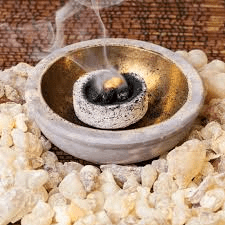
6. Frankincense
In the Bible, frankincense oil is mentioned as one of the gifts brought for baby Jesus by the three wise men. Today, people are familiar with the health benefits of frankincense oil to treat some oral conditions and promote healthy digestion.
Read Also: Health Benefits of taking Watermelon Fruit during Early Pregnancy
7. Garlic
The garlic mentioned in the Bible is the same garlic you could find in your kitchen. Surely you have known that one of the health benefits of eating fresh garlic is good for cholesterol and manage the high blood pressure.
8. Hyssop
Hyssop comes from the same family as mint. Since ancient time, hyssop has been well known as natural expectorant to treat light cough and sore throat. In modern world, hyssop is possible to help reducing the symptoms of high blood pressure due to its anti-hyperglycemia properties.
9. Mustard
There are a lot of scientific studies about mustard and some of them are focusing on how mustard could help preventing the development of cancerous cells.
10. Myrrh
Beside frankincense oil, myrrh oil is the other gifts brought by three wise men for baby Jesus. Myrrh is well known as essential oil with essential healing properties such as anti-bacterial agents to help fighting viral infections, astringent properties to prevent blood clotting and the fatty acids are good for brain and nerve system.
11. Saffron
Saffron is the most expensive herb in the world with amazing healing properties. The health benefits of saffron to treat stomach upsets and smallpox have been well known since ancient time.
Read Also: 18 Health Benefits of Ginger and Garlic Tea to Lose Weight and others
12. Mandrake
Mandrake is believed to have magical properties due to its anticarcinogenic properties. However, mandrake is also poisonous, so using it without professional supervision is forbidden.

13. Rue
In Bible, rue is well known as peganon. Rue has bitter flavor but contains amazing healing properties used to treat stomach problems and bruised.
Bitter Herbs
Below is the list of bitter herbs and health benefits mentioned in the Bible used by the Hebrews during Passover Seder ceremony which symbolizes the slavery experienced by Jews in Ancient Egypt to make sure that people won’t forget about that history.
14. Chicory
Chicory is the herbal plant which comes from dandelion family. Today, the root of chicory is used as coffee substitute which is good to treat digestive issue because it contains powerful probiotic properties.
15. Coriander
Both health benefits of coriander seeds and leaves are great for diabetes. The mineral contents of this herb are also good to prevent osteoporosis and promote healthy bones.
16. Dandelion
Dandelion is not only beautiful flower but its roots contain a lot of health benefits. Dandelion root is commonly consumed as herbal tea with health benefits as body detoxification, prevent bloating and promote healthy digestion.
17. Endive
Instead of healing herbs, perhaps endive is well known as bitter vegetables. However, aside from its bitter flavor, the health benefits of endive are to help overcoming anorexia and good to lower the high blood pressure.
18. Horehound
Horehound is well known as natural expectorant to help overcoming conditions like sore throat and light cough. So, in modern world, horehound is actually one of the main ingredients you could find in cough syrup.
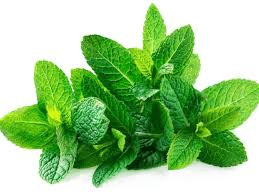
19. Mint
Who doesn’t know the amazing healing properties of mint? The unique flavor and aroma of mint leaves are reasons why this healing herb is well known since ancient time and even mentioned in the Bible. Consuming mint leaves regularly could help improving immunity system.
20. Sorrel
Sorrel is well known as the natural source of some essential vitamins, minerals and antioxidants like flavonoids. So, sorrel is excellent to fight cancer and good for skin and hair. As rich of potassium, sorrel is also good to decrease the risk of cardiovascular diseases.
Read Also: Health Benefits of Paw-Paw (Papaya) Leaves for Cancer and Others
21. Sow-thistle
Sow-thistle comes from the sunflower family with bright yellow color of flower. In modern world, sow-thistle is used to treat some hair conditions especially baldness in men.
22. Wild Lettuce
Just like sow-thistle, wild lettuce is also coming from sunflower family. All parts of this plant from its seeds, leaves and fruits are used as herbal medicine to treat several health conditions.
23. Wormwood
Though wormwood has bitter flavor but this healing herb is commonly consumed in the form of herbal tea. The health benefits of wormwood tea are as anti-microbial agents, anti-cancer properties, anti-malaria and so on.
The problem with today society is, sometime they only believe on modern medical treatment. Well, it is actually okay because most of modern medical treatment has been proven through thorough scientific studies.
However, it doesn’t mean that you can underestimate the home remedy solution like healing herbs mentioned above, because even Bible, the most truthful book in the world mentioned them.
Scientific Evidence and Case Studies on Healing Herbs in the Bible
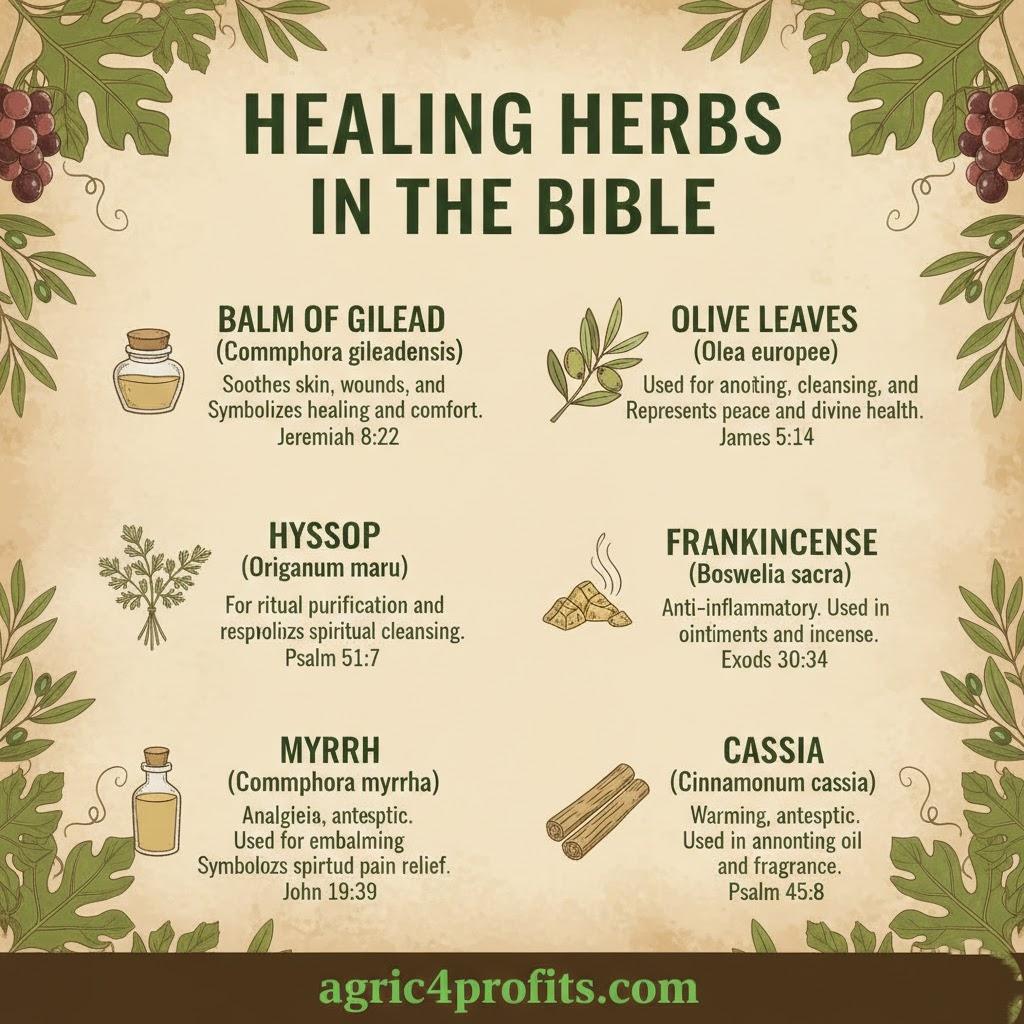
1. Aloe Vera: Extensive research confirms aloe vera’s antioxidant, anti-inflammatory, and wound-healing properties, with studies showing effectiveness in treating skin conditions, burns, and digestive issues through polysaccharides and anthraquinones.
2. Garlic: Numerous clinical trials demonstrate garlic’s cardiovascular benefits, including blood pressure reduction and cholesterol management, attributed to allicin and sulfur compounds with proven antimicrobial and anti-inflammatory effects.
3. Cinnamon (Ceylon): Studies indicate Ceylon cinnamon improves insulin sensitivity and lowers fasting blood glucose in type 2 diabetes patients, supporting its traditional use for blood sugar regulation.
4. Frankincense: Clinical evidence shows boswellic acids in frankincense reduce inflammation and support oral health, with anti-cancer potential observed in lab studies on cell lines.
5. Myrrh: Research validates myrrh’s antibacterial, antifungal, and astringent properties, effective against oral infections and supporting wound healing through sesquiterpenes.
Nutritional Value Of Healing Herbs in the Bible
1. Antioxidants and Polyphenols: Many (e.g., cinnamon, cumin, saffron, sorrel) are rich in flavonoids and phenolic compounds that combat oxidative stress and support cellular health.
2. Essential Minerals: Herbs like coriander, dandelion, and sorrel provide potassium, magnesium, iron, and calcium for bone health, blood pressure regulation, and energy metabolism.
3. Vitamins (A, C, B-complex): Dandelion, chicory, mint, and endive supply vitamin C for immunity, vitamin A precursors for vision, and B vitamins for metabolism and nerve function.
4. Dietary Fiber and Prebiotics: Chicory, dandelion, and endive roots contain inulin and fiber that promote gut health, support beneficial bacteria, and aid digestion.
5. Sulfur Compounds and Volatile Oils: Garlic, anise, cumin, and hyssop deliver organosulfur compounds and essential oils with antimicrobial, anti-flatulent, and expectorant properties.
6. Anti-inflammatory Compounds: Frankincense, myrrh, and wormwood contain boswellic acids, terpenes, and sesquiterpenes that reduce inflammation and support immune balance.
7. Low-Calorie Nutrient Density: Most herbs are low in calories yet high in bioactive compounds, making them excellent for overall wellness without adding significant energy intake.
Summary of Healing Herbs in the Bible
| Aspect | Key Points |
|---|---|
| Primary Benefits | Digestive support, blood sugar regulation, immune boost, anti-inflammatory effects, antimicrobial action, cardiovascular health, skin/wound healing. |
| Highlighted Herbs | Aloe vera, garlic, cinnamon, frankincense, myrrh, anise, cumin, mint, dandelion, chicory, saffron, wormwood. |
| Biblical Context | Mentioned in Old/New Testament; bitter herbs used in Passover; gifts (frankincense/myrrh) symbolize healing/divine provision. |
| Modern Validation | Backed by studies for diabetes, cholesterol, inflammation, digestion, antimicrobial effects; some (e.g., mandrake) require caution due to toxicity. |
| Recommendations | Use culinary amounts safely; consult professionals for therapeutic doses; prefer fresh/organic; cook/prep properly; combine with balanced diet. |
Frequently Asked Questions
1. Are the healing herbs mentioned in the Bible still effective today?
Yes, many (garlic, cinnamon, aloe vera, anise, cumin) have been validated by modern science for digestive, anti-inflammatory, antimicrobial, and blood sugar benefits.
2. Which Biblical herb is best for blood sugar control?
Cinnamon (especially Ceylon) and cumin are frequently studied and shown to improve insulin sensitivity and lower blood glucose levels.
3. Is frankincense and myrrh safe to use today?
Yes, when used appropriately (essential oils diluted or in incense/food-grade forms), they offer anti-inflammatory and antimicrobial benefits, but consult a professional for internal use.
4. Why are bitter herbs important in the Bible?
Bitter herbs (chicory, endive, dandelion, etc.) were eaten during Passover to symbolize the bitterness of slavery in Egypt, reminding people of their history.
5. Can these herbs replace modern medicine?
No, they complement but do not replace medical treatment. Use them as supportive remedies and consult healthcare providers for serious conditions.
6. Which herb from the list helps with digestion the most?
Anise, aloe vera, mint, dandelion, and chicory are particularly effective for relieving stomach issues, flatulence, constipation, and promoting gut health.
7. Is mandrake safe to use?
No, mandrake is toxic and potentially dangerous. It should only be used under strict professional supervision, if at all.
8. How does garlic from the Bible compare to modern garlic?
It is the same species; fresh garlic retains allicin and sulfur compounds that support heart health, immunity, and cholesterol management.
9. Are these herbs good for immunity?
Yes, many (garlic, mint, wormwood, saffron) have antimicrobial and antioxidant properties that strengthen the immune system.
10. Why is saffron considered special among Biblical herbs?
It is the world’s most expensive spice with potent antioxidant, anti-inflammatory, and mood-enhancing effects, used historically for various ailments.
Do you have any questions, suggestions, or contributions? If so, please feel free to use the comment box below to share your thoughts. We also encourage you to kindly share this information with others who might benefit from it. Since we can’t reach everyone at once, we truly appreciate your help in spreading the word. Thank you very much for your support and for sharing!
Disclaimer: This article is for educational and informational purposes only. The health benefits described are based on scientific research and traditional knowledge. They ayre not a substitute for professional medical advice, diagnosis, or treatment. Always consult a healthcare professional before using any herb or natural remedy for medical purposes.
Read Also: Global View of Forestry Sector and Economic Development