


There are certain recommended routine activities that should be carriedon a rabbitry farm to ensure the health and survival as well as optimum performance of the rabbits. Meanwhile, throughout this issue, we have placed a lot of emphasis on security when constructing or purchasing your structures and choosing your equipment. Once you have a safe rabbitry in place, security should still be a priority.
This security extends
beyond protecting rabbits from outside threats and includes their
safekeeping in all ways, from vigilant temperature control to regular
feeding schedules.
The best way to make sure your rabbits stay protected is to develop the following consistent routines:
1. Visitor
guidelines
A rabbit raiser called
me up recently and said his does would not take care of their
litters, and one of his bucks mysteriously died, and did I have any
idea why. It took a few questions, but I finally learned that three
cats resided in his rabbit shed.
Cats and rabbits are
natural enemies. Cats eat rabbits when they can catch them, and if
they can’t, they can still worry rabbits so much that they race
around frantically in their hutches until they die of fright or,
probably more accurately, heart failure. The does can also become so
worried that they neglect their maternal duties and scatter and even
eat their babies.
I wouldn’t let a cat
or a dog, not even a friendly one, into my rabbit barn. The rabbits
might not recognize its friendliness, and the animal might be
carrying tapeworms that could be passed on to the rabbits. An
infected dog or cat can leave behind worm eggs in their feces, and if
the eggs are consumed by a rabbit, these will form cysts in the
intestines and under the skin. Dogs and cats should not be in the
rabbitry or near any feed, utensils, or nest box bedding, such as
straw or shavings.
I wouldn’t let
boisterous children into my rabbitry either, because they too might
worry the rabbits. I wouldn’t even let in other adults who are
rabbit raisers unless I knew they ran a disease-free rabbitry,
because I don’t want my herd to be infected. Visitors who do not
have rabbits are welcome, of course, but you should first find out
why they want to be there.
There are existing
reports of people from animal “rescue” groups letting rabbits out
of hutches. If you obtain a new rabbit from another raiser,
quarantine it in a hutch in your garage or outdoors for a couple of
weeks before you let it join the rabbitry.
You should also
eliminate rats and mice, which can eat feed and may carry disease.
These rodents will often urinate on stored feed bags or in the hopper
feeders. In addition, they leave their droppings all over the place
and may get into hutches and kill baby rabbits or frighten the does
to the point that they will kill their litters.
If you house chickens
or other livestock in your building, it’s a good idea to partition
the rabbit area to keep them out. Chickens love to hop up on rabbit
hutches and deposit their droppings. Goats, sheep, pigs, cows and
horses should have their own space specially designed for them.
Rabbits are easily
startled, and a surprise can be especially detrimental when a doe is
kindling. You want to keep the environment calm and quiet – no
grunting, mooing, crowing, or honking. What’s good for the goose
may be good for the gander but not for the rabbit.
When I’m not around, I keep a padlock on my barn door, because I don’t want anyone going in there without my knowledge.
Read Also: All You Need to Know About Rabbit Housing
2. Feeding and
Breeding Routines
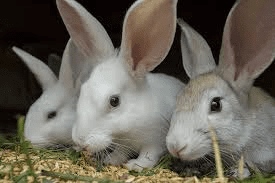
Security for my rabbits also means a regular feeding schedule. It doesn’t really matter whether you feed your rabbits once or twice a day, but you should do it at the same time every day, because they will come to expect it. If I enter the barn at feeding time, they are glad to see me and are active but calm. If I go in at another time, I greet them by saying, “Hi, gang.” Otherwise, they are nervous until they can see me.
I also like a regular
routine. I like to mate my rabbits on weekends so that youngsters
will be born at midweek 31 days later, when neighborhood children are
in school and things are quiet. This also means that I put in the
nest box during a weekend, which is useful because I am less likely
to forget to check their hutch cards for their due dates during the
weekend. I like to palpate and test mate at two weeks, again on the
weekend.
My routine includes
placing weanlings into their own hutches – does together for a few
weeks and bucks in separate quarters.
At this time, I tattoo
their ears and enter their personal information in my stock record
book. I record their ear number, date of birth, sex, the numbers of
the sire and dam, and any special remarks, such as the quality of
their fur or body type. The pertinent information also goes onto a
new card for each hutch.
3. Good housekeeping
 Rabbit Houses
Now that you’ve put
together an excellent rabbitry, complete with all-wire hutches,
you’ll want it to continue functioning at a high level.
Overall cleanliness
will do a lot toward making your life and those of your rabbits a lot
more pleasant. The lack of it can lead to disease and be a turnoff to
visitors, including potential customers. You, the rabbits, your
family, neighbors and customers will appreciate your diligence in
cleaning, even if they don’t come right out and thank you. It’s
the finishing touch to a rabbitry and will help you raise a healthy
and productive herd.
Before taking the
weanlings from their mother, I clean and disinfect their new homes.
First I clean with a
wire brush and burn off hair if necessary, making sure not to keep
the torch on the wire longer than necessary to remove the hair, so it
won’t damage the galvanizing and ultimately rust the cage. The
torch cleans the cage but does not disinfect it, so I follow with a
spray disinfectant.
You can use a
commercial disinfectant according to the product directions, or make
your own by mixing an ounce of household bleach in a quart of water.
A bottle sprayer works fine for a small operation, while a tank
sprayer is best if you have a lot of hutches. I like to let the hutch
dry all day after I spray the disinfectant, then I spray plain water
and let that dry before the rabbits go in.
While you are washing, disinfecting, and rinsing the hutch, don’t forget to do the same to the nest boxes, feeders and pans. You can spray them or dip them in a bucket of disinfectant, then rinse and dry them in the sun, if possible. If you use the all-wire nest boxes and give them a new corrugated cardboard liner for each new litter, you will save yourself some work and time and will always have a germ-free box.
 Rabbits
Regularly clean off hair, cobwebs and dirt from the tops of cages, as well as suspension wires, legs and any other supporting members. Dust can lead to respiratory problems. Brush hutch floors every day with a wire brush to get rid of any manure that has not fallen through. Make the brushing a part of your daily routine.
Read Also: Comprehensive Guide on How to start Cockerel Farming Business
It won’t take long,
it will save you a lot of hassle in the long term, and you are not
likely to forget if you make it a daily occurrence. Keeping your
cages clean and dry will help avoid sore hocks, too. If the rabbits
have wet hair on their feet, the hair doesn’t shield the skin, and
sores can develop.
Because my barn is
well ventilated and sits on more than a foot of gravel with good
drainage, the manure under the hutches stays pretty dry. Wet manure
attracts flies and creates ammonia fumes, so it should be removed
regularly and not left to sit for long. Because the manure stays dry
under my hutches, I let it stay there until I need it for the garden
or the compost heap, which is conveniently located behind the barn.
I don’t move manure
around in hot weather, but instead give it a good sprinkling of
granulated agricultural limestone. This neutralizes the alkalinity of
the ammonia and makes it a better candidate for the compost. If urine
stains develop on a concrete or wood floor, a couple of ounces of
vinegar in a bucket of water should take care of them.
A small greenhouse on
the south side of my rabbit barn helps keep the fly population way
down in the summer. When the plants are in the ground outdoors and
the greenhouse is empty, flies tend to congregate in there. At the
same time, spiders weave webs in it and love to catch and kill flies,
so I call it my “website.”
Frequently Asked Questions
We will update this section soon.