


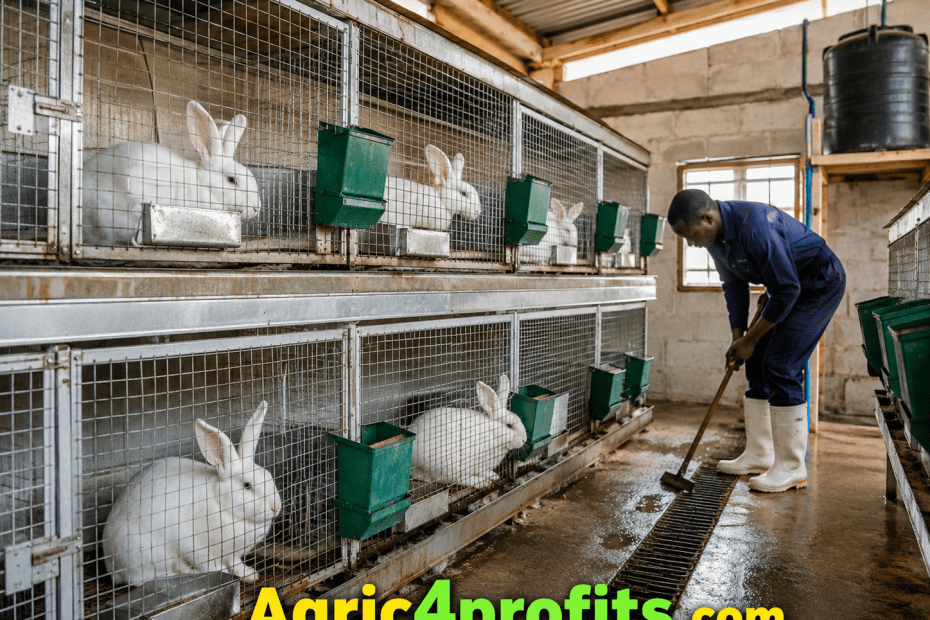
The success of rabbit farming begins with housing that shields animals from heat, rain, predators, injury, and unnecessary stress, while still supporting breeding, feeding, cleaning, and daily supervision by the keeper.
Well-designed accommodation also improves comfort, reduces disease pressure, and helps rabbits perform better. For that reason, a rabbit house must be practical, affordable, and easy to manage without sacrificing ventilation or hygiene.
Because rabbits are quiet and their droppings smell less offensive than poultry or piggery waste, the rabbitry can be located near homes or work areas, provided the site remains dry and secure.
The best housing system is one that matches climate, available capital, labour, and the farmer’s management style. Good planning also makes it easier to follow advice from rabbit housing and equipment guides.
Before construction begins, the keeper should study space needs, floor type, cleaning access, and the position of feeders and drinkers. That practical approach supports stronger health, smoother work, and better long-term productivity.
Read Also: Reasons to use Rabbit Poo (Manure) for our Soil and Crops
🌿 Go Organic on Your Farm: Instead of harmful chemical pesticides and fertilisers, try our organic farming products — including neem oil spray, bio-pesticides, natural plant treatments, organic seeds and seedlings, suckers, and many more organic products that are safe for your health, your family, your soil and your harvest. Shop Now →
Planning the Rabbit House
A rabbit house should protect stock from predators, rain, harsh sun, dampness, theft, and injury. It should also allow the keeper to observe animals, feed them well, and carry out daily chores with little stress.
Site selection matters because good drainage, shade, and airflow reduce heat build-up and wet litter. These conditions support healthier rabbits and fit well with recommendations in rabbit husbandry management practices.
Rabbits can live near people, but the surrounding area should remain calm, tidy, and free from strong odours. A clean, quiet setting also makes routine checks easier and reduces unnecessary disturbance during breeding.
Every rabbitry should be laid out so that feed storage, cleaning tools, water supply, and manure disposal are within easy reach. That arrangement saves time, reduces labour, and helps the keeper maintain consistent hygiene.
🔧 Free Farm Tool Available: Use our free Agric4Profits Farm Tools to calculate your farm profits, formulate feeds, identify pests and diseases on both your crops and animal farms, plan your planting and harvesting season, including many more farm tasks to get free expert advice and recommendations — completely free, no registration required. Access Free Tools →
The house should remain simple enough for one person to operate, yet strong enough to last through weather changes and daily use. Simplicity does not mean weakness; it means useful design without wasteful cost.
A farmer who studies Rabbit and Its Characteristics will understand why rabbits need low-stress environments, secure cages, and gentle handling. Those features matter because rabbits are sensitive, alert animals that react quickly to discomfort.
Good housing planning also supports record keeping, because the keeper can monitor births, mortality, feed use, and cleaning routines. That habit improves decisions and links to Guide to Proper Record Keeping in Rabbit Husbandry.
When the rabbitry is designed carefully from the beginning, it becomes easier to expand later. A flexible plan allows more cages, better movement, and smoother management as the enterprise grows.
Space, Flooring, and Materials
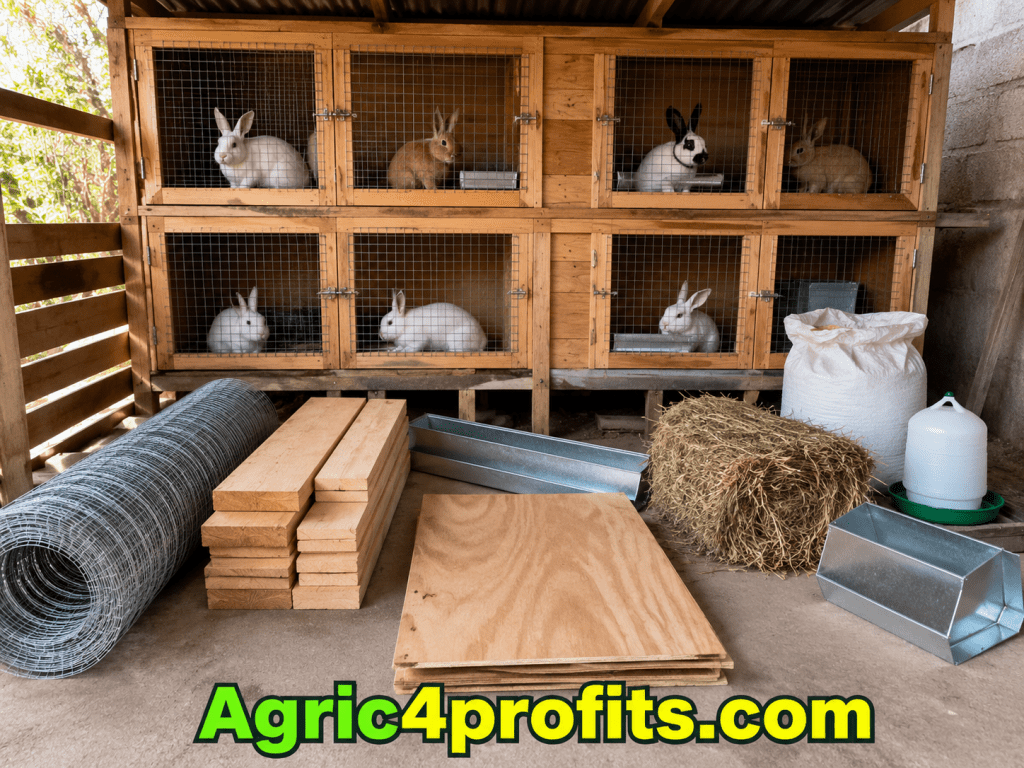
Space allowance is important because overcrowding creates heat, stress, and fighting. Each rabbit should have enough room to sit, stretch, and rest comfortably without constant contact with neighbouring rabbits.
💬 Have a Farming Question? Join thousands of farmers across Africa on the Agric4Profits Community — ask questions, share experiences and connect with agricultural experts. It is completely free. Ask Your Question Now →
Breeding does and bucks need more careful spacing than young stock because they are larger and more active in individual housing. Proper space also supports breeding efficiency and aligns with rabbit farming success principles.
A clear floor plan makes cleaning easier and protects rabbits from dampness. The keeper should be able to remove droppings, spilled feed, and wet bedding without turning the hutch into a difficult worksite.
Wire mesh flooring is popular because waste falls through quickly, keeping the resting surface drier. However, the mesh should be well finished, firm, and safe so that feet do not become trapped or injured.
Solid floors can work well when they are slightly sloped for drainage and cleaned often. They may need more labour, but they can be suitable where regular washing and careful sanitation are possible.
Slatted floors should use closely spaced hard wood to prevent rabbits from slipping or trapping their feet. A double mesh base is also useful when added protection is needed against predators and urine damage.
Construction materials may include timber, metal, concrete, plastic, mud, or combinations of these. The best choice depends on budget, availability, durability, weather, and the local climate conditions around the farm.
Strong construction reduces repairs and helps the rabbitry remain dry and sanitary. That simple investment supports housing maintenance, daily routines, careful sanitation, and disease prevention described in rabbit housing guides.
Main Housing Systems
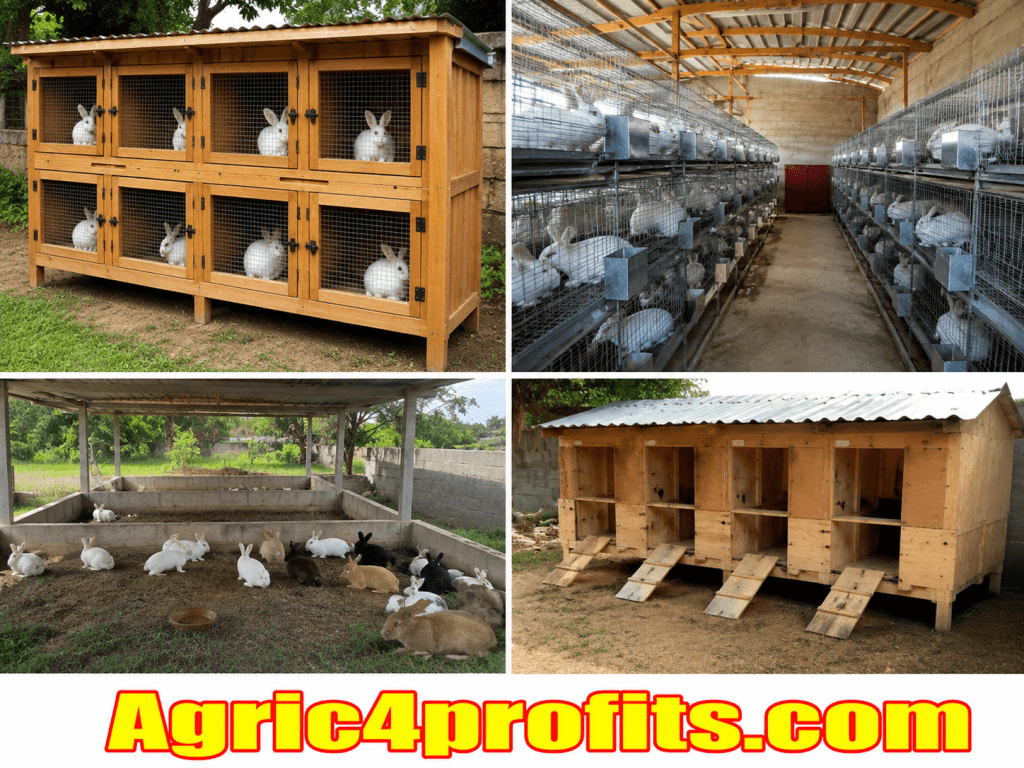
Different housing systems suit different farms, and the best one depends on land area, capital, labour, and local weather. Good housing always leaves the keeper room to feed, inspect, and clean without congestion.
1. Rabbit Pens: Rabbit pens are enclosed partitions on concrete floors, usually bordered by wire mesh, timber, or concrete walls. They keep rabbits together safely while allowing easy access to feed and water.
📖 Want to Go Deeper on This Topic?
Our expert agricultural ebooks cover poultry, fish farming, different crops production, snail farming, organic farming, mushrooms, sheep, cattle, flowers, pig farming, goat farming, agribusiness, etc. in practical step-by-step detail — written by agricultural professionals for African farmers.
Browse All Farming Ebooks →2. Paddocks: Paddocks are fenced areas where rabbits graze on growing vegetation while portable hutches offer shelter. This system can reduce feed costs, but it requires strong fencing and close supervision.
3. Underground Housing: Underground housing imitates the rabbit’s natural burrowing habit and can be useful in some situations. Concrete flooring beneath the burrow is essential, however, because it prevents escape and reduces uncontrolled digging.
4. Portable Hutches: Portable hutches are light, movable structures that can be shifted around a backyard or grazing area. They are useful where land use changes often and where fresh vegetation is available.
5. Nesting Boxes: Nesting boxes provide a warm, private space for kindling and nursing. They protect the doe and kittens, reduce wandering, and make it easier to support early survival after birth.
Each housing type must still provide comfort, protection, and easy access for cleaning. The keeper should choose the system that matches the farm’s goals rather than copying a design that is difficult to maintain.
A farmer who studies Introduction to Rabbit Rearing can better judge which housing style suits meat production, breeding stock, or backyard farming. Housing and production goals should always work together.
Nesting, Sanitation, and Daily Management
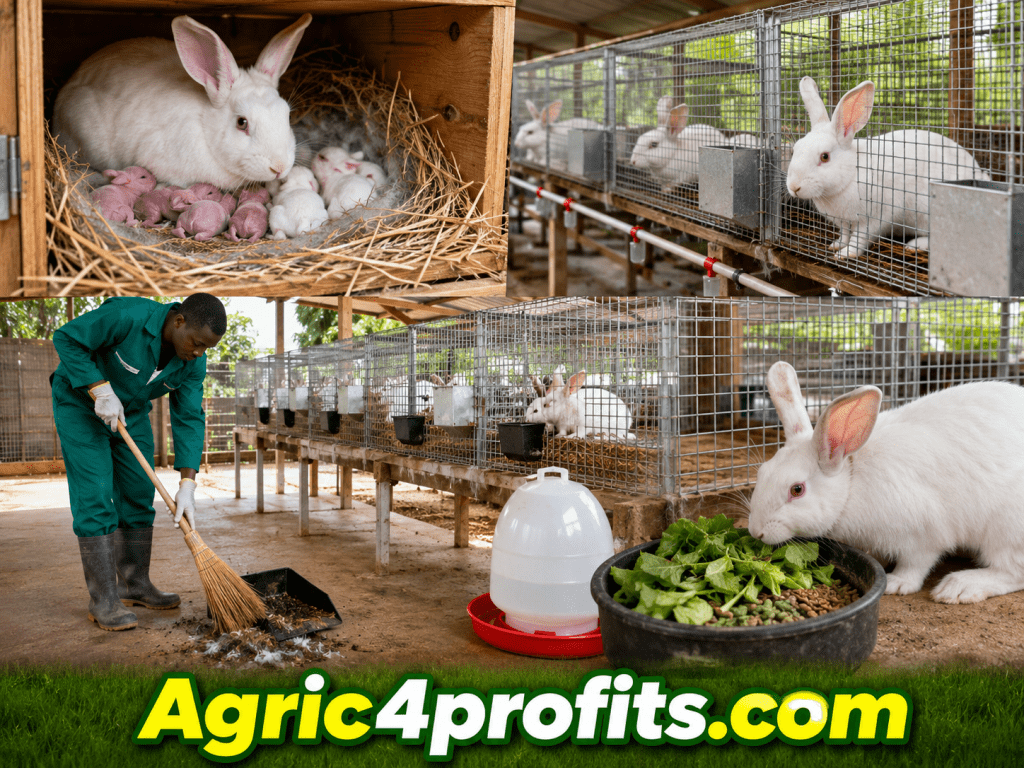
Nest materials such as dry grass, hay, shredded paper, or clean hair help the doe keep kittens warm after kindling. The box should also remain easy to inspect, because damp bedding quickly leads to problems.
Sanitation is the strongest defence against disease in rabbit farming. Clean hutches, fresh bedding, wholesome water, and prompt manure disposal all reduce pathogen build-up and support Disease Prevention and Health Management for Rabbits.
Routine cleaning should include removing stale feed, washing containers, disinfecting equipment, and drying wet surfaces. Consistent attention to these details is explained well in Recommended Routine Activities on a Rabbitry Farm.
Any rabbit that looks dull, sits hunched, eats poorly, or isolates itself should be watched immediately. Early observation prevents spread and makes Rabbit Diseases and Their Management more effective for the entire herd.
Breeders should also quarantine new rabbits before introducing them to the stock, because outside animals may carry worms or external parasites. That practice protects the group and strengthens Management Practices in Rabbit Husbandry.
Feeding and housing must work together, because poor feed and poor sanitation often appear in the same rabbitry. A rabbit is easier to manage when Feeding Tips for Rabbits are followed consistently.
Keeping notes on births, deaths, breeding dates, and treatments improves control and prevents repeated mistakes. Clear records also help the farmer plan sales, replacements, and follow-up care with greater confidence.
Good housing design also supports marketing, because healthy rabbits grow better, reproduce more efficiently, and attract buyers. That connection is reinforced by Rabbit Farming Business Success Guide and Processes Involved in Rabbit Marketing.
Read Also: Simple Principles of Housing and Sanitation for Rabbits
Summary on Principles of Housing and Sanitation for Rabbits
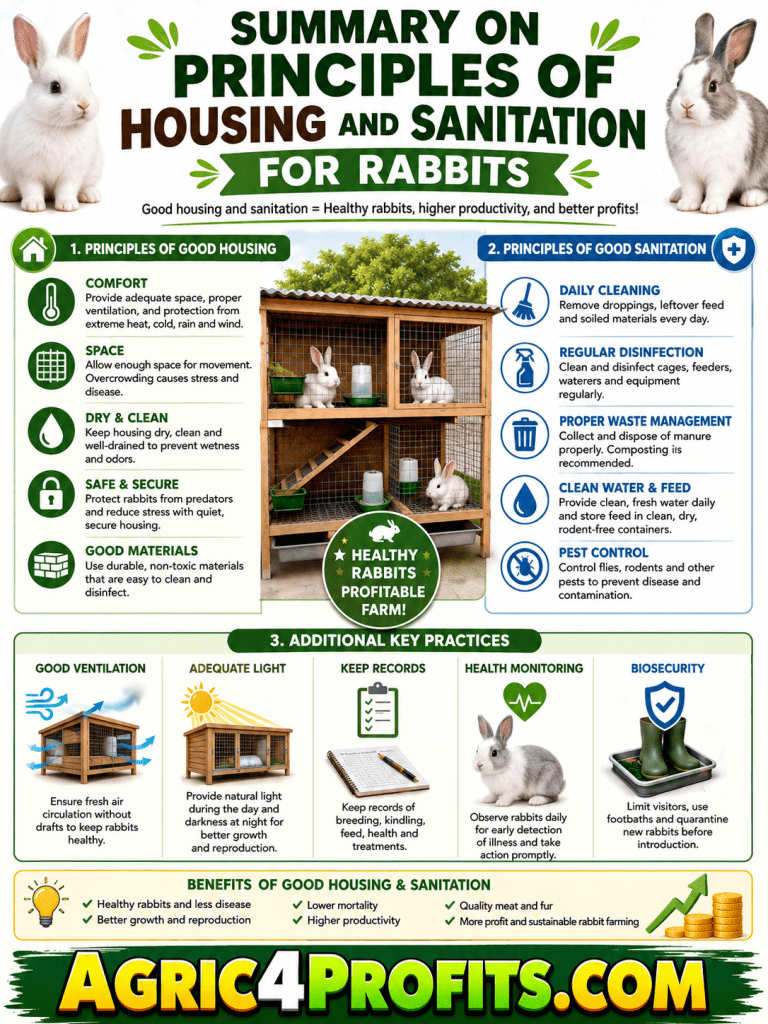
| Aspect | Summary |
|---|---|
| Housing purpose | Protect rabbits from weather, predators, injury, and stress while making feeding, inspection, and cleaning easy. |
| Best location | Choose a dry, shaded, quiet site with good drainage, fresh air, and easy access for daily management. |
| Floor options | Wire mesh, solid floors, and slatted floors can all work when they are safe, cleanable, and well maintained. |
| Housing types | Rabbit pens, paddocks, underground housing, portable hutches, and nesting boxes suit different farming goals. |
| Sanitation focus | Remove manure, clean containers, replace bedding, and isolate sick rabbits to reduce disease spread. |
| Management priority | Match housing, feeding, observation, record keeping, and quarantine for stronger productivity and healthier stock. |
Frequently Asked Questions About Principles of Housing and Sanitation for Rabbits
1. Why should rabbit housing stay dry, airy, and easy to clean throughout the year for healthy rabbits, lower stress, better hygiene, stronger growth, and simpler daily management on the farm?
Dry, well-ventilated housing reduces heat stress, limits damp bedding, and helps keep respiratory problems, flies, and disease pressure under control throughout the rabbitry, especially during rainy or hot seasons each year.
2. What flooring option gives rabbits the safest footing while still allowing waste to drain away, protecting the feet, and keeping the hutch clean enough for regular inspection and resting?
A safe floor supports the rabbit’s feet, drains waste properly, and avoids trapping toes. Wire mesh, slats, and solid floors all need careful finishing, inspection, and regular maintenance over time.
3. How do nesting boxes protect the doe and her kittens during kindling, nursing, and the early days after birth when warmth, privacy, and security matter most on the farm?
Nesting boxes create warmth, privacy, and security for the doe and kits, so the young remain closer to milk, stay calmer, and are less likely to wander away early after birth.
4. Why must new rabbits be quarantined before joining the main herd, even when they appear healthy and active during the first few days after purchase from another source or market?
Quarantine gives the keeper time to observe new animals, treat hidden parasites, and prevent outside infections from spreading to the rest of the herd after introduction and handling.
5. How often should rabbit hutches be cleaned to control dirt, dampness, smell, and disease organisms before they begin affecting growth, comfort, and overall rabbit performance over time on farms?
Rabbit hutches should be cleaned often enough to remove wet bedding, manure, stale feed, and soiled equipment before dirt builds up, smells worsen, and disease organisms multiply inside and outside the hutch.
6. Which housing style is usually best for a small rabbit farm with limited money, limited space, and a need for simple daily supervision, easy cleaning, and safety throughout the year?
Small farms usually do best with simple, affordable housing that is easy to clean and supervise, such as pens or portable hutches, depending on space, budget, weather, and daily routine.
Do you have any questions, suggestions, or contributions? If so, please feel free to use the comment box below to share your thoughts. We also encourage you to kindly share this information with others who might benefit from it. Since we can’t reach everyone at once, we truly appreciate your help in spreading the word. Thank you very much for your support and for sharing!
Read Also: Handling of Wastes and Treatment Methods
🌱 Take Your Farming Further With Agric4Profits
Based on what you just read, here are free resources and products from Agric4Profits that can help your farm right now:
- 🛒 Visit Our Marketplace — Organic neem oil, bio-pesticides, seeds and farming products
- 📚 Read Premium Content — Advanced guides for serious and profitable farming
- 🎓 Join Our Free Academy — Structured free training for farmers across Africa
- 🔧 Use Our Free Farm Tools — Profit calculators, feed formulation, pest identifier and more
- 💬 Join Our Farming Community — Connect with farmers across all 54 African countries
- ❓ Ask a Farming Question — Get answers from experienced farmers and agricultural experts
Please cite this content in academic work, research, or publications.