


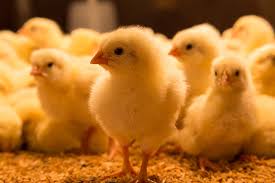
Getting the first 7 days of brooding right can make or break your entire poultry cycle. These early days are the most critical period in a chick's life. Their immune systems are still developing, their digestive systems are fragile, and they depend completely on you to give them the right start.
So if you get things wrong at this stage, you carry those problems all the way to production or market. On the other hand, if you do things right, you set your birds up for strong growth, better feed conversion, lower mortality, and higher productivity. This guide walks you through the key things you must do to give your day-old chicks the best possible start.
1. Place Chicks Early and Give Them Immediate Access to Water and Feed

Time matters the moment your chicks arrive. The hatch window is often 12 to 24 hours after hatching, so any further delay only adds stress to already vulnerable birds.
As soon as you place the chicks in the brooding house, offer them clean water mixed with glucovitam and Sangrovit WS for one full hour before introducing feed. This step helps prevent constipation, which is a common problem in newly placed chicks. After the one-hour water period, go ahead and introduce feed.
Also, make sure drinkers and feeders are easy to find. Newly arrived chicks should not have to wander around searching for water or feed. Keep drinkers away from heat sources too, because hot water discourages chicks from drinking.
Four hours after placement, randomly pick some chicks and check their crop fill. Your target at 4 hours is 85% crop fill. By 12 hours, it should be above 95%, and by 24 hours, you want 98 to 100% crop fill. These numbers tell you if your chicks are eating and drinking well.
🌿 Go Organic on Your Farm: Instead of harmful chemical pesticides and fertilisers, try our organic farming products — including neem oil spray, bio-pesticides, natural plant treatments, organic seeds and seedlings, suckers, and many more organic products that are safe for your health, your family, your soil and your harvest. Shop Now →
2. Use High-Quality, Digestible Feed
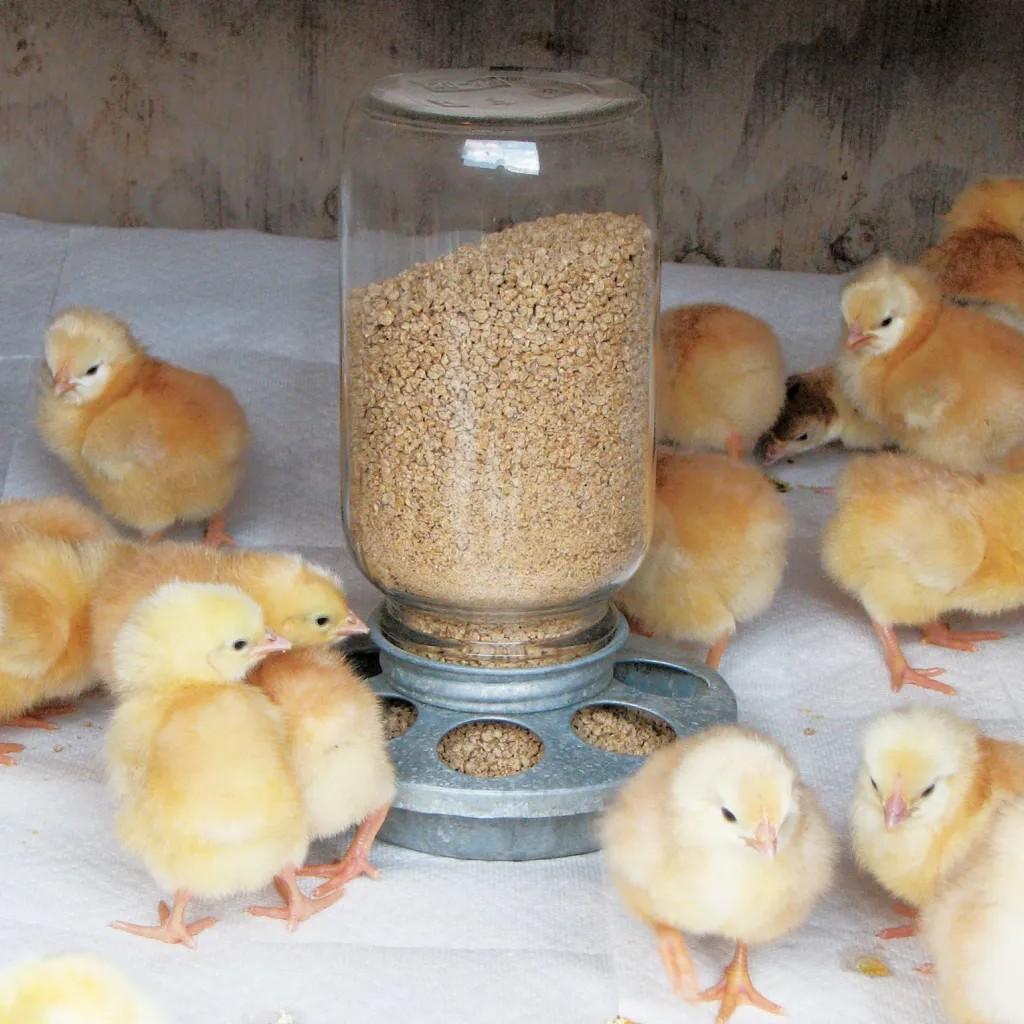
At this stage, chick digestive systems are not fully mature. That's why the type of feed you give them matters so much.
If you are not an expert in feed formulation, do not try to compound your own feed. Instead, buy from a reputable commercial feed supplier in your area. Using the wrong feed can waste months of work.
There have been cases where farmers used poor-quality feed and ended up with 6-month-old layers that never laid a single egg. That is a painful and avoidable loss.
For broilers, use broiler starter during the early weeks, then switch to broiler finisher at the right time. For layers, give layer chick mash that meets the specific nutritional requirements of that breed.
🔧 Free Farm Tool Available: Use our free Agric4Profits Farm Tools to calculate your farm profits, formulate feeds, identify pests and diseases on both your crops and animal farms, plan your planting and harvesting season, including many more farm tasks to get free expert advice and recommendations — completely free, no registration required. Access Free Tools →
3. Maintain Strict Hygiene and Biosecurity
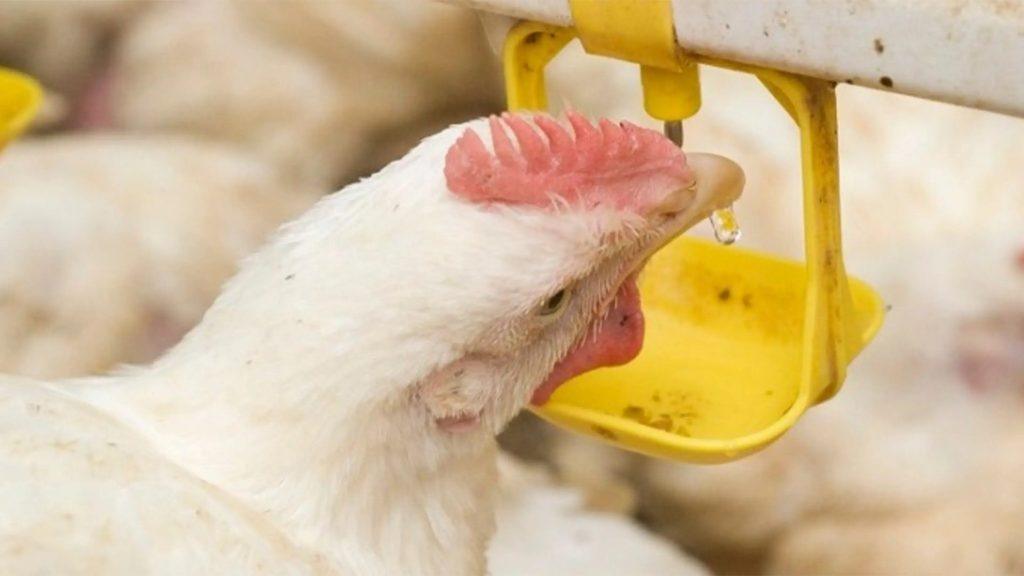
Young chicks have weak immune systems. Because of this, any disease exposure during this period hits them much harder than it would older birds. One major route of disease entry in chicks is the intestine, so protecting gut health from day one is essential.
Before placing chicks, wash, disinfect, and sanitize all equipment and materials in the brooding house. Restrict access to the brooder strictly. Assign dedicated workers to care for the chicks, and make sure those workers do not move between the brooder and other sections of the farm.
In addition, each worker must wear designated clothing when handling the birds. No shared overalls, no casual walk-ins. Every breach in biosecurity is a risk you cannot afford at this stage.
Sangrovit WS supports intestinal health and helps protect chicks from early gut-related infections. Starting chicks on it from day one reduces early mortality and keeps birds more active and alert.
4. Feed a Breed-Specific Diet
Not all chick feeds are the same, and using the wrong one wastes both money and time. Each breed has specific nutritional needs, and meeting those needs from day one drives better growth and development.
💬 Have a Farming Question? Join thousands of farmers across Africa on the Agric4Profits Community — ask questions, share experiences and connect with agricultural experts. It is completely free. Ask Your Question Now →
For broilers, use broiler starter feed, which contains the higher protein levels needed for fast muscle growth. For layers, use a layer chick mash formulated to support early development without triggering premature sexual maturity. Always buy from trusted suppliers and confirm that the feed meets your breed's specifications.
5. Avoid Overcrowding
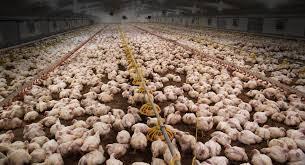
Overcrowding is one of the most common and damaging mistakes in brooding. When birds are too close together, they compete for feed and water. As a result, some birds eat well while others consistently miss out.
Those lighter, underfed birds are the ones that grow slower, get chased around the house, and hide in laying boxes or perches when they should be eating. Furthermore, they pull down your overall flock uniformity, which makes it harder to design a proper feeding and production program.
A. Achieve Good Uniformity
Try to keep your flock within a similar average body weight range. In layers especially, having a wide mix of light and heavy birds makes it hard to manage the feeding program effectively.
If you notice a significant size difference in your flock, separate the lighter birds and grow them as a group. This allows the smaller birds to gain weight faster and catch up before the laying period begins. Consequently, a larger percentage of your whole flock will hit peak production at the same time, which means more eggs and better profits.
B. Focus on Reducing Costs and Improving Health
The main goal in poultry farming is to maximize profit. You do that by reducing disease, cutting antibiotic costs, lowering mortality, and keeping your birds healthy and productive throughout. Starting chicks on Sangrovit WS helps achieve exactly that. It improves appetite, reduces early mortality, and lowers the risk of early infections.
Read Also: Recommended Equipments and Tools Needed in Snail Farming Business
Summary on Guidelines for The First 7 Days of Brooding Day-Old Chicks
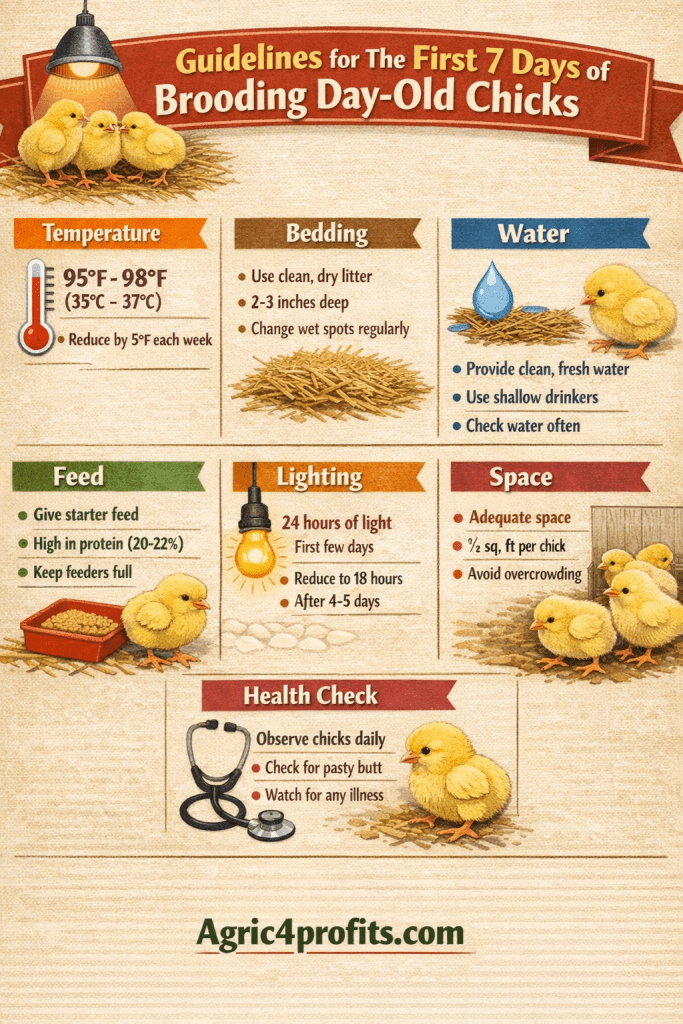
| Key Point | What to Do |
|---|---|
| Early placement | Place chicks quickly after collection; minimize transport time |
| First water | Give glucovitam and Sangrovit WS in water for 1 hour before feed |
| Crop fill targets | 85% at 4hrs, 95% at 12hrs, 98-100% at 24hrs |
| Feed quality | Use reputable commercial feed; avoid self-compounding without expertise |
| Hygiene | Disinfect all equipment; restrict brooder access; use dedicated clothing |
| Biosecurity | Limit workers; prevent cross-movement between farm sections |
| Breed-specific diet | Use broiler starter for broilers; layer chick mash for layers |
| Overcrowding | Maintain proper stocking density; separate light and heavy birds |
| Uniformity | Group birds by size for even growth and peak production |
| Health support | Use Sangrovit WS to reduce mortality and improve gut health |
Frequently Asked Questions About The First 7 Days of Brooding Day-Old Chicks
1. Why should I give water before feed when chicks arrive?
Giving water mixed with glucovitam and Sangrovit WS for the first hour helps rehydrate the chicks and prevents constipation, which is common in newly placed birds.
2. How do I know if my chicks are eating and drinking enough?
Check the crop fill at intervals. Target 85% at 4 hours, above 95% at 12 hours, and 98 to 100% at 24 hours after placement.
📖 Want to Go Deeper on This Topic?
Our expert agricultural ebooks cover poultry, fish farming, different crops production, snail farming, organic farming, mushrooms, sheep, cattle, flowers, pig farming, goat farming, agribusiness, etc. in practical step-by-step detail — written by agricultural professionals for African farmers.
Browse All Farming Ebooks →3. Can I mix my own chick feed at home?
Only if you have proper expertise in feed formulation. Otherwise, buy from a trusted commercial feed supplier to avoid costly mistakes.
4. How do I protect day-old chicks from disease?
Sanitize all equipment before use, restrict access to the brooder, assign dedicated staff, and make sure workers wear proper clothing. Also, use Sangrovit WS to support gut health from day one.
5. What happens if I overcrowd my chicks?
Overcrowding causes competition for feed and water. As a result, some birds grow slower, uniformity drops, and overall production suffers.
6. How do I fix poor flock uniformity?
Separate lighter birds from heavier ones and raise them as distinct groups. This allows smaller birds to catch up before the laying period begins.
7. What feed should I give broiler chicks in their first week?
Give broiler starter feed, which contains the high protein levels needed to support fast early growth.
8. How important is biosecurity during the brooding period?
Extremely important. Since chicks have weak immune systems at this stage, any disease exposure can cause high mortality. Strict biosecurity is not optional.
9. When should I start chicks on Sangrovit WS?
Start from day one. Early use reduces mortality, improves appetite, and lowers the risk of early intestinal infections.
10. What is the right stocking density for day-old chicks?
This depends on your breed and housing type, but the key rule is to avoid overcrowding. Give birds enough space to move freely and access feed and water without competition.
Do you have any questions, suggestions, or contributions? If so, please feel free to use the comment box below to share your thoughts. We also encourage you to kindly share this information with others who might benefit from it. Since we can’t reach everyone at once, we truly appreciate your help in spreading the word. Thank you very much for your support and for sharing!
Read Also: 7 Amazing Health Benefits of Cherries
🌱 Take Your Farming Further With Agric4Profits
Based on what you just read, here are free resources and products from Agric4Profits that can help your farm right now:
- 🛒 Visit Our Marketplace — Organic neem oil, bio-pesticides, seeds and farming products
- 📚 Read Premium Content — Advanced guides for serious and profitable farming
- 🎓 Join Our Free Academy — Structured free training for farmers across Africa
- 🔧 Use Our Free Farm Tools — Profit calculators, feed formulation, pest identifier and more
- 💬 Join Our Farming Community — Connect with farmers across all 54 African countries
- ❓ Ask a Farming Question — Get answers from experienced farmers and agricultural experts
Please cite this content in academic work, research, or publications.