


Worm infestation is one of the most common health problems in poultry farming, yet many farmers do not recognize it until significant damage has already been done. Internal parasitic worms compete directly with your birds for nutrients, reduce feed efficiency, lower egg production, cause weight loss, and in severe cases, kill birds. Knowing what to look for and how to respond can save your flock and your profits.
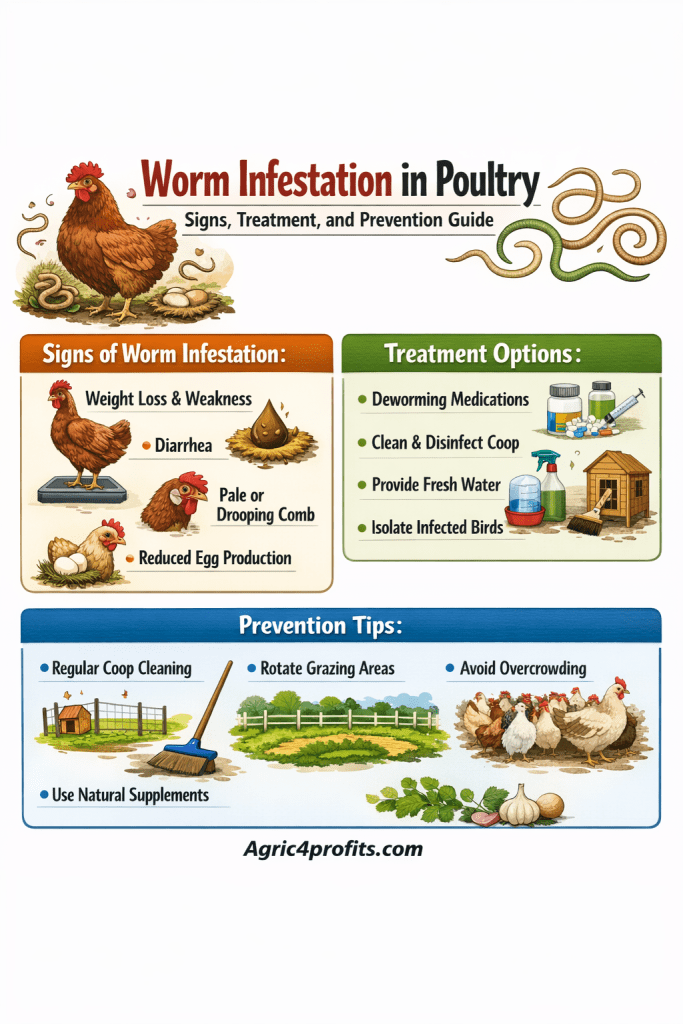
The signs that your birds may be carrying a worm burden include visible weight loss, brown or blood-stained droppings, and in some cases, live worms visible in the droppings. Birds may also appear lethargic, have dirty bottoms, a pale comb, and reduced egg output.
De-worming should begin at 8 weeks of age, and thereafter once every 2 to 3 months depending on your management system and the advice of your vet. Common dewormers include Piperazine, Levamisole, and Mebendazole. The right choice depends on your location, the specific worms present on your farm, and your vet’s recommendation. Always consult a qualified veterinarian before selecting and administering any deworming product.
Read Also: Best Source of Water for Poultry Birds
1. Worm Infestation in Poultry Farming
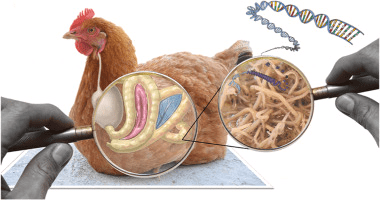
There are three main internal parasitic worms that affect poultry. Understanding each one helps you identify what you are dealing with and choose the right response.
A. Roundworms
Roundworms are the most common intestinal worm in poultry. They look like thin strands of spaghetti and live in the intestine. They affect chickens, turkeys, ducks, and geese. The most problematic type is the Large Roundworm, though hairworms and threadworms also occur.
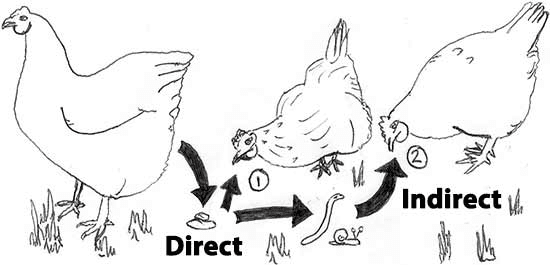
Roundworms follow a direct life cycle. An infected bird passes worm eggs in its droppings. Other birds pick up the eggs from the ground or through intermediate hosts like earthworms. The life cycle takes 28 days to complete. At maturity, roundworms reach about 3 inches in length and may be visible in the droppings. They can also be found in the crop, gizzard, and oesophagus, and in some cases infect the oviduct and pass inside eggs.
Most birds can tolerate a low worm burden, but heavy infestations cause significant drops in egg production and weight loss.
B. Gapeworms
Gapeworms are a type of roundworm that attaches to the trachea rather than the intestine. They impair breathing and cause the bird to gasp repeatedly, which is where the name comes from. Young birds are especially vulnerable. Gapeworms can be fatal if not treated promptly.
Infection typically comes through intermediate hosts such as earthworms, snails, and slugs that carry gapeworm larvae. Once ingested, the life cycle completes in 14 days. Birds can also pick up gapeworms directly from contaminated ground where an infected bird has coughed up worms while scratching. Contact with wild birds such as pheasants is a known risk factor.
C. Tapeworms
Tapeworms are less common than roundworms but still worth watching for. They are flat, segmented, ribbon-like worms that bury their heads in the lining of the intestine. Their eggs are carried by slugs and snails, which makes free-ranging birds more susceptible than confined birds.
Tapeworms are very hard to see with the naked eye. They reproduce by shedding segments that pass out in the droppings and contaminate the ground for other birds. Their life cycle is approximately 6 weeks. Heavy tapeworm burdens weaken the bird’s ability to fight other infections and can cause significant nutritional depletion.
2. Worm Hunt Guide: Reading the Droppings
Checking your birds’ droppings regularly is one of the simplest and most effective early warning tools available. Healthy chicken droppings are fairly firm and rounded with two distinct sections. The larger portion should be black, brown, or grey in colour. The smaller white portion is urine and forms a cap at one end.
Abnormal droppings and what they may indicate:
i. Yellow and loose: Loose yellow droppings that stick to the feathers around the vent are most often a sign of internal worms. It can also indicate a diet very high in corn, but in most cases worms are the likely cause.
ii. Green coloured: This may point to a dietary imbalance from too much green matter or too much protein. If adjusting the diet makes no difference, veterinary diagnosis is recommended as it can also indicate a serious internal infection.
iii. Black, runny, and sticky: Can indicate nutritional deficiency. Return to a basic diet of layers pellets ad libitum with corn twice daily for two weeks to see if droppings improve. Excessive green vegetables like cabbage can also cause darker droppings.
iv. Worms visible in droppings: A definitive sign of infestation requiring immediate attention and treatment.
Other signs to watch for include mucky bottoms, a dishevelled or depressed appearance, weight loss, a drop in egg production, and a pale comb. If you are uncertain about what you are seeing, a vet can arrange a worm count from a dropping sample for an accurate diagnosis.
Read Also: The Diseases Poultry Birds can get from Feeds
3. Prevention is Better than Cure
Keeping worm burdens low through prevention is far less costly and stressful than treating a heavy infestation. Here are the most effective preventive measures:
i. Rotate ground regularly: Never allow birds to stay on bare earth for extended periods. Ground that is continuously occupied becomes heavily contaminated with worm larvae, bacteria, and other pathogens. Rotate birds to fresh ground regularly to break the worm life cycle.
ii. Disinfect fixed runs: If your run cannot be moved, clean it regularly using a disinfectant solution such as Virkon S or Bi-OO-Cyst. A hardwood woodchip surface that can be treated with a watering can mix of disinfectant is a practical option. Do not use disinfectant on grass or near water sources. Also disinfect inside the house regularly.
iii. Apple cider vinegar in drinking water: Adding one teaspoon of apple cider vinegar per litre of drinking water, in plastic drinkers only, alters the acid balance in the gut and makes it less hospitable for worms to survive and reproduce.
iv. Diatomaceous earth in feed: Mix food-grade diatomaceous earth powder into feed at a rate of 5%. This must be used consistently and continuously to be effective.
v. Keep grass short: Sunlight destroys worm eggs on the ground. Keeping grass trimmed reduces the survival of eggs in the environment and lowers the overall worm burden on your land.
vi. Control contact with wild birds: Wild birds such as pheasants and rooks are carriers of worm species including gapeworm. If your birds free-range and come into contact with wild birds, or regularly eat slugs, snails, and earthworms, increase your monitoring frequency and deworming schedule accordingly.
vii. Quarantine new birds: Always isolate new birds before introducing them to your existing flock. New arrivals may carry worms or other parasites that could spread to the rest of your birds before you have a chance to treat them.
Summary on Worm Infestation in Poultry: Signs, Treatment, and Prevention
| Topic | Key Points |
|---|---|
| Common Signs | Weight loss, yellow or blood-stained droppings, worms visible in droppings, mucky bottoms, pale comb, drop in egg production. |
| When to De-worm | First at 8 weeks of age, then once every 2 to 3 months depending on management system. |
| Common Dewormers | Piperazine, Levamisole, Mebendazole. Choice depends on farm conditions and vet advice. |
| Roundworms | Most common. Live in intestine. 28-day life cycle. Can reach 3 inches at maturity. Direct transmission via droppings. |
| Gapeworms | Attach to trachea. Cause gasping. Fatal if untreated. Spread through earthworms, snails, slugs, and wild birds. 14-day life cycle. |
| Tapeworms | Flat, segmented. Attach to intestine lining. 6-week life cycle. Spread via slugs and snails. Hard to see with naked eye. |
| Dropping Colours | Yellow: likely worms. Green: diet or internal infection. Black and runny: nutritional deficiency. |
| Prevention | Rotate ground, disinfect runs, apple cider vinegar in water, diatomaceous earth in feed, keep grass short, quarantine new birds. |
Frequently Asked Questions About Worm Infestation in Poultry
1. How do I know if my birds have worms?
The most common signs are weight loss, loose or discoloured droppings particularly yellow ones that stick to the feathers around the vent, worms visible in the droppings, mucky bottoms, a pale comb, and a drop in egg production. Birds may also appear lethargic and dishevelled. Regular monitoring of droppings is one of the best early detection tools available.
2. When should I first de-worm my birds?
The first deworming should be done at 8 weeks of age. After that, de-worm every 2 to 3 months depending on your management system, the level of risk on your farm, and the advice of your veterinarian.
3. What dewormers are available for poultry?
Common poultry dewormers include Piperazine, Levamisole, and Mebendazole. Each targets different types of worms and has specific dosing instructions. The right product for your farm depends on the worm species present, your location, and your vet’s guidance. Always use dewormers under veterinary advice to avoid incorrect dosing or developing resistance.
4. Can roundworms infect eggs?
Yes. In severe infestations, roundworms can enter the oviduct and be found inside eggs. This is one of the reasons maintaining a low worm burden is important not just for bird health but also for egg quality and safety.
5. What makes gapeworms especially dangerous?
Gapeworms attach to the trachea and directly interfere with the bird’s ability to breathe. Affected birds gasp and stretch their necks repeatedly trying to get air. Young birds are most vulnerable and can die from the infestation if it is not caught and treated quickly. Gapeworms are also spread through common intermediate hosts like earthworms and snails, which birds encounter during normal foraging.
6. How do tapeworms spread and why are they hard to detect?
Tapeworms are carried by slugs and snails. Birds ingest the larvae when eating these creatures while foraging. Tapeworms are nearly impossible to see with the naked eye, making detection through droppings very difficult. A laboratory worm count from a dropping sample is the most reliable way to confirm their presence.
7. Does apple cider vinegar actually help prevent worms?
Apple cider vinegar changes the pH of the gut, making it a less favorable environment for worm survival and reproduction. It is not a substitute for pharmaceutical deworming when a significant infestation is present, but it is a useful preventive measure when used consistently. Use one teaspoon per litre of water in plastic drinkers only, as it corrodes metal.
8. How does rotating pasture help control worms?
Worm eggs and larvae accumulate in the soil wherever birds spend time. Ground that is continuously occupied becomes heavily contaminated and reinfects birds constantly. Moving birds to fresh ground breaks this cycle by leaving the old ground without a host long enough for larvae to die off naturally. It is one of the most effective and low-cost worm management strategies available.
9. Should I quarantine new birds before adding them to my flock?
Yes, always. New birds may be carrying worms or other parasites without showing any visible signs. Introducing them directly to your flock risks spreading an infestation before you have any chance to detect or treat it. A quarantine period of at least two to three weeks, combined with a deworming treatment, significantly reduces this risk.
10. When should I call a vet about worms in my flock?
Call a vet if birds are losing significant weight, if mortality is increasing, if you see worms in droppings and are unsure how to treat them, or if deworming treatment does not seem to be working. A vet can arrange a worm count from a dropping sample to identify exactly which species are present and recommend the most effective treatment with the correct dosage and timing.
Do you have any questions, suggestions, or contributions? If so, please feel free to use the comment box below to share your thoughts. We also encourage you to kindly share this information with others who might benefit from it. Since we can’t reach everyone at once, we truly appreciate your help in spreading the word. Thank you very much for your support and for sharing!
Read Also: Pitcher Plant Care: Tips for Keeping Your Plants Healthy