


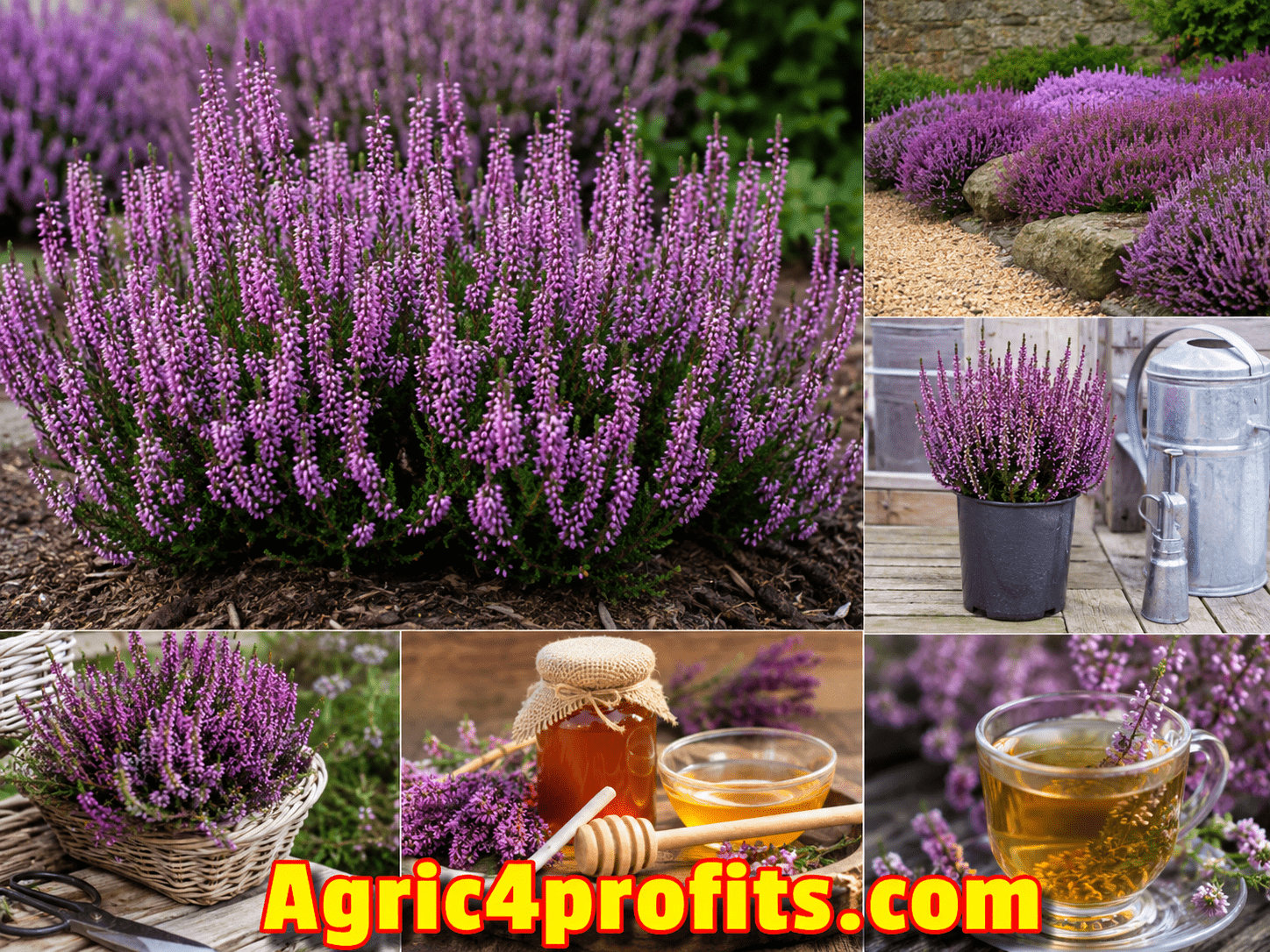
Heather flower, commonly associated with Calluna vulgaris and known as ling, is a hardy evergreen plant admired for delicate flowers, colorful cultivars, and strong adaptability to acidic, nutrient-poor soils across many temperate landscapes.
The plant belongs to the Ericaceae family and develops low, spreading growth covered with tiny leaves and clusters of bell-shaped flowers. Its compact appearance makes it valuable for borders, rockeries, containers, and naturalistic gardens.
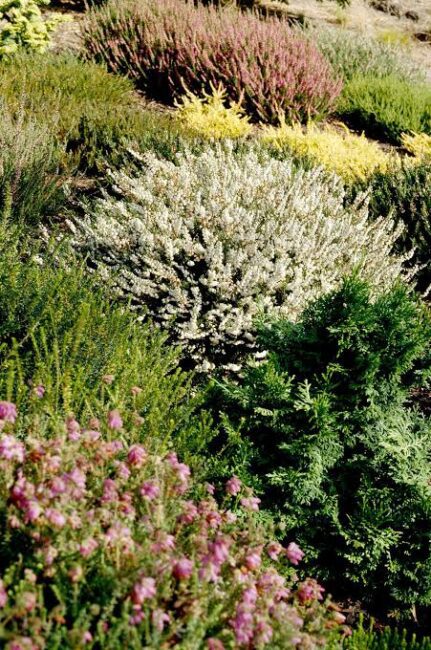
Heather flowers commonly appear in shades of purple, pink, mauve, and white, while selected cultivars may provide additional visual interest through colorful foliage. Their long flowering periods can also extend seasonal garden appeal.
Heather is especially notable for surviving exposed heathlands, moorlands, and other difficult habitats where soil acidity, poor fertility, wind, and seasonal dryness can challenge less adaptable ornamental plants.
Beyond appearance, Heather has cultural importance, especially in Scotland, where it is closely associated with Highland landscapes, traditional folklore, and national identity. Its resilience has also encouraged symbolic associations with endurance and protection.
This article explores Heather flower history, significance, cultivation requirements, practical uses, ecological value, and important care considerations for gardeners seeking a resilient flowering plant for suitable growing conditions.
🌿 Go Organic on Your Farm: Instead of harmful chemical pesticides and fertilisers, try our organic farming products — including neem oil spray, bio-pesticides, natural plant treatments, organic seeds and seedlings, suckers, and many more organic products that are safe for your health, your family, your soil and your harvest. Shop Now →
Read Also: Cutworms: How to Identify and Get Rid of Cutworms
History And Significance of Heather Flower
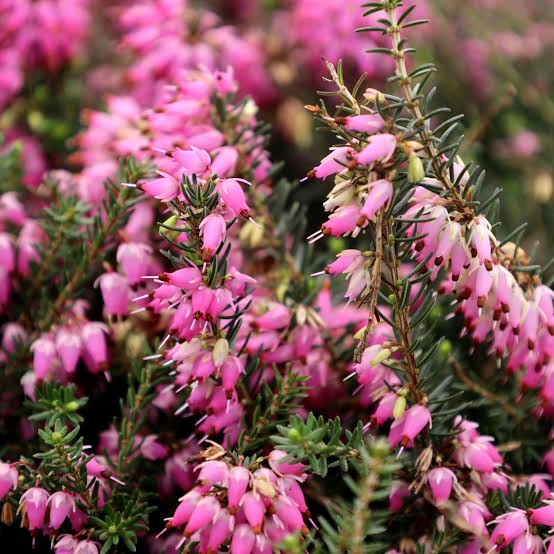
Heather has a long relationship with European landscapes and human communities, particularly in Scotland, Ireland, and other regions where extensive heathlands shaped local agriculture, livelihoods, folklore, and traditional countryside identities.
Common heather, or ling, occurs naturally across much of Europe and extends into parts of North Africa and western Asia. It is especially associated with open acidic habitats supporting specialized plant communities.
In Scotland, Heather became strongly connected with Highland scenery because broad areas of moorland naturally support its growth. The plant therefore became an enduring symbol of rugged landscapes and cultural continuity.
🔧 Free Farm Tool Available: Use our free Agric4Profits Farm Tools to calculate your farm profits, formulate feeds, identify pests and diseases on both your crops and animal farms, plan your planting and harvesting season, including many more farm tasks to get free expert advice and recommendations — completely free, no registration required. Access Free Tools →
Scottish traditions have frequently associated Heather with good fortune, protection, admiration, and enduring affection. Such symbolism varies between sources and communities, but the flower remains deeply represented in Highland-inspired decorations.
Heather has also appeared in traditional celebrations and wedding customs, where sprigs or floral combinations may represent good wishes and lasting relationships. These customs helped preserve the flower's cultural visibility beyond natural landscapes.
Historically, Heather stems had several practical applications because the plant could provide sturdy, flexible material. Communities used Heather for brooms, thatching materials, bedding components, fuel, and selected household crafts.
Traditional medicinal practices also included Heather preparations, although historical usage should not be interpreted as proof of modern medical effectiveness. Herbal traditions sometimes associated the plant with urinary, respiratory, digestive, or calming applications.
Modern gardeners may appreciate Heather alongside other ornamental species with specialized growing requirements. Comparing its preferences with plants discussed in flower classifications and growing groups can improve selection and garden planning.
💬 Have a Farming Question? Join thousands of farmers across Africa on the Agric4Profits Community — ask questions, share experiences and connect with agricultural experts. It is completely free. Ask Your Question Now →
Heather also contributes to biodiversity because flowering plants in heathland communities provide nectar and habitat resources for insects. Its seasonal flowering can be particularly valuable when fewer nectar sources remain available.
Its continuing popularity demonstrates how a modest plant can become culturally significant through landscape association, practical usefulness, ecological relationships, historical traditions, and repeated representation within regional identity.
Read Also: Categorization, Damages Caused, Diagnosis and Control Methods of Plant Diseases
Complete Growing Guide For Heather Flower
Growing Heather successfully depends mainly on selecting an appropriate species or cultivar and reproducing the conditions of its natural habitat. Good drainage, acidic soil, adequate sunlight, and careful moisture management remain important.
1. Choose a Suitable Variety: Select Heather cultivars according to local climate, intended landscape purpose, mature size, foliage characteristics, flowering period, and expected maintenance requirements before purchasing plants for your garden.
2. Select the Right Location: Heather generally performs best in sunny locations that receive several hours of direct light daily. Good airflow and an open position help maintain compact growth and reliable flowering.
3. Prepare Acidic Soil: Heather prefers acidic, freely draining soil. Before planting, test the soil pH and improve unsuitable ground carefully rather than relying on excessive amendments that could create unstable growing conditions.
4. Improve Drainage: Constantly saturated soil can damage roots and encourage poor plant performance. Incorporate suitable organic material and improve drainage where necessary, while avoiding heavy soils that remain waterlogged after rainfall.
Gardeners should understand that soil chemistry affects nutrient availability, making pH management important when cultivating acid-loving plants. Research on soil nutrient availability provides useful background for this consideration.
📖 Want to Go Deeper on This Topic?
Our expert agricultural ebooks cover poultry, fish farming, different crops production, snail farming, organic farming, mushrooms, sheep, cattle, flowers, pig farming, goat farming, agribusiness, etc. in practical step-by-step detail — written by agricultural professionals for African farmers.
Browse All Farming Ebooks →5. Plant Correctly: Dig a planting hole slightly wider than the root system and position the Heather at approximately its original growing depth. Firm the surrounding soil gently, then water thoroughly after planting.
6. Water Carefully: Newly established plants require consistent moisture while roots develop, but mature Heather generally dislikes prolonged saturation. Water according to rainfall, soil condition, season, and the plant's specific growing environment.
Efficient moisture management becomes especially important during dry periods. Gardeners can improve their understanding of irrigation principles by reviewing guidance on water management in crop production and adapting those principles appropriately.
7. Mulch Moderately: A thin layer of suitable organic mulch can help conserve moisture and suppress weeds, but excessive mulch around stems may retain unwanted moisture and create conditions unfavorable for healthy roots.
8. Prune After Flowering: Light pruning after flowering helps maintain compact form, remove spent growth, and encourage dense development. Avoid cutting deeply into old woody sections because vigorous regrowth may be limited there.
9. Fertilize Sparingly: Heather usually needs little feeding when planted in suitable soil. If nutrients are genuinely deficient, use an appropriate fertilizer carefully and avoid excessive applications that encourage weak, unbalanced growth.
10. Protect Plants When Necessary: Many Heather cultivars are hardy, but newly planted specimens can benefit from protection against severe exposure, prolonged freezing, or damaging winter conditions in climates outside their normal range.
Gardeners can also compare Heather's requirements with the cultivation needs of other ornamental plants. Guides covering Azalea flower cultivation demonstrate why acidity, drainage, sunlight, and local climate should influence plant selection.
Heather's specialized preferences make careful site preparation particularly important for gardeners living outside regions naturally dominated by acidic soils. Testing before planting can prevent unnecessary amendments and avoid avoidable establishment problems.
Uses of Heather Flower
Heather flower has several ornamental, ecological, cultural, practical, and historical uses. Its importance extends beyond attractive blooms, especially where gardeners value low-growing plants capable of occupying challenging acidic landscapes.
1. Ornamental Gardening: Heather provides texture, seasonal color, and low-growing structure in gardens. It works particularly well in rockeries, borders, containers, heath gardens, slopes, and naturalistic planting schemes.
2. Ground Cover: Dense Heather growth can help occupy open spaces where suitable conditions exist. Its compact habit creates visual continuity while reducing exposed soil and adding attractive foliage between flowering periods.
3. Floral Arrangements: Flowering stems can complement bouquets and decorative displays, particularly arrangements emphasizing rustic, woodland, cottage, or natural themes. Their fine structure provides useful contrast alongside larger ornamental flowers.
Heather can therefore be combined creatively with flowers described in broader flower guides, especially when designing arrangements that emphasize texture, seasonal character, complementary colors, and natural-looking forms.
4. Wedding Decorations: Heather has traditional associations with good fortune and affection, making it attractive for wedding bouquets, table decorations, buttonholes, and other floral designs inspired by Scottish or countryside themes.
5. Traditional Crafts: Historically, Heather stems were used for practical household materials, including brooms and roofing applications. Modern artisans may also incorporate dried stems into wreaths, rustic decorations, and handmade crafts.
6. Heather Honey: Bees collecting nectar from flowering Heather can produce a distinctive honey associated especially with Scottish and other European upland areas. Heather honey is appreciated for its characteristic flavor and texture.
7. Wildlife Support: Heather flowers provide nectar for bees and other pollinating insects. Planting suitable flowering species alongside Heather can create more continuous food resources and improve the ecological value of managed gardens.
Heather's ecological role can be considered alongside other flowers that support pollinators. For comparison, Lavender flowers and their pollinator value provide another useful example of flowering plants attracting beneficial insects.
8. Naturalistic Landscaping: Heather is useful in landscapes designed to resemble moorlands, heathlands, wildflower spaces, or low-maintenance natural habitats, particularly where acidic soils and suitable climatic conditions already exist.
9. Cultural Representation: Heather appears in Scottish-inspired decorations, artwork, tourism imagery, floral products, and traditional themes because its presence strongly reflects the visual identity of Highland and moorland environments.
10. Fragrance and Decorative Products: Dried flowering material may contribute visual and aromatic interest to decorative products, although claims about medicinal or therapeutic effects should remain cautious and supported by reliable evidence.
11. Habitat Enhancement: Where appropriate soil and climate conditions exist, Heather can contribute to habitat diversity by adding flowering resources and low vegetation structure that supports insects within managed landscapes.
12. Educational Value: Heather can help students and gardeners understand plant adaptation, acidic-soil ecology, pollination, cultural traditions, and biodiversity. Its unusual habitat preferences make it an interesting example for environmental education.
The diversity of ornamental plants available to gardeners is broad, and Heather is only one option. Resources covering different flower characteristics can help readers compare form, climate requirements, and practical uses.
Other flowering plants may complement Heather in suitable gardens, especially species sharing compatible drainage, light, and climate requirements. Examples include Marigold cultivation and garden planting for contrasting color and seasonal interest.
Gardeners seeking dramatic floral contrasts can also explore Orchid flower growing and care, although orchids generally require very different environmental conditions from Heather and should not be treated as interchangeable plants.
Similarly, Plumeria flowers and their decorative uses offer a useful comparison because Plumeria prefers warm climates, while common Heather is better adapted to cooler temperate conditions.
Gardeners interested in larger flowering displays may also examine Sunflower field cultivation, which differs substantially from Heather but illustrates how flower production can support both beauty and practical agricultural interests.
For seasonal bulb gardens, Daffodil growing practices provide another contrasting example, especially because Daffodils have different growth cycles, soil responses, and planting methods from low-growing Heather.
Heather also fits within the wider world of floriculture, where gardeners select plants according to climate, soil, market demand, aesthetics, and intended use. Understanding these factors helps prevent unsuitable plant choices and losses.
Readers interested in broader floral landscapes can explore flower field planning and characteristics to understand how large-scale flowering areas differ from small ornamental gardens and specialized Heather plantings.
Heather's value ultimately comes from combining resilience, attractive flowering, ecological usefulness, cultural identity, and practical versatility. Its greatest success occurs when gardeners respect its natural preferences rather than forcing unsuitable growing conditions.
Summary on Significance and Uses of Heather Flower
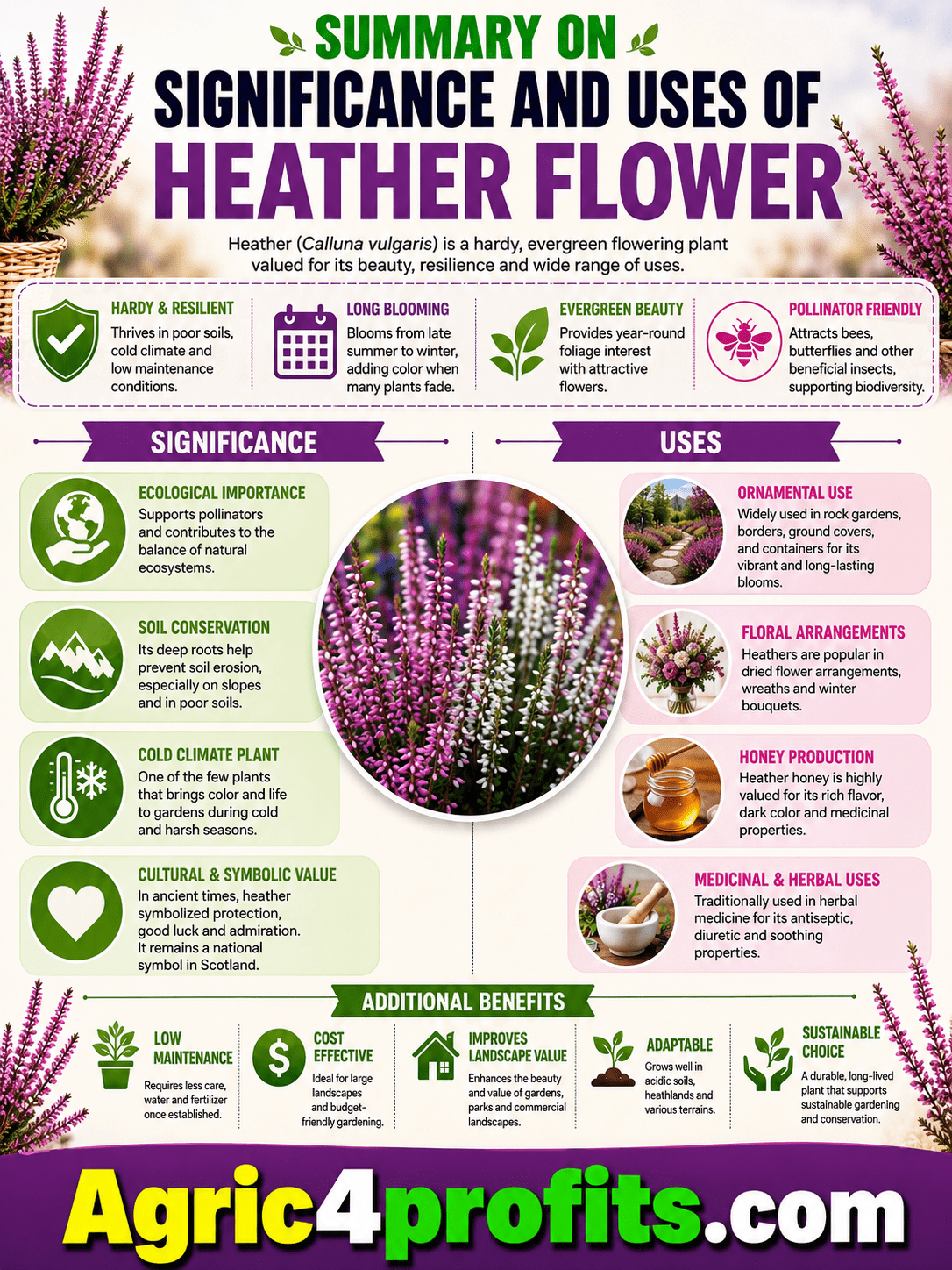
| Aspect | Summary |
|---|---|
| Common Name | Heather or ling |
| Scientific Name | Calluna vulgaris |
| Plant Family | Ericaceae |
| Natural Habitat | Heathlands, moorlands, open acidic habitats, and nutrient-poor soils |
| Flower Colors | Commonly purple, pink, mauve, and white, depending on cultivar |
| Sunlight | Generally prefers sunny, open positions |
| Soil Preference | Acidic, well-drained, relatively nutrient-poor soil |
| Water Needs | Moderate moisture with good drainage and protection from prolonged saturation |
| Major Uses | Ornamental planting, floral decoration, cultural traditions, crafts, habitat support, and Heather honey production |
| Ecological Importance | Provides nectar and habitat resources for pollinating insects and contributes to heathland biodiversity |
| Cultural Significance | Strongly associated with Scotland, Highland landscapes, folklore, and traditional identity |
| Main Care Practices | Proper site selection, acidic soil, moderate watering, light pruning, limited fertilization, and suitable winter protection |
Frequently Asked Questions About Heather Flower
1. What is Heather flower, and which botanical species is most commonly called common Heather or ling in gardens and natural heathland environments?
Heather flower commonly refers to several related plants, but common Heather or ling is Calluna vulgaris, an evergreen species within the Ericaceae family that favors acidic, well-drained environments.
2. What colors do Heather flowers commonly produce, and which shades are most frequently found among cultivated garden varieties available?
Heather flowers commonly appear purple, pink, mauve, and white. Cultivar selection can significantly influence flower and foliage color, giving gardeners several options for ornamental landscape combinations.
3. Does Heather flower grow better in full sun, partial shade, or another type of garden lighting condition overall?
Most common Heather cultivars perform best in sunny, open locations receiving several hours of direct sunlight. Adequate light supports compact growth, healthy foliage, and dependable flowering.
4. What type of soil is most suitable for growing Heather flower successfully in gardens and managed ornamental landscapes?
Heather generally prefers acidic, well-drained soil with relatively low fertility. Heavy, alkaline, or persistently waterlogged soils can produce poor growth and increase root-related problems.
5. How often should Heather flower plants be watered after planting and during periods of dry weather or seasonal heat?
Newly planted Heather needs consistent moisture during establishment, while mature plants should be watered according to rainfall and soil conditions. Avoid keeping the root zone continuously saturated.
6. Is Heather flower suitable for containers, rockeries, borders, and other small ornamental garden spaces with limited planting area?
Yes. Heather's compact growth habit makes it suitable for containers, rockeries, borders, slopes, and other ornamental areas when the planting medium provides adequate acidity, drainage, sunlight, and appropriate moisture.
7. Can Heather flower attract bees and other beneficial insects while growing in a home garden or landscaped environment?
Yes. Heather flowers provide nectar that can attract bees and other insects, helping provide seasonal food resources. Planting diverse flowering species can further strengthen pollinator support throughout the garden.
8. Is Heather traditionally associated with Scotland, and why is the flower considered culturally important within Scottish heritage and landscape symbolism?
Heather is strongly associated with Scotland because it grows extensively across Highland heathlands and moorlands. Its widespread presence has connected the plant with Scottish scenery, folklore, traditions, and cultural identity.
9. Does Heather flower have traditional medicinal uses, and should historical herbal claims be considered proven modern medical treatments today?
Heather has appeared in traditional herbal practices, but historical use does not establish modern medical effectiveness. Medicinal claims should therefore be treated cautiously and should not replace professional medical advice.
10. What are the most important maintenance practices gardeners should follow to keep Heather healthy, attractive, and productive throughout each season?
Important practices include selecting suitable cultivars, maintaining acidic drainage-friendly soil, watering appropriately, pruning lightly after flowering, avoiding excessive fertilizer, and protecting young plants from extreme conditions.
Do you have any questions, suggestions, or contributions? If so, please feel free to use the comment box below to share your thoughts. We also encourage you to kindly share this information with others who might benefit from it. Since we can’t reach everyone at once, we truly appreciate your help in spreading the word. Thank you very much for your support and for sharing!
Read Also: Unearthing the Impact of Landfills on Our Environment
🌱 Take Your Farming Further With Agric4Profits
Based on what you just read, here are free resources and products from Agric4Profits that can help your farm right now:
- 🛒 Visit Our Marketplace — Organic neem oil, bio-pesticides, seeds and farming products
- 📚 Read Premium Content — Advanced guides for serious and profitable farming
- 🎓 Join Our Free Academy — Structured free training for farmers across Africa
- 🔧 Use Our Free Farm Tools — Profit calculators, feed formulation, pest identifier and more
- 💬 Join Our Farming Community — Connect with farmers across all 54 African countries
- ❓ Ask a Farming Question — Get answers from experienced farmers and agricultural experts
Please cite this content in academic work, research, or publications.