


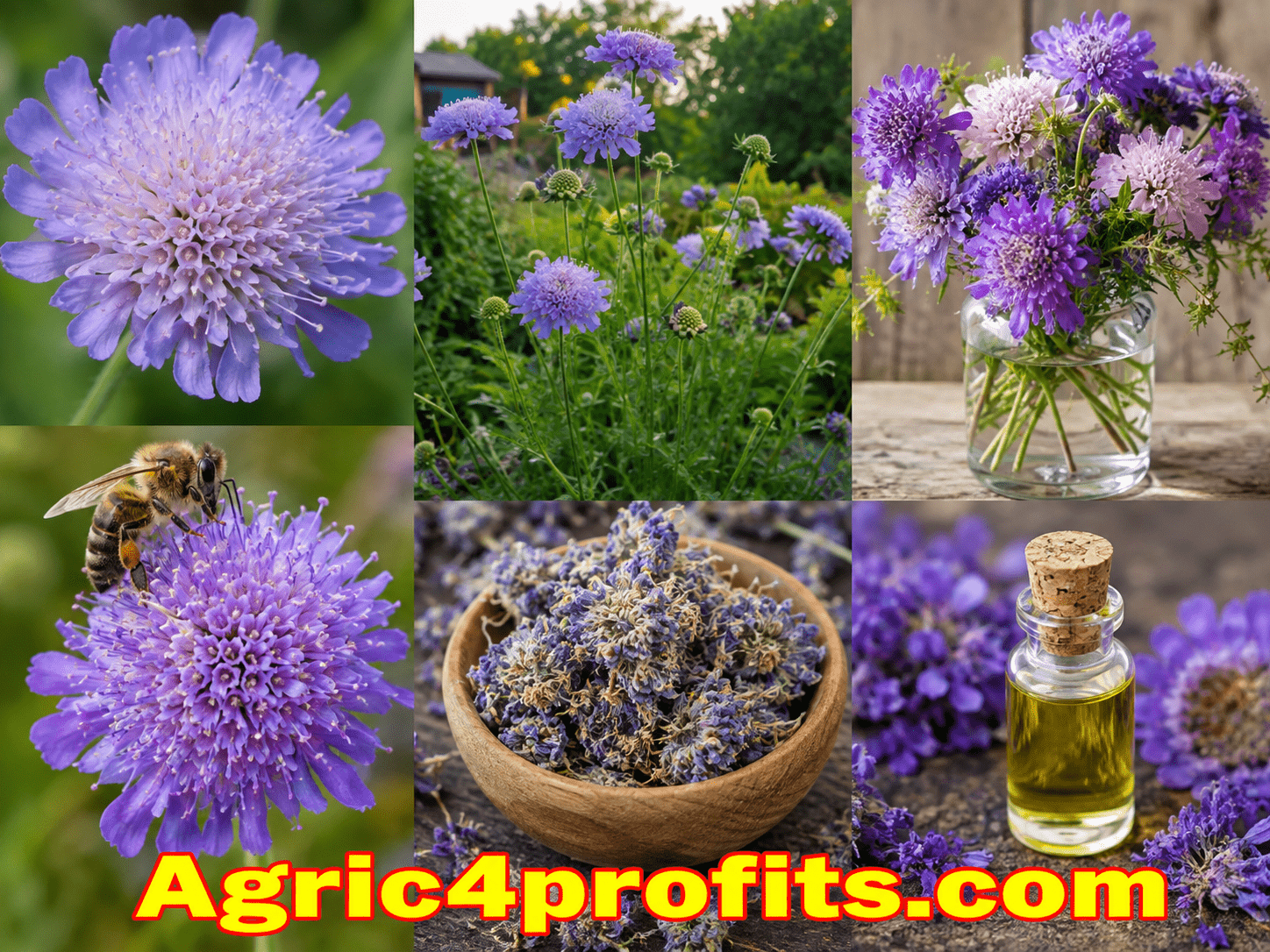
Scabiosa, commonly known as the Pincushion Flower, is an elegant flowering plant valued for distinctive blooms, delicate petals, graceful stems, and attractive colors. Its unusual flower structure makes it especially appealing to gardeners, florists, and pollinator enthusiasts.
Scabiosa has attracted attention for centuries because of its ornamental beauty and historical association with traditional herbal practices. Today, gardeners mainly appreciate it for attractive flowers, garden versatility, pollinator value, and suitability for decorative arrangements.
The common name Pincushion Flower comes from the rounded flower head, whose central florets create an appearance resembling a pincushion covered with numerous delicate pins. Surrounding florets contribute additional texture and visual interest.
Depending on the species or cultivar, Scabiosa flowers may appear in blue, lavender, violet, pink, burgundy, cream, or white shades. Their soft colors and intricate forms complement borders, containers, cottage gardens, and bouquets.
Scabiosa includes annual, biennial, and perennial types, meaning gardeners should select varieties according to climate, growing conditions, available space, and intended use. This diversity makes the genus useful for many different garden designs.
Most cultivated Scabiosa performs best in sunny locations with well-drained soil and adequate moisture. Good site preparation, appropriate spacing, moderate feeding, and regular maintenance can encourage vigorous plants and prolonged flowering throughout suitable seasons.
🌿 Go Organic on Your Farm: Instead of harmful chemical pesticides and fertilisers, try our organic farming products — including neem oil spray, bio-pesticides, natural plant treatments, organic seeds and seedlings, suckers, and many more organic products that are safe for your health, your family, your soil and your harvest. Shop Now →
Beyond ornamental value, Scabiosa can support garden biodiversity because its nectar-rich flowers attract bees, butterflies, and other beneficial insects. Planting suitable flowering species can create valuable feeding opportunities within home gardens and landscapes.
Scabiosa is also appreciated as a cut flower because its stems and distinctive flower heads add texture, movement, and color to arrangements. With proper harvesting and vase care, flowers can remain attractive indoors for several days.
History And Significance of Scabiosa Flower
Scabiosa has a long cultural history associated with traditional medicine, ornamental gardening, symbolism, and artistic expression. The plant became particularly familiar across Europe, where several species were valued for both appearance and traditional herbal applications.
The name Scabiosa is connected with the Latin word scabere, meaning “to scratch,” reflecting historical associations between certain Scabiosa species and traditional treatments for itchy skin conditions. These historical uses should not be confused with established modern medical treatments.
🔧 Free Farm Tool Available: Use our free Agric4Profits Farm Tools to calculate your farm profits, formulate feeds, identify pests and diseases on both your crops and animal farms, plan your planting and harvesting season, including many more farm tasks to get free expert advice and recommendations — completely free, no registration required. Access Free Tools →
Traditional herbal practices sometimes used Scabiosa preparations for skin complaints, wounds, and other ailments. However, scientific evidence supporting medicinal treatment with Scabiosa remains limited, so therapeutic applications should not replace appropriate professional medical care.
Historically, Scabiosa also gained symbolic associations in European flower traditions. Depending on cultural context, the flower has represented themes including remembrance, love, affection, purity, and loss, making its meaning varied rather than universally defined.
The flower’s distinctive appearance contributed to its popularity in artistic representations, decorative gardening, and floral design. Its rounded centers and surrounding petals create a recognizable silhouette that works especially well in detailed paintings and botanical illustrations.
As ornamental horticulture developed, gardeners selected Scabiosa for improved colors, flower sizes, growth habits, stem strength, and flowering performance. Cultivated forms gradually expanded the plant’s usefulness for gardens, containers, borders, and commercial cut-flower production.
Modern gardeners increasingly value Scabiosa not only for decorative qualities but also for ecological benefits. Its flowers can provide nectar for visiting pollinators, contributing to diverse planting schemes that combine ornamental beauty with habitat-supporting functions.
💬 Have a Farming Question? Join thousands of farmers across Africa on the Agric4Profits Community — ask questions, share experiences and connect with agricultural experts. It is completely free. Ask Your Question Now →
The history of Scabiosa therefore reflects changing relationships between people and plants. What began partly through traditional herbal knowledge has evolved into broader appreciation of horticulture, floral design, biodiversity, and sustainable garden management.
Gardeners interested in understanding broader flower groups can also explore different types of flowers, which provides useful comparisons involving annual, perennial, biennial, wild, tropical, bulb, and other flowering plants.
Varieties of Scabiosa Flower
Scabiosa contains several species and cultivated forms that differ in size, flowering habit, lifespan, color, and garden performance. Choosing a suitable variety depends on local climate, garden conditions, container space, and intended decorative purpose.
1. Scabiosa caucasica: Commonly called Caucasian Pincushion Flower, this perennial species produces relatively large flower heads in blue, lavender, pink, or white shades. It is valued for borders, cottage gardens, and attractive cut-flower displays.
2. Scabiosa columbaria: Known as Small Scabious, this species generally forms compact plants with smaller flower heads in lavender, lilac, pink, or related shades. Its manageable size makes it useful for borders, containers, and rock gardens.
3. Scabiosa atropurpurea: Often called Sweet Scabious or Mourning Bride, this species is commonly grown as an annual or biennial ornamental. It produces richly colored flowers in purple, burgundy, pink, lavender, and white.
4. Scabiosa 'Butterfly Blue': This popular cultivar produces attractive blue flower heads on relatively compact plants. Its long flowering period and pollinator appeal make it useful for containers, borders, mixed beds, and small garden spaces.
5. Scabiosa 'Fama': The Fama group contains cultivated forms selected for large flowers, strong stems, and useful flowering performance. Depending on the cultivar, flowers may display lavender, pink, blue, or white tones suitable for cutting.
6. Scabiosa 'Black Knight': This striking form is recognized for very dark burgundy to near-black flower heads. Its dramatic coloration provides contrast among lighter flowers and can create an attractive focal point within mixed borders.
📖 Want to Go Deeper on This Topic?
Our expert agricultural ebooks cover poultry, fish farming, different crops production, snail farming, organic farming, mushrooms, sheep, cattle, flowers, pig farming, goat farming, agribusiness, etc. in practical step-by-step detail — written by agricultural professionals for African farmers.
Browse All Farming Ebooks →7. Scabiosa 'Vivid Violet': This cultivar is valued for richly colored violet blooms and a compact flowering habit. It can contribute strong visual contrast to borders, containers, mixed beds, and other ornamental planting arrangements.
8. Scabiosa 'Pink Mist': This cultivar produces soft pink flowers that complement pastel planting schemes and romantic garden designs. Its gentle coloration works particularly well alongside white, lavender, blue, and silver-toned companion plants.
These varieties represent only part of the diversity available to gardeners. When selecting plants, consider mature size, flower color, annual or perennial behavior, climate suitability, drainage requirements, and the purpose of cultivation.
For gardeners comparing annual and perennial flowering plants, practical annual flower growing guidance can help explain how seasonal flowering plants differ in growth cycle, maintenance, and garden planning.
Read Also: Economic Importance, Uses, and By-Products of Oil Palm Pollen
Complete Growing Guide For Scabiosa Flower

Successful Scabiosa cultivation begins with selecting a suitable variety and providing conditions that encourage healthy roots, strong stems, and regular flowering. Good drainage, sunlight, moisture management, and timely maintenance are especially important.
1. Choosing the right location: Select a site receiving abundant sunlight, preferably around six hours or more daily. Scabiosa generally performs best in open locations with good airflow and protection from persistently waterlogged conditions.
2. Preparing the soil: Loosen compacted soil before planting and remove weeds, stones, and debris. Incorporate suitable organic matter where necessary to improve structure, fertility, moisture management, and drainage for developing Scabiosa roots.
3. Checking soil conditions: Scabiosa generally prefers neutral to slightly alkaline soil, although individual species can tolerate some variation. A simple soil test can help gardeners understand existing pH, nutrient availability, and potential amendment needs.
4. Planting from seed: Many Scabiosa types can be established from seed, but germination requirements differ among species and cultivars. Follow reliable seed instructions regarding sowing depth, temperature, timing, spacing, and transplanting procedures.
5. Planting transplants: When using nursery-grown plants, handle roots carefully and position each transplant at an appropriate depth. Provide enough spacing for mature growth, airflow, sunlight penetration, and convenient access during maintenance.
6. Watering: Keep newly planted Scabiosa adequately moist while roots become established, then adjust irrigation according to rainfall, soil texture, temperature, and plant development. Avoid prolonged saturation because poorly drained soil can damage roots.
7. Applying mulch: A moderate layer of organic mulch can help conserve moisture, suppress competing weeds, and moderate temperature fluctuations around roots. Keep mulch slightly away from stems to reduce excessive moisture accumulation against plant tissue.
8. Fertilizing: Scabiosa usually does not require excessive feeding. Improve soil fertility before planting when necessary, then apply balanced fertilizer carefully according to soil conditions. Excessive nitrogen may encourage foliage while reducing desirable flowering performance.
9. Deadheading flowers: Remove faded flower heads regularly when continued flowering is desired. Deadheading improves appearance and can encourage plants to direct resources toward additional flowers instead of producing unnecessary quantities of mature seed.
10. Managing pests and diseases: Inspect plants regularly for aphids, slugs, snails, distorted growth, leaf spots, and other abnormalities. Good spacing, sanitation, airflow, proper irrigation, and early intervention can reduce many common garden problems.
11. Supporting tall plants: Taller Scabiosa types may benefit from discreet staking or nearby plant support, particularly where strong winds or heavy rain cause stems to bend. Early support usually looks better than correcting damaged plants later.
12. Winter management: Perennial Scabiosa types may require additional protection in regions experiencing severe cold. Apply suitable mulch around established crowns after temperatures decline, while avoiding excessive moisture that could encourage crown or root problems.
Good flower-production practices involve selecting suitable varieties, preparing productive soil, managing irrigation, controlling weeds, monitoring pests, and harvesting appropriately. A practical flower cultivation guide provides additional background for these general practices.
Scabiosa growers should also remember that cultivation recommendations vary between species. Treating every Scabiosa variety identically can produce disappointing results, particularly where climate, soil drainage, temperature, and flowering habits differ significantly.
Gardeners growing Scabiosa alongside other ornamentals can compare its requirements with those of Forget-Me-Not flowers, especially when planning mixed beds that combine plants with different moisture, light, and seasonal preferences.
Read Also: Strategies for Improving Cattle Production
Uses of Scabiosa Flower

Scabiosa is valued for several ornamental and practical purposes, ranging from home gardening and landscaping to cut-flower production and pollinator-friendly planting. Its attractive form allows it to function beautifully in both outdoor and indoor settings.
1. Ornamental gardens: Scabiosa adds color, texture, and architectural interest to borders, flower beds, cottage gardens, containers, and mixed landscapes. Its distinctive flower heads can soften planting schemes while creating attractive visual focal points.
2. Cut-flower production: Scabiosa is widely appreciated for bouquets and floral arrangements because its flower heads have an unusual texture and its stems can provide useful height. Different colors also blend easily with complementary flowers.
Commercial growers interested in expanding into ornamental flower production can learn more from resources covering commercially important cut flowers, especially when evaluating production opportunities and market-oriented floriculture.
3. Pollinator gardens: The nectar-bearing flowers can attract bees, butterflies, and other visiting insects. Incorporating Scabiosa into diverse gardens can therefore support pollinator activity while adding attractive blooms throughout suitable flowering periods.
Pollinators perform important ecological and agricultural functions, so gardeners can strengthen biodiversity by combining Scabiosa with other nectar-producing flowers. Understanding the importance of pollinators can encourage better habitat-focused planting decisions.
4. Dried flower arrangements: Scabiosa flower heads can be incorporated into dried arrangements when harvested and dried carefully. Their rounded centers provide attractive texture and can complement grasses, foliage, seed heads, and other preserved materials.
5. Wedding and event decoration: Scabiosa is suitable for wedding bouquets, centerpieces, table arrangements, and ceremonial decorations. Its romantic appearance works especially well when combined with roses, foliage, grasses, baby's breath, and other complementary flowers.
6. Cottage and naturalistic gardens: The relaxed appearance of Scabiosa makes it suitable for informal planting designs. When combined with compatible perennials, annuals, grasses, and wildflower-style species, it can create movement and seasonal interest.
7. Containers: Compact Scabiosa varieties can be grown successfully in suitably sized containers when drainage, sunlight, watering, and nutrition are managed properly. Containers also allow gardeners to position flowering plants where garden space is limited.
8. Traditional herbal interest: Scabiosa has historical associations with traditional herbal medicine, especially remedies involving skin complaints. However, historical use does not establish modern medical effectiveness, and medicinal preparations should never replace professional healthcare guidance.
9. Floriculture businesses: Scabiosa can contribute to diversified flower production where local demand supports specialty blooms. Growers should study production costs, customer preferences, harvesting standards, postharvest handling, and market opportunities before investing commercially.
The wider floriculture sector includes garden flowers, cut flowers, foliage, landscaping plants, and decorative crops. Producers exploring commercial opportunities can also review information about floriculture opportunities in Nigeria.
Scabiosa can also complement other ornamental species in diversified flower gardens. For example, growers may compare its appearance and management needs with marigold flowers when designing colorful beds, borders, containers, or mixed horticultural displays.
Gardeners seeking additional examples of flowering plants can explore orchid flower cultivation to appreciate the very different growth habits, environmental needs, and ornamental characteristics found across flowering plant families.
Flower-focused landscapes can also benefit from thoughtful seasonal planning. Resources discussing flower fields and large-scale floral displays provide inspiration for combining colors, flowering periods, landscape design, and visitor appeal.
Scabiosa’s ornamental flexibility explains why the plant remains popular among gardeners and floral designers. Whether cultivated for beauty, biodiversity, containers, bouquets, or commercial purposes, it offers several valuable possibilities.
Summary on Significance and Uses of Scabiosa Flower
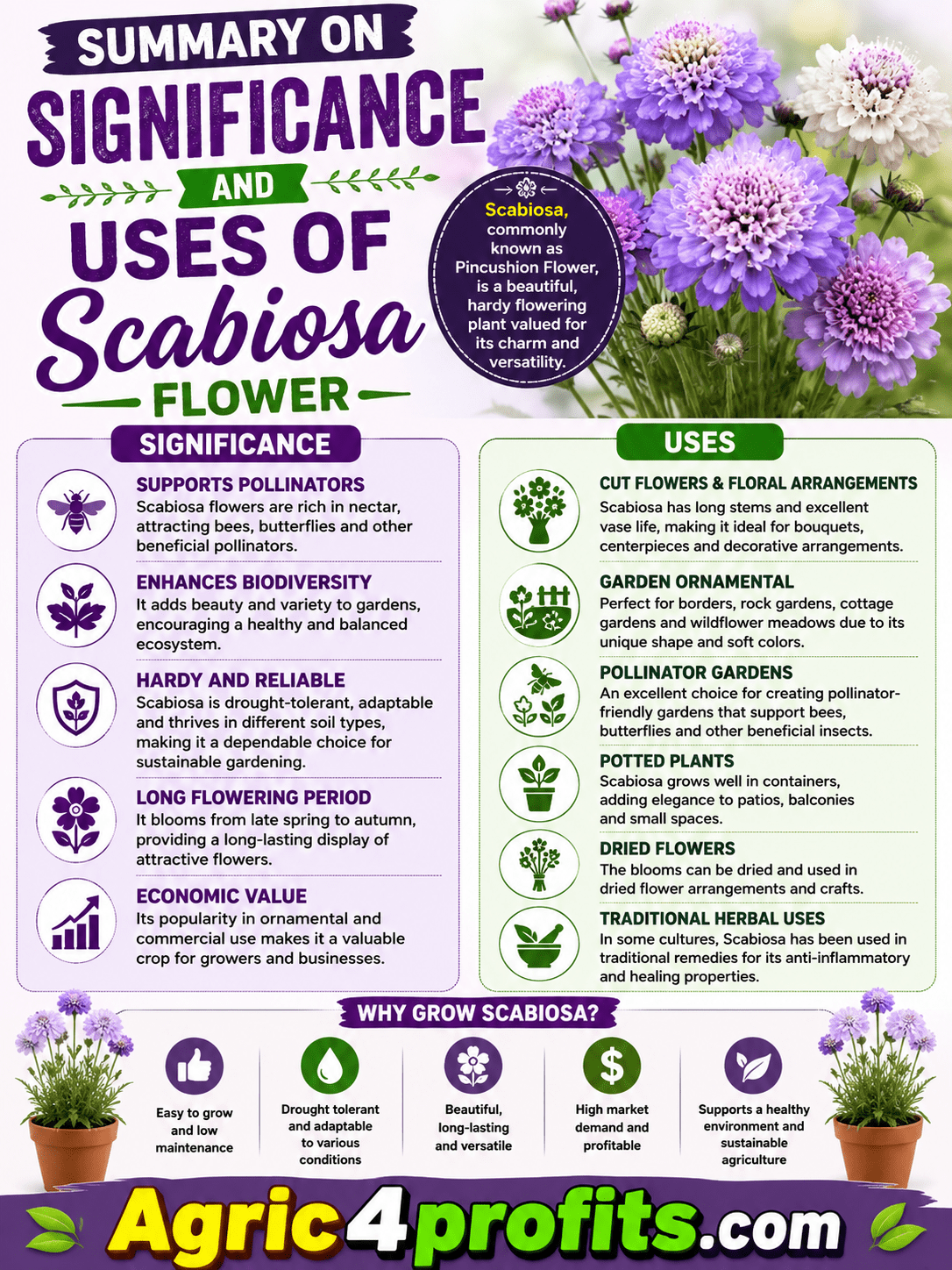
| Topic | Summary |
|---|---|
| Common name | Pincushion Flower |
| Scientific group | Scabiosa |
| Plant types | Annual, biennial, and perennial species and cultivars |
| Flower appearance | Rounded central flower heads surrounded by delicate florets |
| Common colors | Blue, lavender, violet, pink, burgundy, cream, and white |
| Light requirement | Generally performs best in sunny locations |
| Soil preference | Well-drained soil with suitable fertility and moderate moisture |
| Watering | Keep plants adequately moist while avoiding prolonged waterlogging |
| Major garden value | Ornamental beauty, biodiversity support, borders, containers, and mixed planting |
| Pollinator value | Flowers can attract bees, butterflies, and other beneficial insects |
| Cut-flower value | Useful for bouquets, arrangements, events, and decorative displays |
| Traditional significance | Historically associated with herbal remedies and symbolic flower traditions |
| Commercial potential | Can contribute to diversified floriculture and specialty cut-flower production |
| Important caution | Historical medicinal uses should not be treated as proven modern medical treatments |
Frequently Asked Questions About Scabiosa Flower
1. What is Scabiosa Flower?
Scabiosa is a genus of flowering plants commonly called Pincushion Flowers. Different species may be annual, biennial, or perennial, and they are widely valued for ornamental blooms and pollinator-friendly garden planting.
2. Why is Scabiosa called Pincushion Flower?
Scabiosa receives the common name Pincushion Flower because its rounded flower head resembles a pincushion surrounded by numerous delicate pins. The central florets create the distinctive raised structure seen in many cultivated forms.
3. What colors do Scabiosa flowers have?
Scabiosa flowers occur in several attractive colors, including blue, lavender, violet, pink, burgundy, cream, and white. Specific colors depend on the species, cultivar, growing conditions, and commercially available planting material.
4. Is Scabiosa annual or perennial?
Scabiosa can be annual, biennial, or perennial depending on the species or cultivar. Gardeners should therefore check the specific plant before purchasing, because lifespan, winter survival, flowering behavior, and maintenance needs can differ.
5. Does Scabiosa need full sunlight?
Most cultivated Scabiosa performs best with abundant sunlight, often around six hours or more daily. Good airflow and suitable drainage are also important because excessive shade or persistent wetness can weaken plants.
6. Can Scabiosa grow in containers?
Yes, compact Scabiosa varieties can grow successfully in containers when the pots provide adequate drainage, sufficient growing space, sunlight, moderate moisture, and appropriate nutrition. Containers should never remain persistently saturated after irrigation.
7. Do Scabiosa flowers attract bees and butterflies?
Scabiosa flowers can attract bees, butterflies, and other beneficial insects because their flowering heads provide accessible floral resources. Growing several compatible flowering species together can strengthen the overall value of a pollinator-friendly garden.
8. Is Scabiosa used as a medicinal plant?
Some Scabiosa species have historical associations with traditional herbal remedies, particularly for skin-related complaints. However, traditional use does not establish modern effectiveness, so medicinal treatment should be discussed with an appropriately qualified healthcare professional.
9. Can Scabiosa be used as a cut flower?
Yes, Scabiosa is valued by flower growers and florists for its distinctive flower heads and useful stems. Its flowers can add texture, color, and visual contrast to bouquets, wedding designs, centerpieces, and mixed arrangements.
10. How can gardeners encourage more Scabiosa flowers?
Provide adequate sunlight, suitable drainage, moderate moisture, appropriate nutrition, and enough spacing for airflow. Regularly removing faded flowers can also encourage continued blooming and help plants maintain a neat, productive appearance.
Do you have any questions, suggestions, or contributions? If so, please feel free to use the comment box below to share your thoughts. We also encourage you to kindly share this information with others who might benefit from it. Since we can’t reach everyone at once, we truly appreciate your help in spreading the word. Thank you very much for your support and for sharing!
Read Also: How to Start a Business
🌱 Take Your Farming Further With Agric4Profits
Based on what you just read, here are free resources and products from Agric4Profits that can help your farm right now:
- 🛒 Visit Our Marketplace — Organic neem oil, bio-pesticides, seeds and farming products
- 📚 Read Premium Content — Advanced guides for serious and profitable farming
- 🎓 Join Our Free Academy — Structured free training for farmers across Africa
- 🔧 Use Our Free Farm Tools — Profit calculators, feed formulation, pest identifier and more
- 💬 Join Our Farming Community — Connect with farmers across all 54 African countries
- ❓ Ask a Farming Question — Get answers from experienced farmers and agricultural experts
Please cite this content in academic work, research, or publications.