


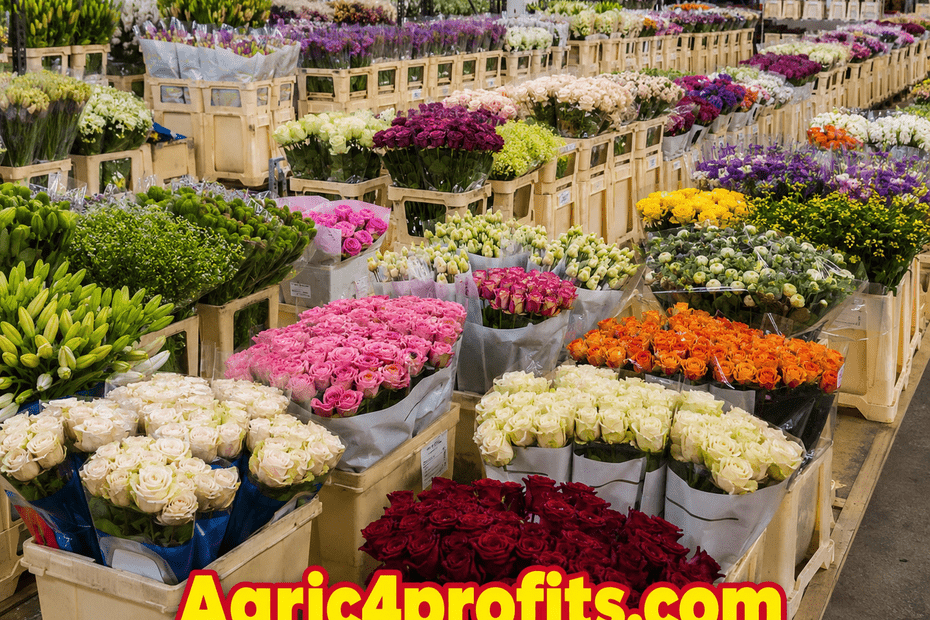
Wholesale flowers have a lasting appeal because their vibrant colors, attractive forms, pleasant fragrances, and natural elegance can transform ordinary spaces into beautiful settings for celebrations, businesses, and personal enjoyment.
Whether purchased for weddings, corporate functions, retail shops, floral businesses, or creative home projects, bulk flowers provide practical advantages. Their availability also allows buyers to select varieties matching different budgets, seasons, designs, and occasions.
One major attraction of wholesale flowers is their cost-effectiveness because buying larger quantities can reduce the average purchase price. This advantage is particularly useful for florists, decorators, retailers, event planners, and businesses.
Bulk purchasing can also help buyers maintain consistent supplies during busy periods when demand increases sharply. For individuals, wholesale buying can make ambitious floral projects more affordable while providing enough blooms for creative experimentation.
The extensive selection available through wholesale channels is another important advantage. Buyers can find familiar varieties such as roses, lilies, tulips, carnations, orchids, sunflowers, hydrangeas, daisies, and numerous seasonal flowers.
The appropriate choice depends on the intended use, available budget, preferred appearance, season, transport requirements, and expected vase life. Learning about different flower types can therefore simplify purchasing decisions.
🌿 Go Organic on Your Farm: Instead of harmful chemical pesticides and fertilisers, try our organic farming products — including neem oil spray, bio-pesticides, natural plant treatments, organic seeds and seedlings, suckers, and many more organic products that are safe for your health, your family, your soil and your harvest. Shop Now →
Quality is especially important when purchasing flowers in bulk because customers expect attractive blooms that remain fresh after delivery. Reliable suppliers normally inspect flowers carefully before shipment and use suitable handling procedures.
Freshness influences appearance, customer satisfaction, arrangement quality, and potential losses. Buyers should therefore examine petals, foliage, stems, flower maturity, color consistency, visible damage, and signs of dehydration before accepting large shipments.
The wholesale flower industry connects growers, wholesalers, distributors, florists, retailers, event planners, exporters, importers, and consumers through coordinated supply networks. Successful businesses depend on efficient sourcing, transportation, storage, marketing, and customer service.
Many commercial flower suppliers operate within broader commercial flower production systems that coordinate cultivation, harvesting, grading, packaging, transportation, and marketing. Understanding these connections helps buyers appreciate how flowers reach their final destinations.
🔧 Free Farm Tool Available: Use our free Agric4Profits Farm Tools to calculate your farm profits, formulate feeds, identify pests and diseases on both your crops and animal farms, plan your planting and harvesting season, including many more farm tasks to get free expert advice and recommendations — completely free, no registration required. Access Free Tools →
Transportation and logistics are especially important because flowers are perishable agricultural products. Delayed delivery, unsuitable temperatures, rough handling, inadequate hydration, or poor packaging can reduce quality and cause avoidable financial losses.
Wholesale buyers should therefore understand their expected quantities, preferred varieties, delivery schedules, storage capacity, and quality requirements before placing orders. Clear planning reduces mistakes and improves communication between buyers and suppliers.
A practical buying guide should begin by identifying the event, customer requirement, floral design, preferred colors, quantities, and available budget. These details help buyers select suitable varieties without purchasing unnecessary or unsuitable flowers.
Flower symbolism can also influence purchasing decisions because different varieties and colors often carry cultural or emotional meanings. Understanding these associations can help florists and event planners design arrangements that communicate appropriate messages.
Freshness should be assessed carefully before accepting wholesale flowers. Strong stems, healthy foliage, bright colors, firm petals, appropriate maturity, and minimal wilting generally indicate better condition, although requirements vary among different flower varieties.
💬 Have a Farming Question? Join thousands of farmers across Africa on the Agric4Profits Community — ask questions, share experiences and connect with agricultural experts. It is completely free. Ask Your Question Now →
Buyers should also consider the intended destination because flowers travelling long distances may require stronger packaging, careful temperature management, and faster delivery. These factors become especially important when flowers are purchased for scheduled events.
Wholesale flowers become particularly valuable when transformed into attractive arrangements. Skilled floral designers combine color, texture, proportion, shape, foliage, containers, and spacing to produce displays suitable for weddings, offices, homes, hotels, and celebrations.
Professional florists understand how flower characteristics influence arrangement design. They consider stem strength, bloom size, opening stage, color relationships, seasonal availability, durability, and customer preferences when preparing professional floral displays.
Wholesale flowers also create opportunities for entrepreneurs interested in floral businesses. Successful operators need reliable suppliers, suitable storage facilities, efficient inventory systems, dependable transportation, good customer relationships, and effective promotional strategies.
Entrepreneurs can serve florists, decorators, supermarkets, gift shops, event planners, hotels, restaurants, garden centers, and individual consumers. A carefully managed wholesale operation can benefit from repeat customers who depend on consistent flower quality.
Demand within the wholesale market changes according to seasons, celebrations, cultural practices, fashion trends, consumer preferences, weather conditions, and special events. Businesses that monitor these changes can adjust purchasing and inventory decisions more effectively.
Sustainability has also become increasingly relevant to the flower industry. Buyers may consider locally grown flowers, responsible production practices, recyclable packaging, efficient transportation, reduced waste, and suppliers that demonstrate environmental awareness.
Online purchasing has changed how many wholesale flowers are sourced. Digital platforms allow buyers to compare varieties, quantities, prices, supplier information, ordering conditions, and delivery options without visiting physical marketplaces.
However, online purchasing requires careful evaluation because photographs cannot always reveal actual freshness, stem strength, maturity, or packaging quality. Buyers should review supplier policies, customer feedback, delivery terms, and product descriptions before ordering substantial quantities.
📖 Want to Go Deeper on This Topic?
Our expert agricultural ebooks cover poultry, fish farming, different crops production, snail farming, organic farming, mushrooms, sheep, cattle, flowers, pig farming, goat farming, agribusiness, etc. in practical step-by-step detail — written by agricultural professionals for African farmers.
Browse All Farming Ebooks →Proper care after receiving wholesale flowers is essential because quality can decline quickly when blooms are exposed to excessive heat, dehydration, dirty water, rough handling, or unsuitable storage conditions.
Detailed guidance on post-harvest care for flowers emphasizes hydration, clean tools, proper cooling, grading, sanitation, packaging, storage, and transportation. These practices help reduce losses and preserve appearance throughout the distribution process.
Upon arrival, stems should generally be handled gently and placed into clean suitable containers when wet storage is required. Damaged leaves and plant materials should be removed carefully to protect water quality.
Re-cutting stems can improve water uptake for many cut flowers when performed correctly with clean, sharp tools. The exact technique should consider the flower species, stem structure, storage conditions, and intended use.
Water should remain clean because microorganisms can multiply rapidly in contaminated containers. Regularly checking containers, removing deteriorating material, and maintaining appropriate hydration can contribute significantly to better vase life and visual quality.
Temperature management is another important consideration because excessive heat accelerates moisture loss and deterioration. However, colder conditions are not automatically better because some flowers are sensitive to chilling or freezing injury.
Wholesale flowers serve many sectors beyond traditional weddings and retail shops. They support hospitality businesses, interior decoration, landscaping, photography, ceremonial services, corporate environments, gifting companies, public events, and creative home projects.
The importance of flowers as agricultural products is further demonstrated by commercial cut-flower markets, where quality, presentation, market demand, transportation, and post-harvest handling influence opportunities for producers and traders.
International trade adds another dimension because flowers may cross national borders before reaching consumers. Importers and exporters must understand customs requirements, plant health regulations, documentation, market standards, transportation conditions, and delivery schedules.
The international flower trade demonstrates how growers, wholesalers, retailers, logistics providers, florists, exporters, and importers depend upon interconnected systems to move flowers efficiently between production regions and consumer markets.
Efficient packaging protects flowers from bruising, crushing, dehydration, temperature changes, and excessive movement during transportation. Packaging should provide enough support while still allowing appropriate ventilation and moisture management for the selected flowers.
Packaging materials should be selected according to flower type, shipment distance, transportation method, quantity, and environmental conditions. Sturdy cartons, sleeves, separators, protective wraps, and moisture-retaining materials may be used when appropriate.
Temperature-controlled transportation can provide important advantages for perishable flowers, particularly during long-distance shipments. Maintaining suitable conditions from harvesting through delivery helps protect freshness and reduces deterioration caused by heat exposure.
Distribution also requires effective communication between suppliers, logistics providers, retailers, florists, and customers. Tracking systems can provide useful information about shipment progress and help businesses respond quickly when unexpected delays occur.
Inventory management presents a special challenge because flowers are highly perishable. Wholesale suppliers must balance adequate stock availability against the risk of holding excessive quantities that may deteriorate before they are sold.
Demand forecasting can help wholesalers anticipate seasonal requirements and major events. Monitoring previous sales, customer preferences, market trends, and upcoming celebrations can improve purchasing decisions while reducing unnecessary waste and financial losses.
Quality control should continue throughout receiving, storage, packing, transportation, and final delivery. Regular inspection helps identify bruised stems, wilted flowers, disease symptoms, discoloration, broken parts, and other issues before customers receive shipments.
Clear return and complaint procedures are also important. When flowers arrive below agreed standards, responsive suppliers should investigate the problem and apply fair solutions according to their documented terms and customer service policies.
Wholesale flowers offer several practical and commercial benefits for people who require larger quantities, consistent quality, and broader selection. The following advantages explain why wholesale purchasing remains attractive across many floral markets.
1. Cost-effectiveness: Buying larger quantities can reduce the average cost per flower, making wholesale purchasing attractive for events, floral businesses, retailers, decorators, and individuals managing substantial floral projects.
2. Wide variety: Wholesale suppliers often provide numerous flower varieties, colors, sizes, and seasonal options, allowing buyers to create diverse arrangements while matching different customer preferences, themes, occasions, and design requirements.
3. Freshness and quality: Established suppliers use organized handling systems to protect flowers during sourcing, grading, packaging, and transportation. Buyers can benefit from fresher blooms when suppliers maintain appropriate post-harvest practices throughout distribution.
4. Customization: Bulk purchasing allows customers to select particular varieties, colors, stem lengths, quantities, and flower combinations. This flexibility supports creative arrangements and helps businesses satisfy specific customer requests more effectively.
5. Large-event supply: Weddings, conferences, parties, exhibitions, ceremonies, and corporate functions may require substantial flower quantities. Wholesale purchasing helps organizers secure enough blooms for coordinated decorations, centerpieces, bouquets, and installations.
6. Business profitability: Florists and retailers can purchase flowers at commercial prices and resell finished arrangements or individual products at suitable margins. Effective cost management can improve competitiveness and overall business sustainability.
7. Convenience: Wholesale suppliers provide centralized purchasing, reducing the need to visit many retail locations. Online ordering can simplify selection, payment, communication, shipment tracking, and repeat purchasing for regular commercial customers.
8. Seasonal opportunities: Wholesale markets can provide seasonal varieties that help designers create timely arrangements. Seasonal flowers may add freshness, distinctive character, and visual relevance to celebrations, promotions, decorations, and special events.
9. Creative flexibility: Buying flowers in larger quantities allows florists and hobbyists to experiment with different combinations, textures, colors, and arrangements. This freedom can encourage creativity while supporting personalized floral designs for varied occasions.
10. Better supply planning: Businesses can schedule bulk purchases around predictable demand periods. Planning helps coordinate inventory, staffing, transportation, event preparation, and customer orders while reducing the likelihood of shortages during busy seasons.
Successful flower production begins long before wholesale distribution because growers must select suitable varieties, prepare productive growing environments, manage irrigation, protect plants, and harvest flowers at appropriate maturity stages.
Anyone interested in understanding these production principles can explore practical flower cultivation techniques, which explain important considerations involving site preparation, planting, irrigation, fertilization, pest management, harvesting, and post-harvest activities.
Protected cultivation can also influence flower quality and production scheduling. Greenhouses and other controlled structures may help growers manage environmental conditions, especially when producing flowers for specialized or high-value markets.
Information on greenhouse and cut-flower production provides useful context for understanding how environmental management, harvesting, grading, packaging, and post-harvest care contribute to commercial flower quality.
Flower farmers can improve market opportunities by producing varieties that match customer demand rather than selecting crops solely because they are attractive. Market research should consider climate, production costs, timing, competition, transportation, and buyer preferences.
Profitability varies according to production systems, market access, crop choice, input costs, quality, labor, infrastructure, and sales channels. Some varieties may provide stronger returns where demand and growing conditions are favorable.
Commercial flower growers should also understand the relationship between production and post-harvest quality. Excellent field production may still produce poor financial results when harvesting, cooling, handling, packaging, or transportation are poorly managed.
Farmers and consumers can also learn more about caring and growing flowers to understand how suitable environmental conditions, irrigation, soil management, maintenance, and observation influence healthy flowering plants.
Wholesale flowers can also support specialized floral products. Wearable arrangements, decorative pieces, sympathy displays, gift bouquets, and themed event designs require flower choices that combine appearance, durability, comfort, and suitability.
For example, wearable floral arrangements commonly use durable flowers that can withstand handling while maintaining an attractive appearance. Wholesale purchasing makes it easier to source enough suitable blooms for repeated event requirements.
Sympathy arrangements require similarly thoughtful flower selection because colors, forms, symbolism, durability, and presentation can communicate respect and emotional support. Buyers should consider cultural expectations and the preferences of the families involved.
Resources covering sympathy flower arrangements can help buyers understand why particular flowers may be selected for remembrance, tribute, affection, respect, comfort, and solemn occasions across different settings.
Wholesale flowers are equally important to retailers because attractive displays can influence customer attention and purchasing decisions. Florists, garden centers, supermarkets, gift stores, and specialized shops depend on reliable suppliers.
Retailers benefit when wholesalers provide consistent quality, dependable availability, clear pricing, suitable delivery schedules, and responsive service. Strong supplier relationships can reduce purchasing difficulties and improve the retailer's ability to satisfy customers.
Businesses can also diversify by purchasing different varieties for different customer segments. Some customers may prefer traditional roses, while others seek lilies, orchids, sunflowers, tulips, carnations, seasonal flowers, or unusual specialty blooms.
The beauty and diversity of flowers continue to support numerous commercial and cultural uses. Buyers seeking broader background information can explore general flower information covering characteristics, uses, care, ecological value, and diversity.
Wholesale flower markets can be found through several channels, including physical flower markets, local wholesalers, online suppliers, flower farms, trade associations, industry events, and business networks serving floral professionals.
Wholesale Flower Markets: Physical markets bring growers, wholesalers, florists, decorators, and retailers together, often providing extensive selections of fresh flowers. Buyers can compare products directly and sometimes negotiate quantities, prices, and delivery arrangements.
Online Wholesale Platforms: Digital marketplaces allow customers to review available varieties, quantities, prices, photographs, supplier conditions, and delivery options. Online ordering can save time, although buyers should carefully evaluate supplier reliability before purchasing.
Local Wholesalers: Nearby suppliers may provide valuable advantages because buyers can inspect flowers personally, communicate directly with staff, arrange pickup, discuss recurring requirements, and potentially establish long-term commercial relationships.
Flower Farms: Some growers sell flowers directly to businesses and customers, especially where commercial flower production is established. Direct purchasing can reduce intermediary steps while creating closer relationships between producers and buyers.
Trade Shows and Networking: Floral industry events can introduce buyers to growers, wholesalers, suppliers, equipment providers, designers, and logistics companies. Such events may create opportunities for discovering new products and establishing professional partnerships.
Floral Associations: Professional organizations can provide industry contacts, educational resources, directories, events, and networking opportunities. These resources may help buyers identify reputable suppliers and remain informed about developments within the floral industry.
Before committing to a supplier, buyers should compare flower quality, minimum order quantities, pricing, delivery arrangements, packaging, payment terms, customer support, return policies, and reputation to choose an appropriate wholesale partner.
Wholesale flowers represent a complete agricultural and commercial system built around production, quality, creativity, logistics, marketing, and customer satisfaction. Their usefulness extends from major events and businesses to personal floral projects.
With careful sourcing and proper handling, wholesale flowers can provide attractive products while reducing purchasing costs and supporting efficient floral operations. Their broad variety also allows buyers to serve changing customer preferences throughout different seasons.
The sector continues to evolve as growers, wholesalers, florists, retailers, exporters, designers, and consumers adopt improved production practices, digital purchasing systems, sustainable packaging, efficient logistics, and more informed approaches to flower quality.
For farmers, floral businesses, retailers, event planners, and hobbyists, understanding wholesale flower markets can support better purchasing decisions. Careful planning, quality assessment, suitable storage, and reliable supplier relationships remain essential for success.
Wholesale flowers therefore remain valuable because they combine beauty, variety, commercial opportunity, creative flexibility, and broad accessibility. When managed correctly, they can support attractive arrangements while creating opportunities throughout the floral supply chain.
Read Also: Significance And Uses Of Annual Flowers
Wholesale Flower Packaging and Distribution

Wholesale flower packaging and distribution are critical because flowers are delicate and perishable. Proper systems protect blooms during movement while helping maintain freshness, appearance, hydration, and acceptable quality until customers receive them.
Packaging should protect flowers from crushing, bruising, excessive movement, dehydration, temperature changes, and other conditions that may occur during transportation. The selected materials must suit the type, quantity, destination, and expected journey.
Sturdy cartons or boxes can provide structural protection, while internal partitions or suitable sleeves may reduce contact between stems and blooms. Packaging should remain secure without creating unnecessary pressure that could damage flowers.
Moisture management is equally important because harvested flowers continue losing water after cutting. Suitable hydration materials and conditioning procedures can help reduce dehydration and protect flower quality before final delivery to customers.
Temperature control is another essential consideration. Excessive heat can accelerate water loss and deterioration, while inappropriate cold conditions can injure sensitive varieties. Storage and shipping temperatures should therefore reflect specific flower requirements.
Efficient distribution depends on coordination among suppliers, transportation providers, wholesalers, retailers, florists, and event planners. Clear communication helps ensure that order quantities, delivery addresses, schedules, packaging requirements, and quality expectations remain accurate.
Shipment tracking can improve transparency by allowing buyers and suppliers to monitor delivery progress. When unexpected delays occur, timely communication gives businesses opportunities to adjust arrangements, storage, customer expectations, or replacement decisions.
Online wholesale platforms have further simplified flower purchasing by connecting sellers and buyers across different locations. Digital ordering can increase convenience while allowing suppliers to present inventory, collect orders, and communicate delivery information.
Customer reviews and supplier ratings can provide useful purchasing clues, although they should not replace independent evaluation. Buyers should examine product descriptions, policies, delivery conditions, minimum quantities, and evidence of supplier reliability.
Inventory management is essential because excessive stock can deteriorate before sale, while insufficient stock may cause missed opportunities. Wholesalers should monitor demand patterns, seasonal requirements, purchasing schedules, and product turnover carefully.
Demand forecasting can support better inventory decisions by examining sales history, upcoming celebrations, seasonal preferences, customer behavior, and market trends. Accurate forecasting can reduce waste while helping suppliers maintain appropriate product availability.
Returns and quality complaints should be handled professionally because customer trust is central to long-term business relationships. Clear policies can establish expectations regarding acceptable quality, damaged shipments, delivery problems, replacements, refunds, and claims.
Quality control should continue from receiving through storage, packaging, dispatch, and delivery. Inspecting flowers regularly allows suppliers to remove damaged or deteriorating blooms before they compromise an entire shipment or customer order.
Efficient packaging and distribution ultimately protect the economic value of flowers. When suppliers combine careful handling, suitable temperature management, reliable logistics, inventory control, and responsive customer service, buyers receive more dependable products.
Professionally organized distribution systems therefore help wholesale flowers travel successfully from production sites to markets, retailers, florists, event planners, and consumers while preserving the quality necessary for attractive final arrangements.
Benefits of Wholesale Flowers
Wholesale flowers provide practical and financial advantages for individuals and businesses that need larger quantities of blooms. Their benefits include lower purchasing costs, greater selection, flexible design possibilities, and easier supply planning.
1. Cost-effectiveness: Bulk purchasing can reduce the average cost of flowers compared with small retail purchases, helping event planners, florists, decorators, retailers, and individuals manage large floral budgets more effectively.
2. Wide variety and availability: Wholesale suppliers can offer numerous flower varieties, colors, sizes, and seasonal choices, giving buyers more opportunities to match specific themes, customer preferences, occasions, and design concepts.
3. Freshness and quality: Established wholesalers generally use organized sourcing, grading, handling, and transportation procedures to protect flowers. Reliable systems can help buyers receive attractive blooms with better condition and useful vase life.
4. Customization and flexibility: Wholesale purchasing allows buyers to select preferred flower varieties, colors, quantities, and combinations. This flexibility helps florists and decorators create personalized arrangements that match individual customer requests and event themes.
5. Large-scale event supply: Major weddings, conferences, celebrations, exhibitions, and corporate events may require hundreds or thousands of flowers. Wholesale purchasing helps organizers obtain enough blooms for coordinated decoration and floral installations.
6. Business profitability: Floral businesses can purchase flowers at commercial prices and use them to create arrangements, bouquets, decorative products, or retail displays. Effective sourcing may improve margins while supporting competitive customer pricing.
7. Convenience and time-saving: Wholesale suppliers provide centralized purchasing, allowing buyers to source multiple varieties from fewer locations. Online ordering can further simplify product selection, communication, payment, tracking, and repeat procurement.
8. Seasonal availability: Wholesale markets can provide flowers associated with particular seasons, helping florists incorporate timely colors and varieties into arrangements. Seasonal sourcing can also create freshness, uniqueness, and stronger visual appeal.
These advantages make wholesale flowers useful for professionals and hobbyists alike. However, buyers should still evaluate supplier reputation, product quality, delivery arrangements, storage requirements, minimum quantities, and total purchasing costs.
Read Also: Shih Tzu Dogs: Description and Complete Care Guide
Where to Find Wholesale Flower near Me/You

There are several reliable channels for finding wholesale flowers, and the best option depends on location, required quantity, available budget, preferred varieties, delivery needs, and whether the buyer needs physical inspection before purchase.
1. Wholesale Flower Markets: Physical markets bring growers, wholesalers, florists, and retailers together, often offering broad selections of fresh flowers. Buyers may compare quality directly and discuss quantities, pricing, pickup, or delivery.
2. Online Wholesale Flower Platforms: Digital suppliers allow customers to browse varieties, quantities, prices, photographs, ordering conditions, and delivery options. Online purchasing can save time, especially for established businesses that regularly reorder products.
3. Local Flower Wholesalers: Local suppliers may offer advantages such as direct communication, physical inspection, flexible collection, faster delivery, and opportunities to develop long-term relationships. Research should focus on reliability and consistent flower quality.
4. Directly from Flower Farms: Some flower growers sell directly to businesses and customers, particularly in regions with commercial flower production. Direct sourcing may shorten the supply chain and provide closer contact with producers.
5. Networking and Trade Shows: Industry exhibitions, conferences, and networking events can connect buyers with growers, wholesalers, suppliers, designers, equipment providers, and logistics companies while providing opportunities to discover new commercial relationships.
6. Floral Associations and Organizations: Professional organizations may provide directories, educational resources, networking opportunities, conferences, and industry contacts. Such resources can assist buyers searching for established suppliers and learning about floral market developments.
Before selecting a supplier, compare prices, minimum orders, quality standards, packaging, delivery schedules, customer support, payment arrangements, return policies, and reputation. Testing a smaller order can also reduce purchasing risks initially.
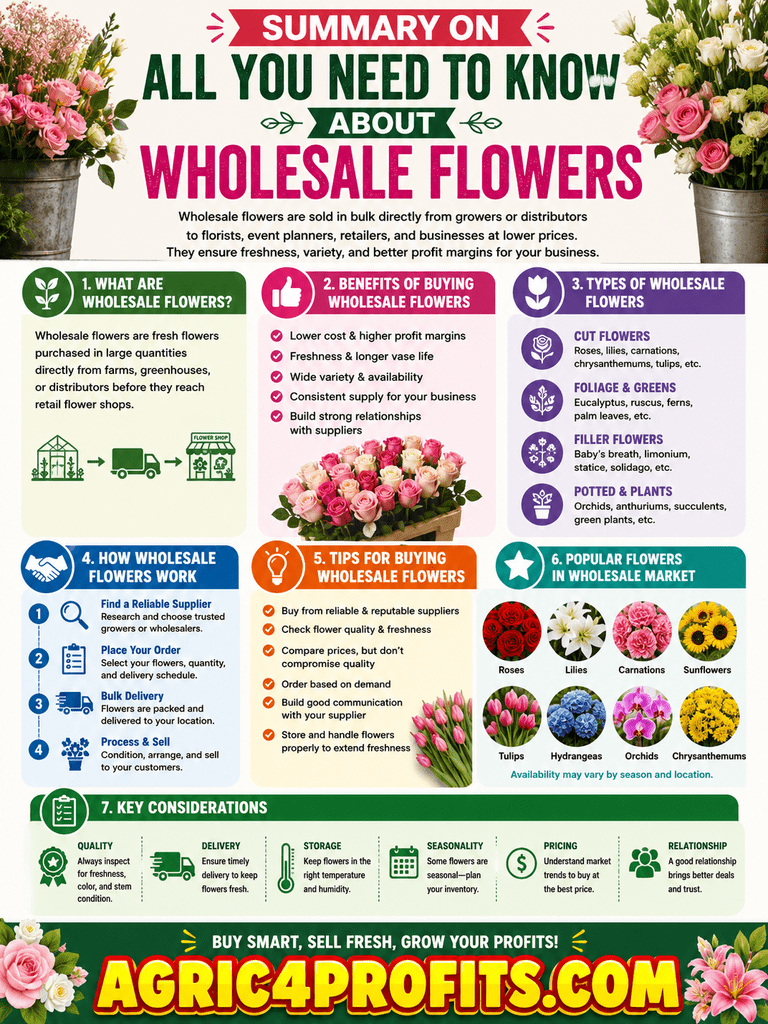
Summary on All You Need To Know About Wholesale Flowers
| Topic | Summary |
|---|---|
| Definition | Wholesale flowers are blooms purchased in larger quantities, usually from growers, wholesalers, distributors, or specialized suppliers for commercial, event, retail, or personal use. |
| Main advantages | They can provide lower average costs, wider selections, flexible purchasing, consistent supply, seasonal choices, and opportunities for larger floral projects and businesses. |
| Popular varieties | Common wholesale selections include roses, lilies, tulips, carnations, orchids, sunflowers, hydrangeas, daisies, and other seasonal or specialty flowers. |
| Quality assessment | Buyers should examine freshness, stem strength, petal condition, foliage, maturity, color, hydration, visible damage, and overall presentation before accepting shipments. |
| Packaging | Suitable packaging protects flowers against crushing, dehydration, temperature changes, excessive movement, and other transportation risks while maintaining acceptable freshness. |
| Distribution | Efficient distribution depends on coordinated sourcing, transportation, storage, communication, shipment tracking, inventory management, and timely delivery to customers. |
| Care | Proper hydration, clean containers, suitable temperatures, gentle handling, sanitation, grading, and timely maintenance can help preserve flower quality and extend useful vase life. |
| Business opportunities | Wholesale flowers support florists, retailers, decorators, event planners, exporters, gift businesses, hospitality businesses, farmers, and entrepreneurs interested in floral commerce. |
| Where to buy | Buyers can find wholesale flowers through physical markets, online suppliers, local wholesalers, flower farms, trade shows, industry associations, and professional networks. |
| Key consideration | Successful wholesale purchasing requires careful planning, supplier evaluation, quality control, appropriate storage, reliable delivery, and understanding of customer and seasonal demand. |
Frequently Asked Questions About Wholesale Flowers
1. What are wholesale flowers, and why are they commonly purchased in bulk by florists, event planners, retailers, decorators, and customers preparing large floral arrangements?
Wholesale flowers are blooms purchased in larger quantities from growers, wholesalers, distributors, or specialized suppliers, usually at commercial prices for events, businesses, floral arrangements, retailing, or personal projects.
2. What are the major benefits of buying wholesale flowers instead of purchasing smaller quantities from ordinary retail flower shops and outlets?
The major benefits include potentially lower average costs, broader selection, easier supply planning, greater customization, better suitability for large events, and access to commercial quantities for floral businesses.
3. Which flowers are commonly available through wholesale suppliers for weddings, celebrations, retail businesses, decorative projects, and professional floral arrangements?
Common wholesale flowers include roses, lilies, tulips, carnations, orchids, sunflowers, hydrangeas, daisies, chrysanthemums, gerberas, and many seasonal varieties selected according to market demand and availability.
4. How can buyers identify fresh and high-quality wholesale flowers before accepting a large shipment from a supplier or distributor?
Buyers should examine stems, petals, foliage, color, maturity, hydration, bloom condition, visible damage, and signs of wilting. Supplier reputation, packaging quality, delivery conditions, and product specifications should also be considered.
5. How should wholesale flowers be stored and handled after delivery to preserve freshness, appearance, hydration, and useful vase life for customers?
Flowers should be handled gently, kept appropriately hydrated when required, stored under suitable temperatures, protected from excessive heat, and maintained in clean containers with deteriorating material removed promptly.
6. Can wholesale flowers be purchased directly from flower farms, local suppliers, physical markets, online platforms, or professional floral industry organizations?
Yes. Buyers can source wholesale flowers from farms, physical flower markets, local wholesalers, online suppliers, trade events, floral associations, and professional networks, depending on location and purchasing requirements.
7. Are wholesale flowers suitable for weddings, corporate events, parties, funerals, retail stores, hospitality businesses, home decoration, and other large floral projects?
Yes. Wholesale flowers are particularly useful for situations requiring substantial quantities, including weddings, ceremonies, corporate events, retail displays, hospitality decoration, sympathy arrangements, home projects, and professional floral installations.
8. How does proper packaging and transportation affect the quality and commercial value of wholesale flowers during long-distance or short-distance delivery?
Suitable packaging and transportation reduce bruising, crushing, dehydration, heat exposure, and excessive movement. Good logistics help maintain freshness, appearance, market value, and customer satisfaction throughout the delivery process.
9. Can entrepreneurs make money by operating wholesale flower businesses or supplying flowers to florists, retailers, decorators, event planners, and other commercial customers?
Yes. Profitability depends on suitable flower selection, reliable suppliers, efficient inventory management, controlled operating costs, market demand, quality preservation, dependable distribution, appropriate pricing, and strong long-term customer relationships.
10. Why is understanding seasonal flower availability important when purchasing wholesale flowers for commercial customers, events, and specialized floral arrangements?
Seasonal availability influences flower variety, price, quality, supply, and customer expectations. Understanding seasons helps buyers plan suitable alternatives, control costs, secure sufficient quantities, and create attractive timely arrangements.
Do you have any questions, suggestions, or contributions? If so, please feel free to use the comment box below to share your thoughts. We also encourage you to kindly share this information with others who might benefit from it. Since we can’t reach everyone at once, we truly appreciate your help in spreading the word. Thank you very much for your support and for sharing!
Read Also: Revolutionizing Wastewater Treatment
🌱 Take Your Farming Further With Agric4Profits
Based on what you just read, here are free resources and products from Agric4Profits that can help your farm right now:
- 🛒 Visit Our Marketplace — Organic neem oil, bio-pesticides, seeds and farming products
- 📚 Read Premium Content — Advanced guides for serious and profitable farming
- 🎓 Join Our Free Academy — Structured free training for farmers across Africa
- 🔧 Use Our Free Farm Tools — Profit calculators, feed formulation, pest identifier and more
- 💬 Join Our Farming Community — Connect with farmers across all 54 African countries
- ❓ Ask a Farming Question — Get answers from experienced farmers and agricultural experts
Please cite this content in academic work, research, or publications.