


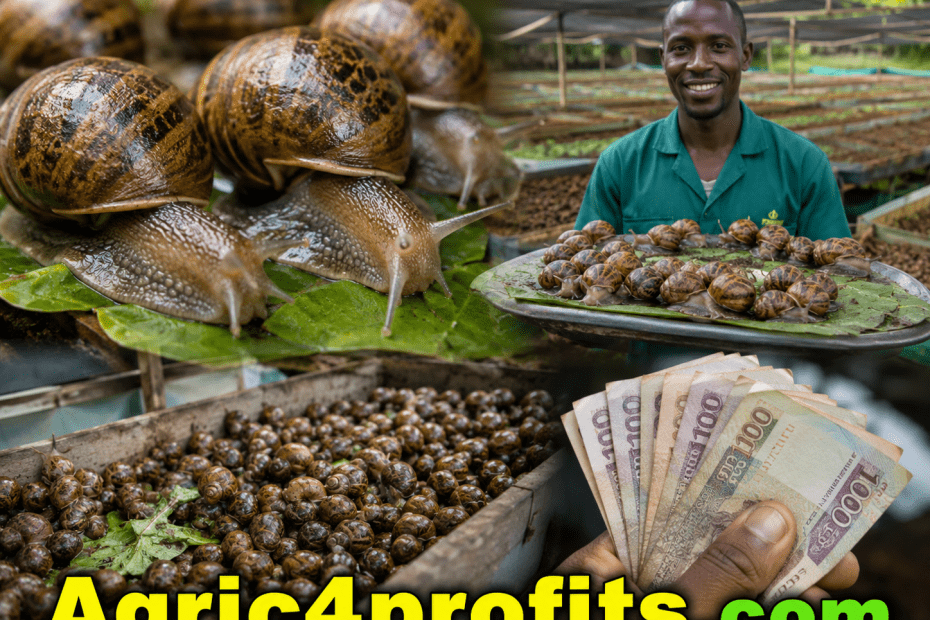
Heliciculture, also called snail farming, is the controlled raising of land snails for food, slime, and other commercial uses. It is a practical agribusiness because it needs little space, modest capital, and careful daily management.
For many beginners, the attraction is simple: snails grow quietly, feed on readily available crops, and can bring steady returns when the farm is well planned. Their market value also keeps improving in many communities.
Snail farming matters because snail meat is rich in protein, iron, calcium, magnesium, and vitamins, while remaining low in fat. That combination makes it valuable for households, restaurants, and health-conscious consumers.
A successful farm still depends on planning, housing, feeding, breeding, and hygiene. Farmers who understand those foundations usually avoid losses, reduce mortality, and build a stronger business with better long-term profit.
This guide rewrites the major ideas in a clearer, more practical way, so you can understand what snail farming requires from start to finish. It also highlights useful resources already available on Agric4Profits.
Benefits of Snail Farming Business

1. Low start-up cost: Snail farming is affordable because land preparation is simple, feed is inexpensive, and housing can begin small. That flexibility helps beginners manage risk while expanding gradually.
🌿 Go Organic on Your Farm: Instead of harmful chemical pesticides and fertilisers, try our organic farming products — including neem oil spray, bio-pesticides, natural plant treatments, organic seeds and seedlings, suckers, and many more organic products that are safe for your health, your family, your soil and your harvest. Shop Now →
2. Protein-rich meat: Protein-rich meat remains one of the clearest advantages, especially beside costlier animal proteins. Snail meat also supports articles like processing and consumption of snail meat, which explain its strong consumer appeal.
3. Low fat advantage: Low fat content gives snail meat another commercial edge, since many buyers now prefer lighter meals. Readers exploring why snail meat is unique can see its nutrition value clearly.
4. Multiple income streams: Snails can be sold as meat, breeding stock, or processed products. Farmers who study 11 merits of snail farming business usually recognize the wider earning possibilities.
5. Low mortality: Another benefit is low mortality when management is careful. Snails need routine observation, but they do not require noisy equipment or handling. That is why general management routine for snails remains essential.
🔧 Free Farm Tool Available: Use our free Agric4Profits Farm Tools to calculate your farm profits, formulate feeds, identify pests and diseases on both your crops and animal farms, plan your planting and harvesting season, including many more farm tasks to get free expert advice and recommendations — completely free, no registration required. Access Free Tools →
6. Market and export value: Snail farming can support local trade and foreign exchange where demand exceeds supply. In many markets, the shell, slime, and meat each carry value, creating multiple income lines.
7. Steady expansion: Because snails reproduce well under favorable conditions, farmers can expand stock steadily without chasing fast turnover. People who compare business models through simple analysis for snail farming business often appreciate that stability.
8. Smallholder friendly: Finally, snail farming fits smallholder agriculture well. It combines low noise, low space use, and a steadily rising market, so many investors study benefits of snail farming heliculture before starting.
Read Also: Ways to make more Money as a Snail Farmer
Processes Involved in Snail Farming Business
1. Learn the basics: Before buying stock, a farmer should understand the species, market target, and production system. A good starting point is snail farming step-by-step beginners guide for practical direction.
💬 Have a Farming Question? Join thousands of farmers across Africa on the Agric4Profits Community — ask questions, share experiences and connect with agricultural experts. It is completely free. Ask Your Question Now →
2. Choose the right site: Site selection matters because snails need shade, moisture, and protection from harsh wind. Farmers who study different systems of snail production can match housing to their budget.
3. Prepare suitable soil: The soil should be loose, slightly moist, and rich in humus so eggs can hatch easily and shells can access minerals. Good soil also keeps snails closer to natural conditions.
4. Source active stock: Stock sourcing must be done carefully because weak or overheated snails reduce future output. The article sourcing, selection and stocking of snails explains why active stock is preferable.
5. Avoid overcrowding: Beginners should avoid overcrowding because density problems increase competition, slow growth, and encourage disease. For a more complete setup, complete snail farming heliculture guide for beginners and commercial farmers is useful.
6. Build safe housing: The pen or snailery must keep predators out while preserving moisture and airflow. Well-designed housing reduces escape, prevents contamination, and makes feeding, watering, and cleaning far easier.
7. Keep records early: Once housing is ready, record keeping should begin immediately. Farmers who watch costs, growth rates, and mortality can compare results with cost of rearing 100 snails within six months.
8. Match the system: Strong planning also means selecting the right production method from the start. Many people make better decisions when they read snail farming techniques breeding housing and feeding first.
Snail Housing, Feeding, Health, and Marketing
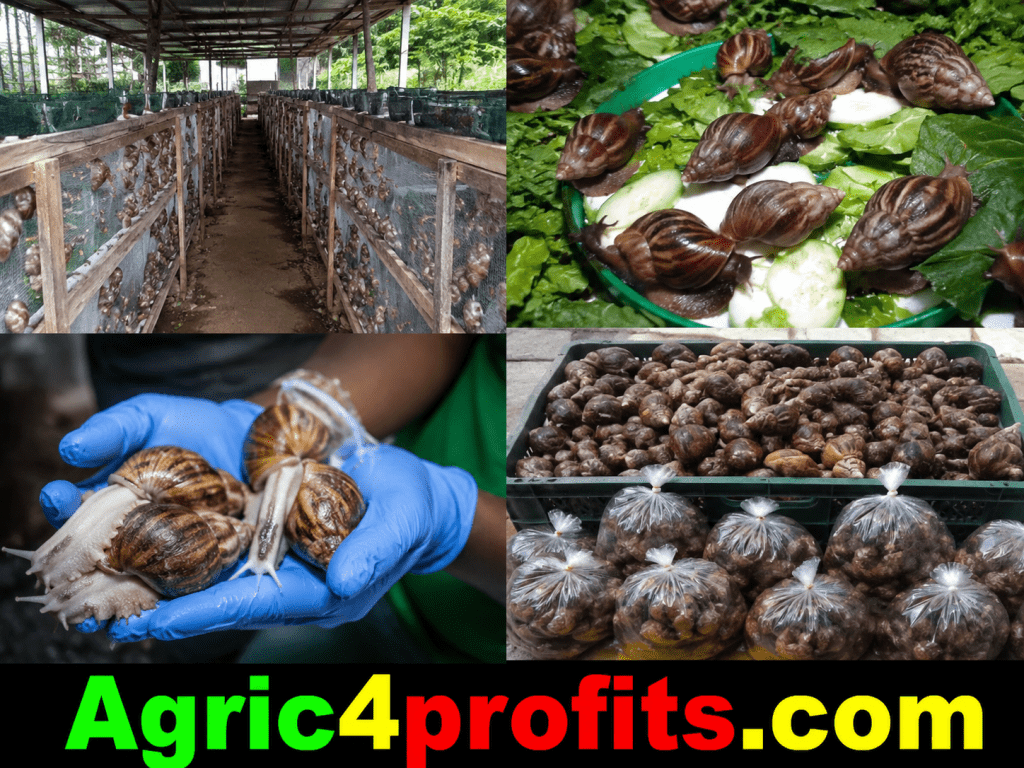
1. Feed for growth: Feeding should combine fresh leaves, fruits, and formulated diets, because nutrition speeds growth and improves shells. Farmers can compare rations through equipment and tools needed in snail farming and guides.
2. Manage water daily: Watering is important because snails thrive in humid conditions. A farm that dries out too quickly will create stress, so routine wetting and shade management must remain steady.
📖 Want to Go Deeper on This Topic?
Our expert agricultural ebooks cover poultry, fish farming, different crops production, snail farming, organic farming, mushrooms, sheep, cattle, flowers, pig farming, goat farming, agribusiness, etc. in practical step-by-step detail — written by agricultural professionals for African farmers.
Browse All Farming Ebooks →3. Keep the farm clean: Hygiene should never be ignored, since dirty bedding attracts pests, bacteria, and odors that reduce performance. Articles such as methods of disease prevention in snail farming stress regular cleaning.
4. Guard against predators: Predators are another major risk, especially ants, rodents, birds, and reptiles that can destroy young snails quickly. Farmers who read benefits and common challenges of snail farming usually prepare protection.
5. Support breeding: Breeding should happen in calm, controlled conditions so mating, egg laying, and hatching remain steady. Those who want a deeper practical overview can review reproduction management practices snail business first.
6. Monitor behavior: Good management also means avoiding waste and monitoring performance every week. When farmers notice unusual inactivity, shell damage, or reduced feeding, they should isolate the affected snails immediately.
7. Sell strategically: Marketing improves when the farmer understands timing, packaging, and customer preference. The article processing marketing of snails in snail business helps farmers prepare for wider sales over time.
8. Keep learning: Finally, sustainable farms keep learning from experience and later reviews. Reading 4 mistakes snail farmers make in snail farming and challenges and potential of snail farming helps avoid losses.
Summary on Benefits of Snail Farming Business
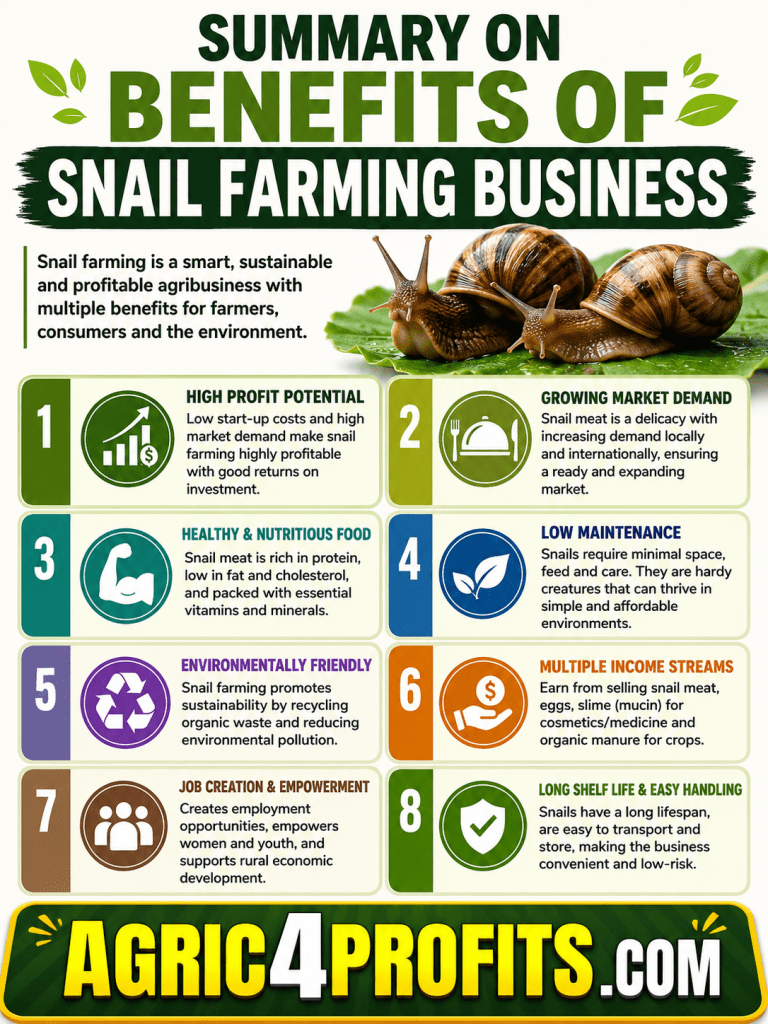
| Aspect | Summary |
|---|---|
| Business model | Snail farming is a low-capital agribusiness with small-space housing, manageable daily care, and growing demand in many local markets. |
| Key benefits | It offers protein-rich meat, low fat content, multiple income streams, and low mortality when the farm is managed carefully. |
| Farm setup | Success depends on choosing a shaded site, loose soil, active stock, safe housing, and the right production system. |
| Daily management | Feeding, watering, hygiene, predator control, and record keeping are essential for stable growth and reliable output. |
| Marketing outlook | Snails can be sold as meat, breeding stock, or processed products, making the business attractive when supply is limited. |
Frequently Asked Questions About Benefits of Snail Farming Business
1. What makes snail farming attractive to beginners who want a practical agribusiness with limited capital, simple housing, manageable daily work, and steady demand across many local markets throughout the year?
Snail farming is attractive because start-up costs are low, land use is modest, and feed is often cheap. With proper housing and observation, beginners can build stock gradually and reduce early losses.
2. Which housing conditions are best for snails when a farmer wants better growth, safety, easier cleaning, protection from predators, and reliable comfort throughout the production cycle in both dry and wet seasons?
The best housing remains cool, shaded, humid, and secure. Good airflow matters, but the pen should still protect snails from predators, escape, contamination, and extreme weather changes throughout the year.
3. What soil type supports egg hatching and shell formation most effectively in a small or commercial snail farm with steady moisture, good drainage, reliable mineral access, and long-term farm success?
Loose, slightly moist, humus-rich soil works best because it supports hatching and helps snails access minerals. Soil that holds too much water can cause stress, disease, and poor performance for healthy stock.
4. How should a farmer respond when snails become inactive, lose weight, or show signs of disease inside the snailery during daily checks and routine farm inspections without delaying treatment?
The farmer should isolate affected snails, remove dead stock, clean the pen, replace contaminated bedding, and improve feeding or shade. Quick action limits spread before the problem reaches the healthy population.
5. What feeds can maintain healthy snail growth without relying only on expensive commercial feed, especially where vegetables, leaves, and fruits are easy to obtain in the farm area without disrupting steady growth?
Fresh leaves, fruits, vegetables, and formulated feeds can all support growth when balanced properly. Farmers should also supply calcium-rich materials in a balanced ration, because shell strength depends heavily on mineral nutrition.
6. How long does it usually take for snails to reach marketable size under proper management, regular feeding, and enough moisture throughout the season before first harvest in most climates?
Under favorable conditions, many snails reach market size in several months, although the exact period depends on species, feed quality, moisture, stocking density, and overall farm management in most climates.
Do you have any questions, suggestions, or contributions? If so, please feel free to use the comment box below to share your thoughts. We also encourage you to kindly share this information with others who might benefit from it. Since we can’t reach everyone at once, we truly appreciate your help in spreading the word. Thank you very much for your support and for sharing!
Read Also: Anatomy of Fishes: Female Fish and their Reproductive Strategies
🌱 Take Your Farming Further With Agric4Profits
Based on what you just read, here are free resources and products from Agric4Profits that can help your farm right now:
- 🛒 Visit Our Marketplace — Organic neem oil, bio-pesticides, seeds and farming products
- 📚 Read Premium Content — Advanced guides for serious and profitable farming
- 🎓 Join Our Free Academy — Structured free training for farmers across Africa
- 🔧 Use Our Free Farm Tools — Profit calculators, feed formulation, pest identifier and more
- 💬 Join Our Farming Community — Connect with farmers across all 54 African countries
- ❓ Ask a Farming Question — Get answers from experienced farmers and agricultural experts
Please cite this content in academic work, research, or publications.